Select any symptoms you are currently experiencing:
Select your current medications or symptoms to see a safety analysis.
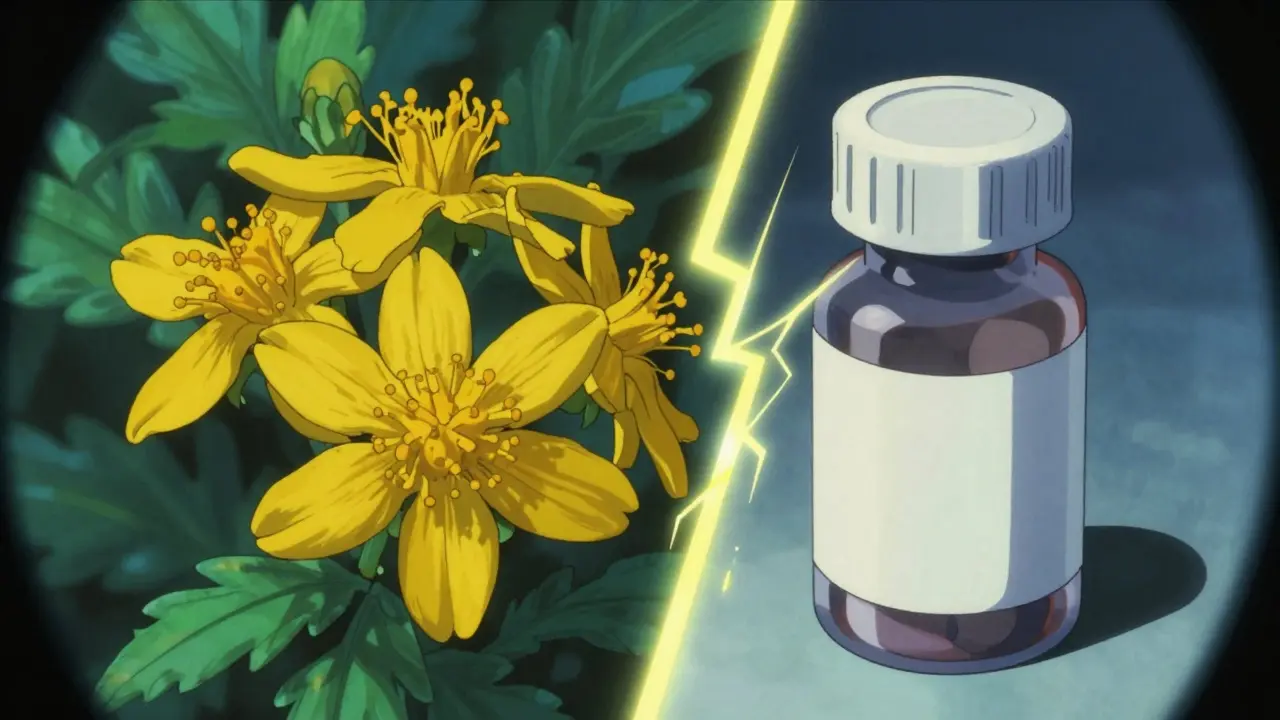
Thinking about adding a "natural" boost to your mood while you're already taking a prescription antidepressant? It sounds like a safe bet, but mixing St. John's Wort is a flowering plant-derived herbal supplement used to treat mild to moderate depression with prescription meds can be a dangerous gamble. While it's sold over-the-counter in many places, this herb isn't just a mild tonic-it's a potent pharmacological agent that can trigger a life-threatening condition called serotonin syndrome.
To understand why this mix is a problem, we have to look at how SSRIs (Selective Serotonin Reuptake Inhibitors) work. These drugs, like Sertraline or Fluoxetine, keep more serotonin available in your synapses to help improve mood. Now, enter St. John's Wort. It doesn't just do one thing; it acts as a weak monoamine oxidase inhibitor (MAOI) and its own kind of serotonin reuptake inhibitor.
When you take both, you're essentially hitting the serotonin "gas pedal" from two different directions. Your brain ends up with way more serotonin than it can handle. This isn't a good thing-too much serotonin acts like a poison to your central nervous system, leading to the chaos known as serotonin syndrome. This typically happens within 24 hours to 14 days after you start taking them together.
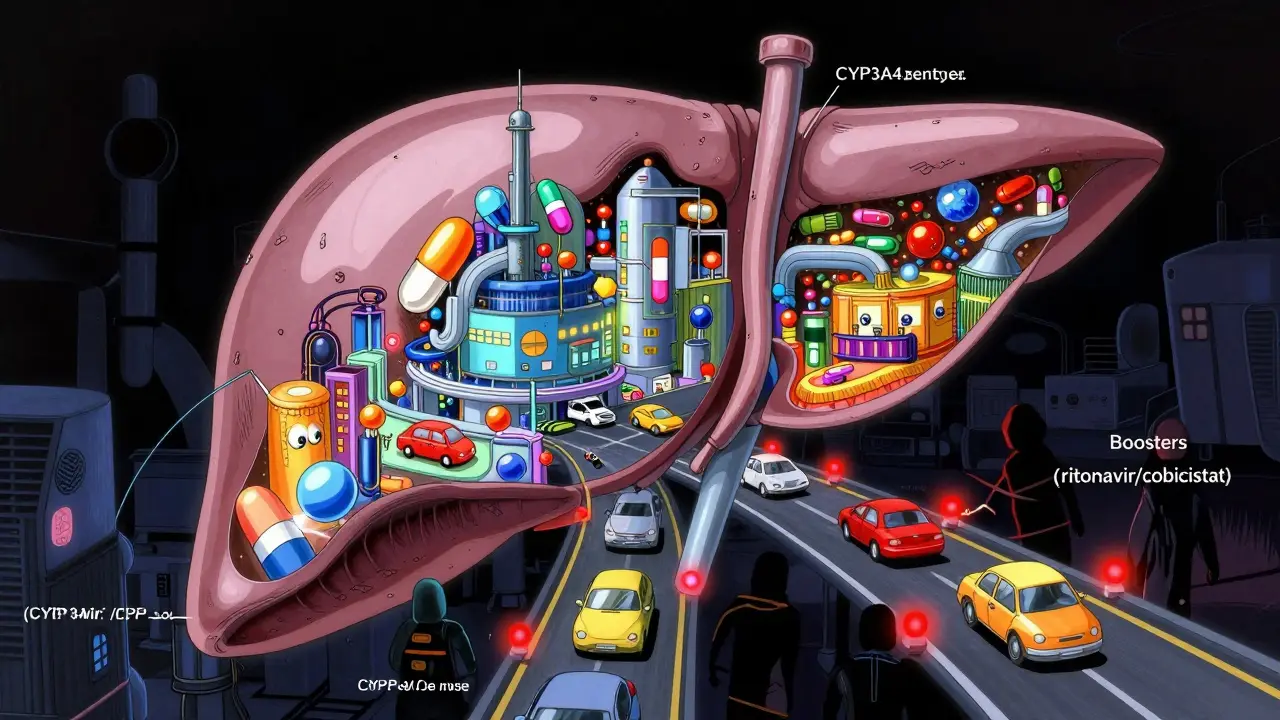
It's not just about the serotonin levels; there's a hidden battle happening in your liver. St. John's Wort contains a compound called hyperforin, which activates the pregnane X receptor (PXR). This tells your liver to produce more CYP3A4 and CYP2C19 enzymes-the proteins responsible for breaking down medications.
Think of it as an assembly line that suddenly speeds up. If your liver breaks down your SSRIs too quickly, the medication might stop working, leaving your depression untreated. Conversely, the additive effect on serotonin levels often outweighs this metabolic speed-up, resulting in toxicity. Some SSRIs, specifically those processed by the CYP2C19 enzyme like Escitalopram and Citalopram, may have a higher interaction potential, though no SSRI is truly "safe" to mix with this herb.
| Feature | St. John's Wort | SSRIs (Pharmaceuticals) |
|---|---|---|
| Regulatory Status | Dietary Supplement (US) / Prescription (Some EU) | Prescription Medication |
| Primary Mechanism | Weak MAOI & Reuptake Inhibition | Selective Serotonin Reuptake Inhibition |
| Liver Impact | Induces CYP450 Enzymes (Speeds metabolism) | Substrates for CYP450 Enzymes |
| Standard Dose | ~900mg daily (standardized to 0.3% hypericin) | Varies (e.g., 50-200mg for Sertraline) |

If you've been taking both, you need to know the warning signs. It doesn't always hit you like a ton of bricks; sometimes it starts slowly. Doctors use the "Hunter Serotonin Toxicity Criteria" to diagnose it, looking for a cluster of mental, autonomic, and neuromuscular symptoms.
Mild to Moderate Signs:
Severe Red Flags (Emergency):
If you see these, get to an ER immediately. We're talking about hyperthermia where body temperatures soar above 106°F (41.1°C), rigid muscles, and rapid heart rate. In extreme cases, this can lead to rhabdomyolysis (muscle breakdown) or organ failure. It's not just a "bad reaction"; it's a medical emergency.
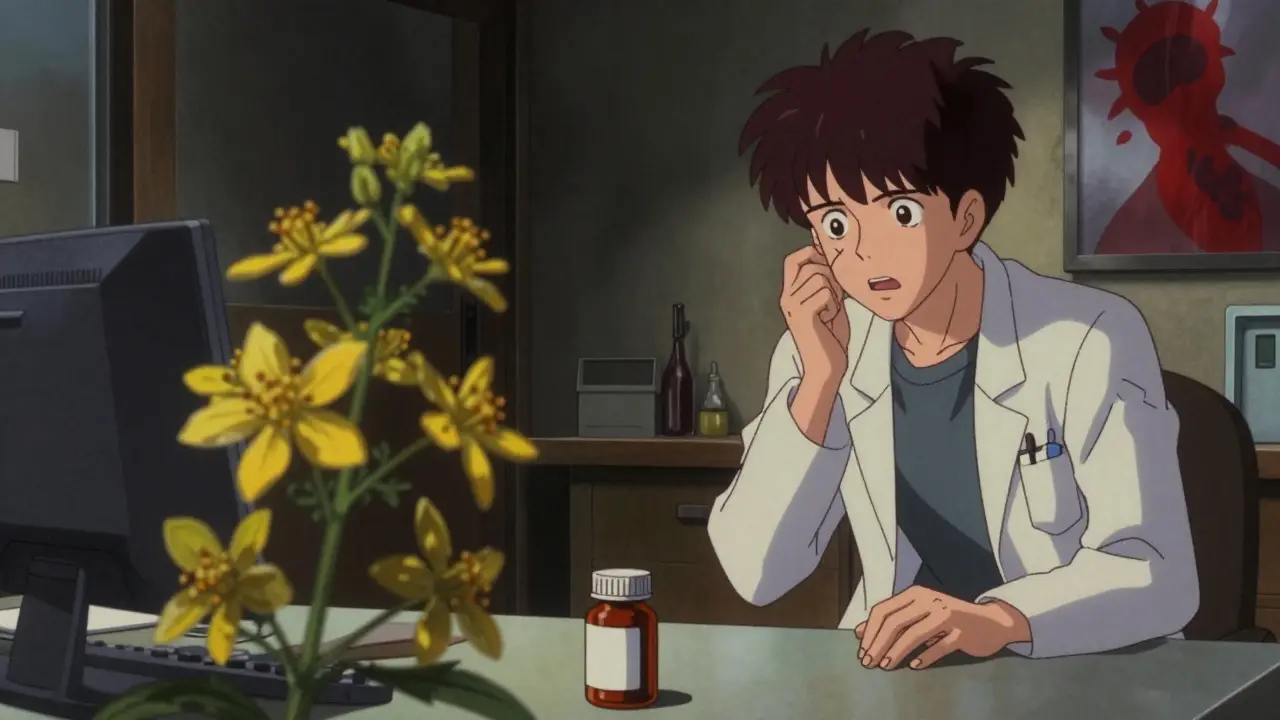
One of the biggest problems is that many people don't tell their doctors they're taking St. John's Wort because it's "natural." A study in JAMA Internal Medicine found that only about 33% of supplement users actually disclose their use to their physicians. This is a huge gap in patient safety.
And it's not just antidepressants. Because St. John's Wort ramps up those liver enzymes we mentioned, it can make other life-saving drugs fail. For instance, it can drop the effectiveness of Cyclosporine (an immunosuppressant) by up to 60%, which is a nightmare for organ transplant patients. It also reduces the efficacy of Warfarin, increasing the risk of blood clots, and can even cause unplanned pregnancies by speeding up the metabolism of hormonal contraceptives by 30-50%.
If you're currently taking St. John's Wort and want to start an SSRI-or vice versa-you can't just swap them overnight. Your body needs time to clear the chemicals and for your liver enzymes to return to their normal speed. Experts generally recommend a two-week washout period. This gap allows the herb to leave your system and the PXR-induced enzymes to stabilize before the pharmaceutical drug takes over.
Always be honest with your pharmacist. They are often better equipped than anyone else to spot these interactions. If you see a label that says "Consult a physician before use," take it seriously. In countries like Canada, this herb has already been moved to prescription-only status because of the high number of serotonin syndrome cases.
No. Even low doses can create an additive effect on serotonin levels. The risk of serotonin syndrome exists regardless of the dose when combined with SSRIs. You should avoid this combination entirely.
The Mayo Clinic explicitly advises against using St. John's Wort during pregnancy or while breastfeeding because there isn't enough safety data to prove it won't harm the fetus or infant.
A washout period is a break (usually two weeks) between stopping one medication and starting another. It ensures the first substance is fully cleared from your blood and your liver enzymes have reset, preventing a dangerous interaction.
Yes, significantly. It increases the metabolism of hormonal contraceptives, which can lower the amount of hormone in your blood and lead to unplanned pregnancies.
Look for a combination of mental changes (agitation, confusion), autonomic hyperactivity (sweating, fever, high blood pressure), and neuromuscular issues (tremors, muscle rigidity). If you experience these after starting a new supplement, seek emergency care.

It is so crucial to highlight the CYP3A4 enzyme induction here. Many people assume that if a supplement is "natural," it simply cannot interfere with pharmaceutical pathways, but that is a dangerous misconception. The way hyperforin accelerates the metabolism of other drugs is a textbook example of why pharmacist consultations are non-negotiable. I've seen too many cases where people unknowingly compromised their birth control or blood pressure medication just by adding a "mood booster" from a health food store.

This is really helpful and scary at the same time! Thanks for sharing. ❤️

Everyone knows that herbal supplements aren't regulated like meds. It is basic common sense that you shouldn't just mix random pills with prescription drugs without checking first.

Obviously the biggest issue here is people's sheer ignorance about basic pharmacology. You can't just play chemist with your own brain and expect not to end up in the ER. Most people are just too lazy to read a label or do a simple search before popping these "natural" cures. It is honestly embarrassing how many people trust a bottle's marketing over actual medical science. If you don't understand how a reuptake inhibitor works, you shouldn't be touching any supplement that claims to affect your mood. It's a recipe for disaster and a waste of medical resources when they eventually crash.

Stay safe everyone! Always talk to your doc first 🌟🙏

Typical of people to just trust whatever is on a shelf without thinking about the chemistry behind it this is why we need stricter laws in this country and not just letting every random herb be sold as a cure all while the liver is literally fighting for its life lol

It's so interesting how our bodies react to these things... nature is both beautiful and terrifying!! 🌿✨ I think it's just a matter of finding the right balance for each person, though the warnings here are definitely a wake-up call!!!

The mention of the Hunter Serotonin Toxicity Criteria is the only part of this that provides actual clinical utility. The rest is essentially a simplified primer for those who lack a basic understanding of enzyme kinetics.

The duality of the "natural" label is a fascinating social construct. We treat the earth as a pharmacy but forget that plants are essentially chemical factories. People want the reward of nature without the risk of its potency, which is a logical fallacy in itself.

I find it absolutely tragic... truly tragic... that some people still feel the need to hide their supplement use from their doctors. It's such a passive way to gamble with one's life, don't you think? The lack of transparency in patient care is just... exhausting.

I just think it's important for us to remember that everyone's journey with mental health is different, and sometimes people turn to these supplements because they feel the pharmaceutical route isn't working for them or they're afraid of the side effects, so while the warnings are vital, we should also try to be kind to those who are just trying to find some relief in whatever way they can even if they aren't fully aware of the risks involved with things like the CYP3A4 enzyme.

Spot on! This is exactly why I always tell people to keep a running list of everything they take, including vitamins and herbs. It makes the conversation with the pharmacist so much smoother and keeps you safe. Let's all commit to being 100% honest with our healthcare providers-it's the only way to make these treatments work effectively!

the intersection of biology and chemistry often reveals our own fragility