

When you go to the pharmacy and your usual medication is out of stock, or when the price jumps unexpectedly, it feels like a minor inconvenience. But behind that empty shelf lies a complex web of pricing pressure and supply constraints that ripples through the entire economy. In health economics, these issues are particularly acute because patients cannot easily switch to alternatives; they need their specific drugs or treatments to stay healthy.
The post-pandemic period highlighted how fragile our systems can be. According to the Office for Budget Responsibility (OBR), supply bottlenecks in energy, products, and labor markets became critical drivers of inflation dynamics starting in late 2021. These aren't just temporary glitches; they represent structural imbalances where production capacity, transportation networks, or labor availability fail to keep up with demand. For healthcare providers and consumers alike, understanding these mechanics is essential for navigating rising costs and scarcity.
Economists distinguish between demand-driven and supply-driven price increases, and the two behave very differently. Research from the Cleveland Federal Reserve shows that supply shocks have a significantly larger impact on price levels than demand shocks. Specifically, a shock to aggregate supply raises the core Personal Consumption Expenditures (PCE) price level by about 0.25% after three years, compared to just 0.05% for demand shocks. That’s a five-fold difference in impact.
This matters because it means that when factories can’t produce enough goods or when raw materials become scarce, prices don’t just rise-they spike. The San Francisco Federal Reserve estimated that supply chain disruptions contributed approximately 60% of the above-trend run-up in headline inflation in the United States during 2021-2022. Their Global Supply Chain Pressure Index (GSCPI) hit a record high of 3.88 in December 2021, compared to a pre-pandemic average of 0.15. A one standard deviation shock to this index raised PCE goods inflation by up to 1.5 percentage points relative to pre-shock levels.
Shortages rarely happen in isolation. They often stem from labor market rigidities. In the U.S., the labor force participation rate remained 1.5 percentage points below pre-pandemic levels through Q2 2022. This created significant wage pressures in affected sectors, including healthcare logistics and pharmaceutical manufacturing.
In the UK, the situation was compounded by energy costs. The OBR noted that UK wholesale gas prices reached £200 per therm in August 2021, compared to a five-year average of £35-45 per therm. Energy-intensive industries like steel, glass, and chemical producers faced input cost increases of 25-40% in Q3 2021. Since many medical devices and packaging materials rely on these inputs, the cost pressure trickled down to the final product.
For businesses, this meant longer lead times. Industry surveys by the Institute for Supply Management showed that 76% of manufacturing executives reported supply chain disruptions in Q4 2021. Average supplier delivery times increased from 45 days pre-pandemic to 78 days. In construction, a CEO from Hive Project Management noted that 73% of clients reported project delays due to material shortages, averaging 68 days per project. Similar delays occur in hospital infrastructure projects and pharmaceutical plant expansions.
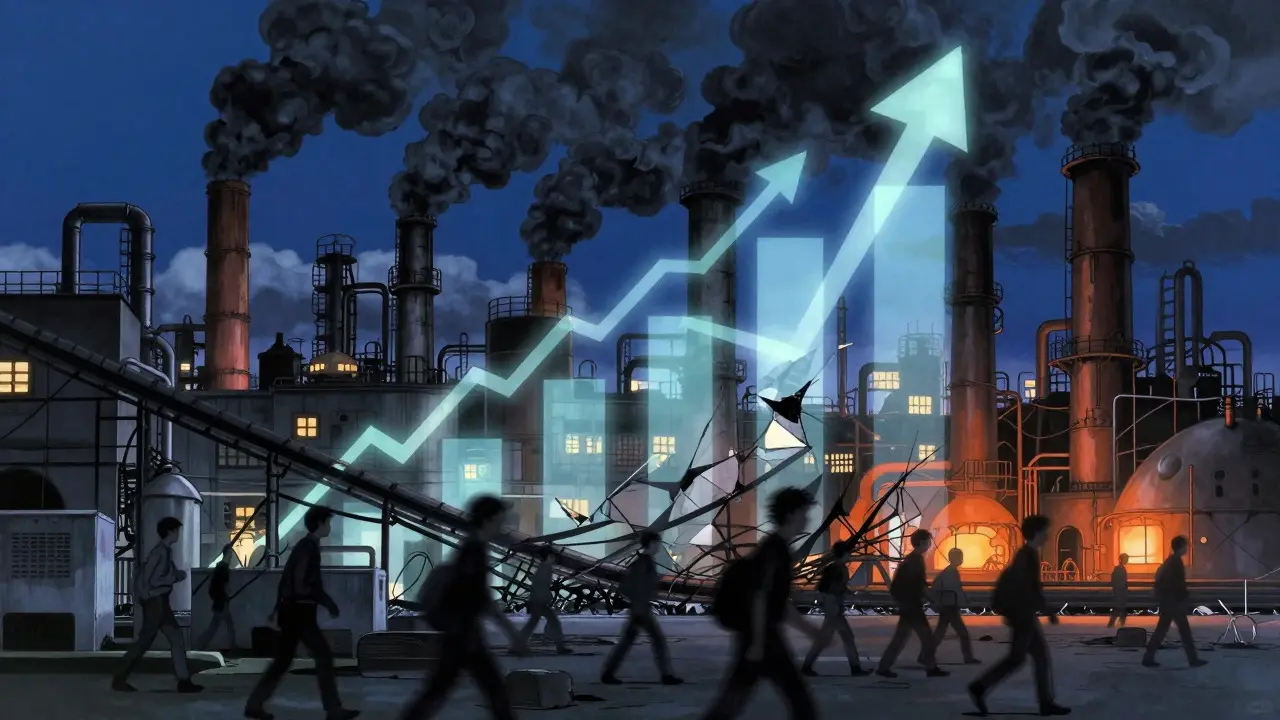
A common reaction to high prices is government intervention, such as price caps. While well-intentioned, these measures can exacerbate shortages. Harvard economist Martin Weitzman’s research suggests that when prices are held artificially low, a predictable pattern of 'shortage deformation' occurs. Consumers engage in speculative hoarding once scarcity becomes apparent, further draining available stock.
The UK’s experience with energy price caps provides a cautionary tale. By preventing providers from passing costs to consumers, the policy led to 27 smaller energy provider failures between August and December 2021. In healthcare, similar mechanisms can lead to underinvestment in R&D or production capacity if margins are squeezed too thin. The European Central Bank recommended 'temporary relaxation of competition rules' during acute disruption periods, a strategy Germany used to reduce pharmaceutical shortages by 19% within six weeks in 2021.
| Metric | Supply Shock Impact | Demand Shock Impact | Source |
|---|---|---|---|
| Core PCE Price Level Increase (3 yrs) | ~0.25% | ~0.05% | Cleveland Fed (Aug 2023) |
| Employment Depression | ~0.15% | ~0.05% | Cleveland Fed (Aug 2023) |
| Inflation Contribution (US 2021-22) | ~60% of run-up | Remaining portion | San Francisco Fed (Jun 2023) |
| Supplier Delivery Time Change | +33 days (45 to 78) | N/A | Institute for Supply Management |
Healthcare is uniquely vulnerable to these dynamics because of regulatory hurdles and long approval timelines. The U.S. automotive sector saw production declines of 7.2% in 2021 due to semiconductor shortages. Similarly, medical device manufacturers faced delays in obtaining microchips for diagnostic equipment and implantable devices.
Consumer sentiment reflects this anxiety. The University of Michigan’s Surveys of Consumers revealed that 58% of respondents cited 'shortages of things they wanted to buy' as a primary concern in Q2 2022. While automobiles and electronics were top mentions, building materials and electronic goods also featured prominently. For patients, this translates to delayed surgeries, reduced access to new therapies, and higher out-of-pocket costs.
Emerging markets face even steeper challenges. The International Monetary Fund noted that supply chain disruptions added approximately 1.5 percentage points to global inflation in 2021-2022, with emerging markets experiencing impacts 25-30% larger than advanced economies due to less diversified supply networks. This disparity affects the global distribution of medicines, making certain regions more susceptible to prolonged shortages.

Resolving these issues requires a mix of policy adjustments and business agility. The Federal Reserve identified three potential resolution scenarios: an easing of consumer goods demand, rapid reallocation to services causing new bottlenecks, or persistent negative supply shocks from geopolitical events. Policy interventions should focus on removing factor market rigidities to enable labor and capital mobility. The OBR noted that UK wage support schemes had inadvertently reduced labor market flexibility by 12-15% in affected sectors.
On the corporate side, diversification pays off. Companies with diversified supplier networks experienced 40% fewer disruption days than those with concentrated bases during the 2021-2022 period. A 2022 McKinsey survey found that businesses implementing dual-sourcing strategies recovered 35% faster from disruptions. Additionally, investing in digital supply chain visibility tools reduced inventory stockouts by 28% on average.
Looking ahead, the San Francisco Federal Reserve reported that GSCPI values returned to pre-pandemic levels by Q1 2023, helping decelerate U.S. inflation from 9.1% in June 2022 to 3.0% in June 2023. However, the IMF projects that supply chain pressures will remain 15-20% above pre-pandemic norms through 2025 due to geopolitical fragmentation. Gartner predicts that 60% of global 2000 companies will implement 'digital twin' supply chain simulations by 2025, reducing disruption response times by 45%.
Supply shocks restrict the ability of producers to meet existing demand, leading to immediate price hikes as goods become scarcer. Demand shocks, conversely, increase buying power but can be absorbed by gradual capacity expansion. Data from the Cleveland Federal Reserve shows supply shocks raise price levels by roughly five times more than demand shocks over a three-year period.
Price caps can prevent manufacturers from covering increased production costs, leading to reduced output or withdrawal from the market. This often results in physical shortages rather than just higher prices. Research by Martin Weitzman indicates that artificial price suppression triggers speculative hoarding, worsening scarcity.
Rigid labor markets, caused by licensing requirements, skill mismatches, or excessive wage subsidies, slow down the adjustment of workforce size to demand. This prolongs bottlenecks. For example, the U.S. hospitality sector experienced labor shortages lasting over 18 months partly due to occupational licensing barriers.
Yes. The International Monetary Fund estimates that emerging markets experience inflationary impacts 25-30% larger than advanced economies during supply chain disruptions. This is primarily due to less diversified supply networks and lower capacity for rapid logistical adjustments.
Highly effective. Companies using digital supply chain visibility tools reduced inventory stockouts by 28% on average. Furthermore, Gartner predicts that widespread adoption of 'digital twin' simulations will reduce disruption response times by 45% compared to traditional management approaches.