It’s 2026, and hospitals are rationing insulin. Cancer centers are delaying treatments because a key chemotherapy drug won’t ship. Pharmacies are telling patients, “We don’t have it, and we don’t know when we will.” This isn’t a scene from a dystopian novel-it’s happening right now, and the root cause isn’t just supply chain chaos. It’s pricing pressure and shortages crushing drug manufacturers from both sides at once.
Manufacturers of generic drugs are caught in a trap. Input costs-active pharmaceutical ingredients (APIs), packaging, shipping, and energy-have climbed steadily since 2023. According to the National Association of Manufacturers, raw material costs for pharmaceuticals rose 3.1% in 2024 and are on track for another 2.8% increase in 2025. For APIs sourced from India and China, tariffs and export restrictions have added 12-18% to production costs over the past year. Yet, these manufacturers can’t pass those costs along.
Why? Because the U.S. government and insurers pay based on average sales prices-not actual production costs. Medicare Part B and Medicaid reimbursements are tied to historical pricing data, not inflation. Private insurers follow suit. So if your cost to make a 100-pill bottle of metformin goes from $1.20 to $1.80, but the reimbursement stays at $1.30? You’re losing money on every bottle. And that’s not rare. A 2025 survey of 182 generic drug makers by the Association for Accessible Medicines found 67% were operating at a loss on at least one core product.
When you’re losing money on a product, you stop making it. That’s not greed-it’s survival. This is why shortages aren’t random glitches. They’re deliberate business decisions. In 2024, over 300 drugs hit shortage lists in the U.S. alone. By early 2026, that number has climbed to 412. The most affected? Antibiotics, steroids, injectables, and older generics like furosemide, norepinephrine, and procainamide.
Take norepinephrine, a life-saving drug for septic shock. In 2023, three manufacturers produced it. By mid-2025, one shut down its line entirely. Why? Their cost per vial rose 40% due to tighter controls on precursor chemicals. Reimbursement? Still $1.75. They lost $0.85 per vial. They stopped making it. The other two tried to fill the gap-but they were already running at 115% capacity. Result? A nationwide shortage that forced hospitals to use less effective alternatives.
It’s the same story with antibiotics. When a drug’s patent expires and dozens of companies start making it, competition drives prices down-sometimes below $0.10 per pill. But those low prices don’t account for rising labor costs, environmental compliance, or shipping delays. So manufacturers quietly exit the market. No one notices until the shelves are empty.
When a drug disappears, the pain doesn’t stop at the factory gate. Hospitals scramble. Pharmacists spend hours calling alternate suppliers. Clinicians prescribe riskier, more expensive alternatives. Patients delay care or pay out-of-pocket for imports that may not be FDA-approved. In some cases, patients die because the right drug wasn’t available.
And the ripple effects go deeper. When manufacturers leave a product line, they don’t just stop making that drug-they stop investing in the infrastructure that makes it possible. Production lines are dismantled. Regulatory certifications expire. Skilled workers move on. Rebuilding that capacity takes 18-36 months. That’s why shortages often last years, even after the original cause is resolved.
One example: the 2022 shortage of IV saline. It took over two years for production to fully recover-even though the root cause (a single factory fire) was fixed in months. Why? Because the entire supply chain had been dismantled. No one was left to restart it.
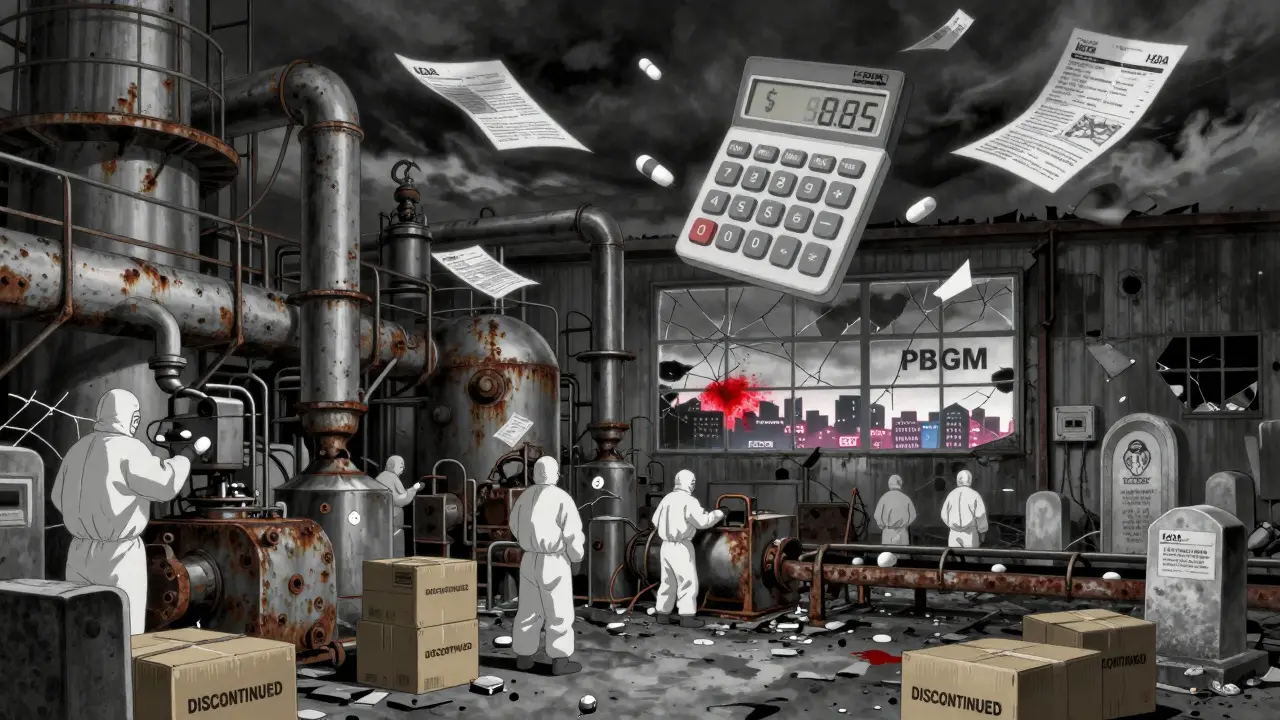
People point fingers at big pharma, but the problem isn’t Pfizer or Merck. It’s the system built around generic drugs. These are low-margin, high-volume products. They’re essential. And they’re treated like commodities.
Meanwhile, brand-name drugs-those with patents-can raise prices freely. In 2025, the average price increase for patented drugs was 6.3%. Generic drugs? Zero. In fact, prices for generics dropped 1.2% on average last year. That’s because buyers (hospitals, PBMs, government programs) keep pushing for lower costs. But they don’t factor in the cost to produce.
And then there’s regulation. The FDA approves new manufacturers slowly. It takes 18-24 months to get a new facility certified. In 2024, the FDA received 142 applications for new generic drug facilities. Only 37 were approved. The backlog? Over 500 pending. That’s not bureaucracy-it’s a bottleneck that keeps supply tight.
Some manufacturers are trying to adapt. A few have started vertical integration-owning their API supply chains. One company, MedPharm Solutions, now grows its own precursor chemicals in controlled facilities in Texas and Kentucky. It cut its API costs by 22% in 14 months. But that’s expensive. It takes $150 million in capital and years to build. Most small manufacturers can’t afford it.
Others are shifting to “strategic niches.” Instead of making 50 low-margin drugs, they focus on 5 that are essential but underproduced. They charge slightly more-just enough to survive. The FDA has started a “Critical Drugs List,” which gives priority review to manufacturers of those drugs. But the list only has 47 items. There are over 400 drugs in shortage.
Some states are stepping in. California passed a law in late 2025 requiring hospitals to report shortages within 24 hours and forcing insurers to cover alternative drugs at full cost. New York is considering a “manufacturing resilience fund” to subsidize domestic API production. But these are patchwork fixes. Without federal action, they won’t scale.
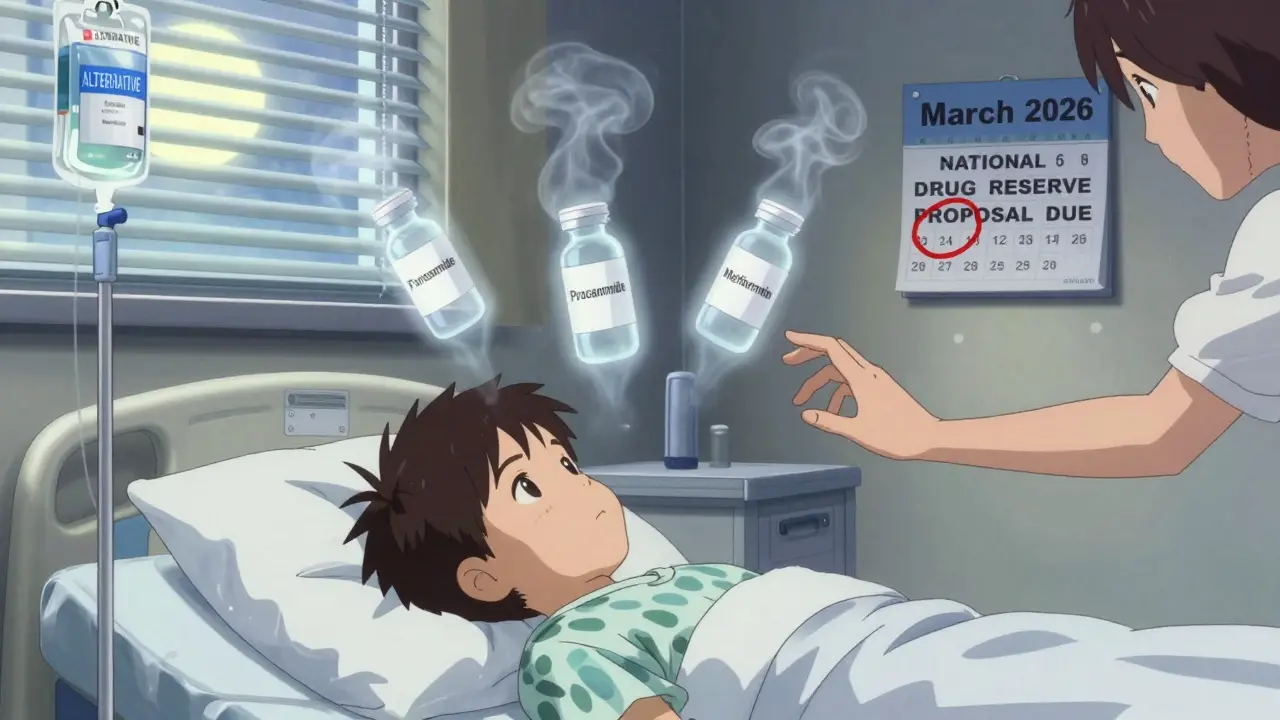
These aren’t radical ideas. They’re basic risk management. You don’t let your house burn down because you didn’t buy insurance. Why do we let lives be at risk because we didn’t fund the system that makes life-saving drugs?
They can’t. Generic drug prices are locked in by government and insurer reimbursement rates that don’t adjust for inflation. Even if production costs rise 20%, the reimbursement stays the same. Making a drug at a loss isn’t sustainable-so companies stop making it instead.
Yes. In 2024, there were 300+ drugs in shortage. By early 2026, that number hit 412. The trend is accelerating because manufacturers are leaving entire product lines due to unprofitability. The FDA’s approval backlog and global supply chain fragility make recovery slower than ever.
No, but the U.S. is uniquely vulnerable. Other countries use price controls too, but they often subsidize production or maintain national stockpiles. The U.S. relies on a free-market model with no safety net for essential generics. That’s why shortages here are deeper and longer-lasting.
Partially. Domestic production reduces supply chain risk and gives more control over quality. But it’s expensive. Building a single API facility costs $150M+. The real fix isn’t just location-it’s payment reform. If manufacturers can make a reasonable profit, they’ll invest in U.S. capacity. If not, they’ll keep outsourcing-even if it’s risky.
Patients can report shortages to the FDA’s Drug Shortages website. Ask your pharmacist if there are alternatives. Talk to your doctor about switching to a different formulation or brand. And advocate-contact your representatives. The system won’t change unless people demand it.
Without intervention, drug shortages will keep growing. More hospitals will face rationing. More patients will die because a $0.50 pill wasn’t made. The manufacturers aren’t villains-they’re victims of a broken pricing model. Fixing this isn’t about charity. It’s about basic economics: if you want something made, you have to pay enough for it to be worth making.

This is why I say capitalism without a social contract is just chaos with spreadsheets. 😔 We’re literally letting people die because we won’t pay $0.50 more for a pill that keeps them alive. The math is simple: if you don’t pay for the system, the system dies. And then we cry when the lights go out.

I’ve worked in hospital pharmacy for 18 years. This isn’t new. It’s been getting worse since 2018. The FDA backlog alone is a disaster-300+ pending applications for new generic facilities. We’re not talking about fancy biologics. We’re talking about saline, insulin, epinephrine. Basic stuff. And no one’s fixing it because it’s not profitable enough to lobby for.

The real issue is not pricing-it is the lack of state-owned production infrastructure. In India, we have public sector pharmaceutical units that produce essential drugs at cost. The U.S. system is built on profit extraction, not public health. This is not a market failure. It is a moral failure disguised as economic policy.

So let me get this straight-we let drug companies go bankrupt making life-saving drugs because we refuse to pay $1.50 instead of $1.30… and then we act shocked when people die? 🤡 The only thing more absurd than this system is the fact that we still pretend it’s ‘free market.’ It’s not. It’s a rigged game where the patients are the ones getting fleeced. And the FDA? A glorified paper-shuffler with a 2-year waitlist. #systemicfailure

The proposed solutions-reforming reimbursement, subsidizing domestic API production, and establishing a strategic reserve-are not only feasible but economically rational. The cost of a single ICU admission due to drug shortage exceeds the annual operational budget of most small generic manufacturers. A national stockpile of six to nine months’ supply would cost less than 0.2% of annual U.S. healthcare expenditures. The failure to act is not fiscal prudence-it is institutional negligence.

Oh honey, you think this is bad? Wait until you need a $0.10 antibiotic and the only thing left is a 2018 batch from a factory that got shut down because ‘the ROI wasn’t there.’ 🥲 Meanwhile, Pfizer’s CEO just bought a third private island. The system isn’t broken. It’s working exactly as designed. For someone.

America thinks it’s special because it has ‘innovation’-but when it comes to basic human needs, it outsources everything and then wonders why the pipes burst. India and China produce 80% of our APIs because we gave up on manufacturing. Now we’re crying because we don’t have insulin? Wake up. This isn’t capitalism-it’s colonialism with a pharmacy label. We need to nationalize API production. Now.

The core issue is structural misalignment between cost structures and reimbursement mechanisms. The current model incentivizes exit from low-margin, high-volume markets. A sustainable solution requires both price re-indexation and risk-sharing between public payers and manufacturers. Vertical integration, while effective for large firms, is not scalable for SMEs. A public-private partnership model-modeled after the EU’s Critical Medicines Act-would be more equitable and resilient.

We need to fix this. Now. No more excuses. The math is clear. The solutions are known. The human cost is undeniable. Let’s stop debating and start doing.

Every single one of these proposed solutions is grounded in evidence, ethics, and economic logic. The fact that they are not already implemented is not a policy failure-it is a leadership failure. We have the tools. We have the data. What we lack is the collective will to prioritize life over ledger lines. This is not a partisan issue. It is a human one.

I just cried reading this 😭 I have a kid with asthma and we’ve been on the edge of running out of inhalers twice this year. It’s not ‘just a shortage’-it’s terror wrapped in a pharmacy bag. Please, someone in Congress, PLEASE read this. We need help. Not just talk. Help. 💔💉

So we’re supposed to feel bad for the drug companies making pennies while people die? Nah. They knew the risks. They chose the business. Now they’re mad they didn’t get a bailout? Grow up. Let them go bankrupt. We’ll make the drugs ourselves.