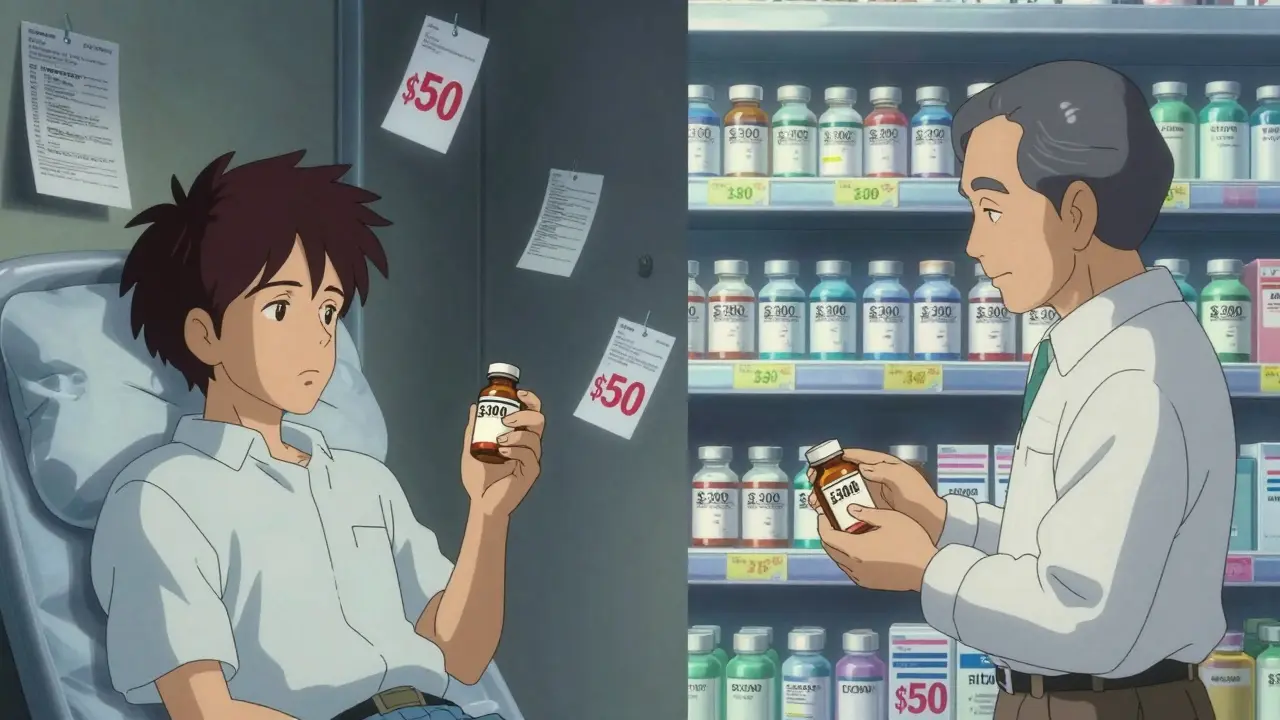
Why does a bottle of insulin cost $30 in Germany but $300 in the U.S.? Why do some people fly to Canada just to fill a prescription? The answer isn’t simple - and it’s not just about how rich a country is. Pharmaceutical prices vary wildly across the world, and the reasons behind those differences reveal deep cracks in how healthcare systems operate.
The U.S. is often called the most expensive country for medications. That’s true - but only if you’re looking at the list prices of brand-name drugs. According to the U.S. Department of Health and Human Services, Americans pay 278% more than other OECD countries for brand-name medications. For some drugs, like the diabetes treatment Jardiance, Medicare’s negotiated price in 2025 is 3.9 times higher than what Japan pays.
But here’s the twist: most Americans don’t pay list price. About 90% of all prescriptions filled in the U.S. are for generic drugs. And for those, the U.S. is actually cheaper than most other countries. Generic insulin, for example, costs around $25 in the U.S. compared to $50-$80 in Germany or the U.K. That’s because U.S. pharmacies and insurers have strong negotiating power - and a massive generic drug industry that drives prices down.
The real issue isn’t that Americans pay more for all drugs. It’s that they pay way more for the few brand-name drugs that still dominate high-cost treatments - like biologics for arthritis, diabetes, or cancer. These are the drugs that make headlines, drive insurance premiums up, and leave patients choosing between rent and refills.
Most developed countries don’t let drugmakers set prices freely. They use one of three tools: price controls, reference pricing, or government negotiation.
France and Japan consistently have the lowest drug prices in the OECD. Japan’s government negotiates every new drug price before it hits the market. If a drug costs too much, it doesn’t get covered by public insurance. That’s why Ozempic, one of the most popular diabetes drugs in the U.S., costs under $50 per month in Japan - compared to over $1,000 in the U.S. before Medicare negotiation.
Germany and the U.K. use reference pricing. If you have a drug that works like another (say, two different statins for cholesterol), the government sets one price for the whole group. If your doctor prescribes the more expensive one, you pay the difference out of pocket. That pushes manufacturers to lower prices or risk losing sales.
Australia uses a mix of both. Its Pharmaceutical Benefits Scheme (PBS) negotiates prices directly with companies and caps what patients pay - usually under $30 per script. For many drugs, Australia has the lowest price in the world. Eliquis, a blood thinner, costs just $28 a month there. In the U.S., it was $500 before Medicare negotiated it down to $185 in 2025.
For decades, the U.S. government was banned from negotiating drug prices for Medicare. That changed in 2022 with the Inflation Reduction Act. In 2023, Medicare selected 10 high-cost drugs for negotiation. The first round of prices, effective in 2025, cut costs by an average of 60% - but even those lower prices are still higher than what other countries pay.
For example:
Japan and Australia consistently have the lowest prices. Canada and Germany are next - and even their prices are often half of what Medicare pays. The U.S. is catching up, but it’s still far behind.
By February 2025, Medicare will announce the next 15 drugs for negotiation. That list includes more diabetes, heart, and cancer drugs. If the trend continues, millions of Americans could see their monthly bills drop by hundreds of dollars - but only for those specific drugs. The rest? Still priced like the U.S. is the only market that matters.
When you look beyond the OECD countries - the rich, industrialized ones - the differences get even more extreme.
A 2024 study of 72 countries found that prices for essential medicines ranged from 18% of Germany’s cost in Lebanon to 580% in Argentina. That means a drug costing $100 in Germany might cost $18 in Lebanon - or $580 in Argentina.
Why? It’s not just about income. It’s about access. In low-income countries, generic manufacturers produce cheap versions of older drugs. In places like India, Bangladesh, and South Africa, local drugmakers churn out affordable versions of HIV, hepatitis, and tuberculosis medicines - often at 1% of the U.S. price.
But in wealthier countries that don’t regulate prices tightly, like the U.S. or Switzerland, those same drugs can cost 10 to 20 times more. It’s not about production cost. It’s about who gets to decide what’s affordable.
Some economists argue that high U.S. drug prices are a trade-off: we pay more so drug companies can fund research for new treatments. But the data doesn’t support that as the whole story.
The U.S. does lead in drug innovation - but so do countries like Germany, Switzerland, and Japan. And those countries still pay far less for the same drugs. The difference isn’t R&D spending. It’s market power.
In the U.S., drugmakers have near-total control over pricing. Insurers and pharmacies negotiate behind closed doors. Patients rarely see the real cost. There’s no national price cap. No reference pricing. No public negotiation - until now.
Meanwhile, countries like Canada and the U.K. have public health systems that act as one giant buyer. That gives them leverage. One buyer, one price. The U.S. has hundreds of insurers, each with different deals. That fragmentation means drugmakers can charge whatever they want - and someone, somewhere, will pay.

If you’re in the U.S. and you take a brand-name drug, you’re likely paying more than anyone else in the world. Even with insurance, your copay might still be hundreds of dollars a month. If you’re on Medicare, the new negotiated prices could help - but only if your drug is on the list.
If you’re on a generic, you’re probably paying less than people in most other countries. That’s the U.S. paradox: we have the cheapest generics and the most expensive brand names - all in the same system.
If you’re outside the U.S., your price depends on your country’s rules. In Japan, you pay next to nothing. In Lebanon, you might not find the drug at all. In Argentina, you pay a fortune. There’s no global standard. Only national choices.
What’s clear is this: drug pricing isn’t about science. It’s about policy. It’s about politics. And it’s about who gets to decide what’s fair.
The next five years will change how drugs are priced in the U.S. More drugs will be negotiated. More patients will see lower bills. But unless the system moves beyond patchwork negotiations - and starts setting real price caps - the U.S. will still be the outlier.
For now, if you’re struggling to afford medication, know this: you’re not alone. And you’re not paying too much because you’re unlucky. You’re paying too much because the system was built that way.
The U.S. doesn’t regulate drug prices the way most other countries do. Instead of government negotiations or price caps, drugmakers set list prices and negotiate secretly with insurers. This gives them more power to charge higher prices, especially for brand-name drugs. Other countries use reference pricing, bulk negotiation, or direct government control to keep costs down.
Yes. Generic drugs in the U.S. are often 30-67% cheaper than in other developed countries. That’s because the U.S. has a large, competitive generic drug market, strong purchasing power from pharmacies and insurers, and faster approval of generic versions. While brand-name drugs cost more here, generics are a major reason why overall drug spending isn’t even higher.
Yes. Starting in 2025, Medicare is negotiating prices for 10 high-cost drugs under the Inflation Reduction Act. Prices for drugs like Jardiance, Eliquis, and Stelara have dropped by up to 70%. More drugs will be added each year, with the next list due by February 1, 2025. This is the first time the U.S. government has directly negotiated drug prices for Medicare.
Japan and France consistently have the lowest prices for both brand-name and generic drugs among OECD countries. Australia also ranks very low, especially for newer medications like Eliquis and Ozempic. Canada and Germany are next, but their prices are still significantly lower than U.S. list prices - even after Medicare negotiations.
Technically, importing prescription drugs from Canada or other countries is illegal under U.S. law. But many people do it anyway - especially for insulin, heart medications, and diabetes drugs. Some states have started official import programs from Canada, and the FDA has signaled it may allow more safe imports in the future. For now, it’s a gray area - but it’s a sign of how desperate people are for affordable meds.
In low- and middle-income countries, the problem isn’t always price - it’s availability. Supply chains are weak, local manufacturing is limited, and international drug companies often don’t prioritize selling in smaller markets. A 2024 study found that Eastern Mediterranean countries had the lowest median availability of essential medicines, even when those drugs were affordable elsewhere.

The U.S. drug pricing model is a textbook case of market failure masked as capitalism. Brand-name monopolies, no price controls, and fragmented payers create perfect conditions for rent extraction. Pharma’s R&D argument is a red herring - they spend 3x more on marketing than R&D. The real innovation is in financial engineering, not science. Medicare negotiation is a Band-Aid. What we need is reference pricing like Germany or mandatory price caps like Australia. Until then, it’s just corporate welfare with a stethoscope.

I had to choose between my insulin and my heating bill last winter. I’m not a statistic. I’m not a line item in a quarterly report. I’m a person who takes a pill every day just to stay alive - and I shouldn’t have to beg for it. The fact that we let this happen in the richest country on earth is a moral failure. No one should have to ration medicine. Not here. Not ever.

in india insulin costs like 50 rupees like 60 cents. same pill. same factory sometimes. the difference is who gets to profit. the system is rigged. period.

It’s wild how the same drugs are sold at 1/10th the price in Canada and Australia - and yet we still act like it’s impossible here. We’re not broke. We’re just choosing not to fix it. The negotiation program is a start, but it’s too slow and too narrow. We need universal price transparency. Everyone should see what the government pays for the same drug. That’d force change faster than any law.

They say Medicare is negotiating - but have you noticed how the prices still suck? It’s all staged. Big Pharma lets them pick the drugs they’ll ‘negotiate’ - the ones that already have generics coming next year. They’re playing us. The real expensive ones? The ones with no competition? Still at $4K a month. This is just theater. They want you to think it’s getting better so you stop screaming.

Fun fact: the U.S. doesn’t just pay more - we pay for the R&D of the whole world. Japan and Germany get our innovation for cheap. They use our patents, then cap prices. We’re basically subsidizing global healthcare while our own people starve for meds. It’s not capitalism. It’s colonialism with a pharmacy.
And yeah, generics are cheaper here - but that’s because we outsourced production to India and China. The U.S. doesn’t make medicine anymore. We just own the labels.

My mom’s on Stelara. She pays $180/month now after Medicare negotiation. Before? $4,500. She cried. Not because she was happy - because she realized she almost died trying to afford it for five years. This isn’t politics. It’s survival. And we’re letting it happen.

Change is coming. Slow, but real. Medicare’s next list includes 15 more drugs - diabetes, heart, cancer. That’s thousands of people who’ll suddenly breathe easier. Don’t write it off because it’s not perfect. Every dollar saved is a life less ruined. Keep pushing. Keep sharing stories. This is the beginning.

Did you know the FDA is in bed with Big Pharma? They approve drugs faster if the company promises to ‘lobby for favorable pricing.’ That’s why Ozempic got approved in 6 months - same time as a new toothpaste. The whole system is a pyramid scheme. The government, the pharma, the insurers - they all get rich. You? You’re the sucker on the bottom.

They’re not just overcharging - they’re engineering scarcity. Why do you think Eliquis costs $500 here and $28 in Australia? Because the manufacturer deliberately limits supply to non-U.S. markets to keep the U.S. price inflated. It’s not a coincidence - it’s a strategy. They want you to think it’s ‘supply chain issues’ - but it’s not. It’s a cartel. And they’re laughing all the way to the Caymans.

It’s easy to blame corporations. But what are we, as a society, willing to tolerate? We let this happen because we believe in ‘free markets’ - even when the market is rigged. We don’t want to pay higher taxes for universal pricing. We don’t want to challenge the status quo. So we accept that some people die because they can’t afford a pill. That’s not capitalism. That’s moral surrender.
The real question isn’t how to fix drug prices. It’s whether we still believe in fairness - or if we’ve given up on it.