

You probably know garlic is great for your heart and tastes amazing in a stir-fry. But if you're taking a blood thinner, there's a hidden danger you need to know about. While a few cloves of garlic in your dinner are generally fine, taking concentrated garlic supplements is a completely different story. These supplements can act as powerful blood thinners themselves, and when combined with prescription medications, they can push your bleeding risk into a dangerous zone.
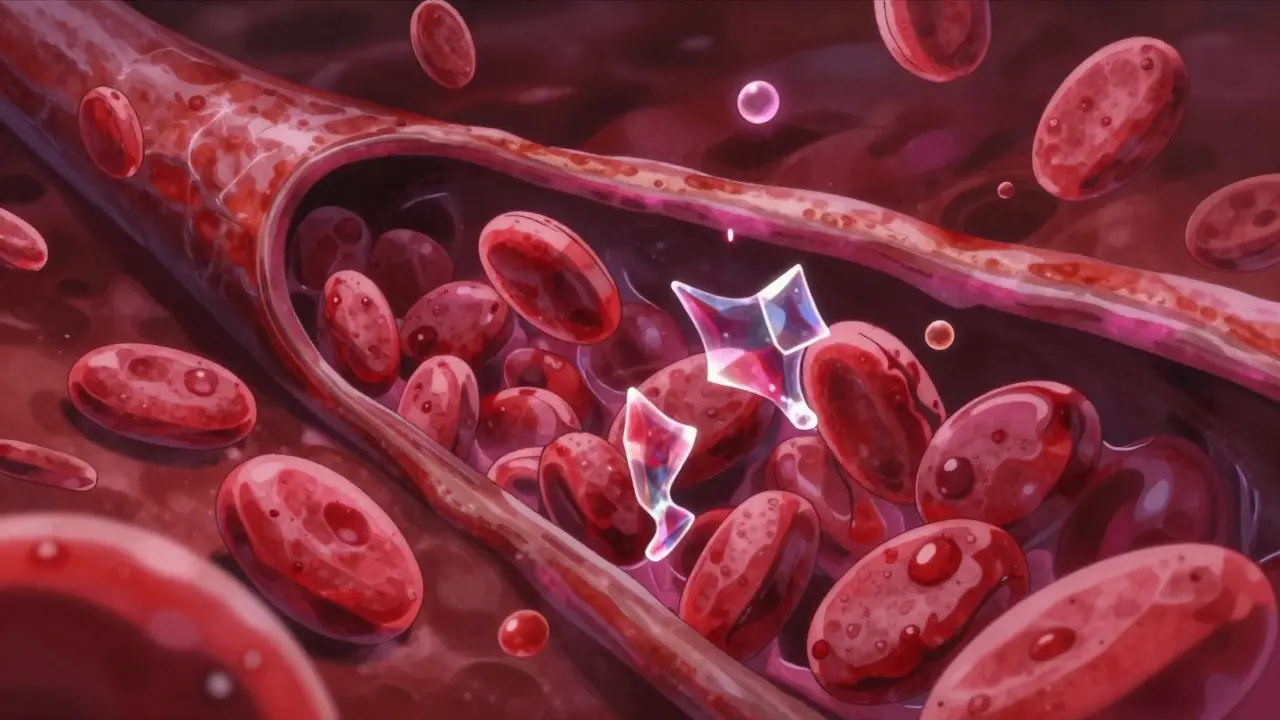
It isn't just a "natural remedy" feeling; there is hard science behind why garlic affects your clotting. Garlic contains a sulphur-containing derivative called ajoene. This compound is a potent anti-platelet agent, meaning it stops the sticky cells in your blood (platelets) from clumping together to form a clot.
The problem is that ajoene's effect is often irreversible. Once it binds to your platelets, those cells can't help your blood clot until your body creates new ones. This is why medical professionals are so concerned. In one documented case from the National Institutes of Health, two patients who weren't even on prescription blood thinners experienced uncontrolled bleeding during surgery simply because they were taking garlic supplements. The bleeding was so severe that surgeons had to switch from a simple laparoscopic procedure to a major open surgery.
When you take a prescription anticoagulant (like Warfarin or Apixaban) and add a garlic supplement, you're essentially doubling down on the blood-thinning effect. This creates a "synergistic" risk where the combined effect is stronger than either one alone.
Depending on your medication, the risks vary slightly:
| Form of Garlic | Typical Dose | Risk Level | Primary Concern |
|---|---|---|---|
| Fresh Cloves (Food) | 1-2 cloves/day | Low | Generally safe for most users. |
| Standard Supplements | 600mg - 1,200mg | High | Significant antiplatelet activity. |
| Oil Macerates | Variable | Very High | Highest concentration of ajoene. |
| Aged Garlic Extract | 480mg/day | Moderate to High | Prolonged bleeding times (aPTT). |
If you've been taking garlic supplements while on blood thinners, you need to be vigilant. Bleeding doesn't always look like a gaping wound; it often starts subtly. Keep an eye out for these red flags:
If you're planning a medical procedure-even a dental extraction-you must be honest with your surgeon about your supplement use. Because ajoene inhibits platelets irreversibly, you can't just stop taking the pill the morning of the surgery.
The gold standard for safety is to stop all garlic supplements at least seven days before any operative intervention. This window allows your body to produce a fresh supply of functional platelets. Data shows a massive difference in outcomes: patients who stopped garlic 7 days prior had blood loss similar to people not taking supplements at all. However, those who stopped only 3 days prior had significantly higher blood loss and a much higher rate of needing blood transfusions during surgery.
For those on long-term Warfarin therapy, the University of California San Diego suggests that if you start or stop a supplement, you should have your INR monitored within 48 to 72 hours. Your doctor may need to adjust your dose by 10-25% to keep you in the safe zone.

A common question is: "Can I still eat garlic in my food?" The answer is almost always yes. Using garlic as a spice-adding a few cloves to your pasta or roast-is unlikely to have a clinically significant impact on your clotting. The danger lies in the concentration.
Supplements extract and concentrate the bioactive compounds. For example, a single capsule might contain the equivalent of many more cloves than you'd ever reasonably eat in one sitting. Dr. Pieter Cohen from Harvard Medical School has pointed out that there's little evidence that taking a pill is any better for your heart than simply eating garlic in your meals. Given the bleeding risks, sticking to the kitchen instead of the pharmacy is a much safer bet.
If you're avoiding garlic to lower your bleeding risk, be careful not to swap it for another "natural" blood thinner. Many herbal supplements share the same antiplatelet properties. If you are on anticoagulants, be cautious with:
It is generally not recommended. While most data is based on Warfarin, garlic supplements can increase the bleeding risk for all direct oral anticoagulants (DOACs) like Apixaban by inhibiting platelet function, which compounds the drug's effect.
Not necessarily. While oil macerates have the highest concentration of ajoene, studies show that aged garlic extract also significantly prolongs bleeding time and increases aPTT levels. Any concentrated form of garlic should be discussed with your doctor.
Because the inhibition of platelets by ajoene is irreversible, you must wait for your body to generate new platelets. This typically takes about 7 days, which is why surgeons require a one-week washout period before operations.
No. Culinary use (1-2 cloves daily) is generally considered safe for those on blood thinners and does not provide the same concentrated dose of ajoene found in supplements.
Contact your surgical team immediately. They may need to perform a platelet function test (like the PFA-100) to see if your clotting is compromised. In some cases, they may delay the surgery or prepare a platelet transfusion to ensure your safety.