When you pick up a prescription, you might see two options: the brand name drug you recognize, or a cheaper generic version. You might wonder-are generic drugs really as safe as the brand name ones? The answer isn’t just yes, it’s backed by a rigorous, science-driven system that’s been refined over 40 years. The U.S. Food and Drug Administration (FDA) doesn’t just approve generics because they’re cheaper. They approve them because they must meet the exact same safety and effectiveness standards as the original drug.
It’s not enough for a generic drug to have the same active ingredient. The FDA requires that every generic version matches the brand name drug in four key ways: the same active ingredient, the same strength, the same dosage form (like tablet, capsule, or injection), and the same way it’s taken (by mouth, injected, applied to the skin, etc.). This is called pharmaceutical equivalence.
But here’s where most people get confused: generics don’t have to look the same. They can be a different color, shape, or size. They can even have different fillers, dyes, or flavors-these are called inactive ingredients. That’s why your generic pill might look nothing like the brand version. But those differences don’t affect how the drug works in your body. The FDA only allows changes to inactive ingredients if they don’t change how the drug is absorbed or how safe it is.
The real test for a generic drug isn’t just what’s in it-it’s how your body handles it. That’s where bioequivalence comes in. The FDA requires that a generic drug delivers the same amount of active ingredient into your bloodstream at the same rate as the brand name drug. They measure this using two key numbers: Cmax (the highest concentration in your blood) and AUC (how much of the drug your body is exposed to over time).
To be approved, the generic’s Cmax and AUC must fall within 80% to 125% of the brand name drug’s values. That might sound like a wide range, but it’s based on decades of clinical data showing that within this range, patients experience the same therapeutic effect and side effect profile. For most drugs, this works perfectly.
But for drugs with a narrow therapeutic index-like warfarin, levothyroxine, or certain seizure medications-the standard is tighter. Here, the FDA requires the range to be 90% to 111%. These are drugs where even small differences in blood levels can lead to serious problems. The FDA knows this, so they apply extra scrutiny.
Generics aren’t made in back-alley labs. Every facility that makes generic drugs-whether in the U.S., India, or Germany-must follow the same strict rules as brand name manufacturers: Current Good Manufacturing Practices (cGMP). This means:
The FDA inspects these facilities regularly. In 2022, over 70% of generic drug manufacturing sites were overseas. The FDA increased inspections of these foreign sites by 22% since 2020 to ensure quality isn’t compromised by distance.
Impurities are also tightly controlled. The FDA follows international guidelines (ICH Q3B and ICH M7) to limit harmful substances. For example, any potential carcinogen must be kept below 1.5 micrograms per day-so low it’s practically negligible. This isn’t a suggestion. It’s a legal requirement.
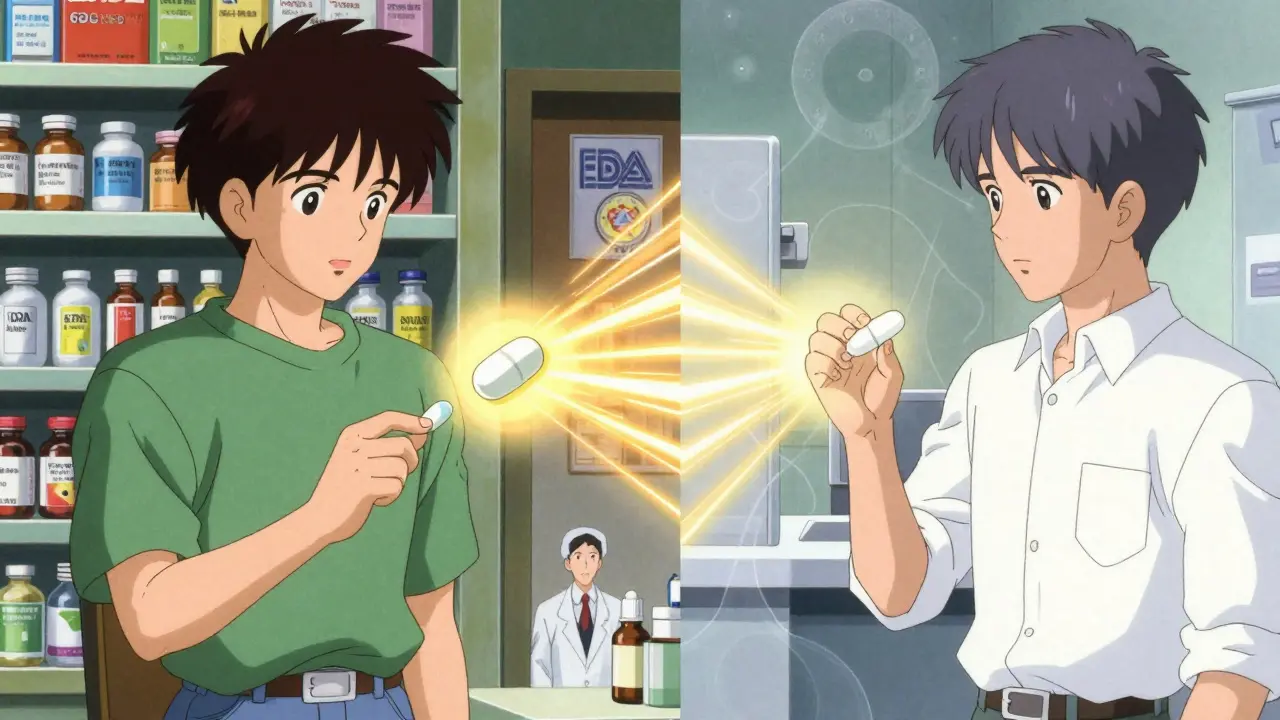
Generic drug labels must be identical to the brand name’s, except for the manufacturer’s name, packaging size, and inactive ingredients. That means side effects, warnings, dosing instructions, and contraindications are exactly the same. If the brand name drug warns about dizziness or liver damage, the generic must say the same thing.
There’s one recent change worth noting: since late 2022, the FDA proposed allowing generic manufacturers to update safety labels on their own-without waiting for the brand name company to act first. This closes a long-standing gap where patients might be exposed to outdated safety information for months or even years.
Not all drugs are created equal. Simple pills are easy to copy. But inhalers, eye drops, creams, and injectables? These are far more complex. The active ingredient might be the same, but how it’s delivered matters. For example, a generic inhaler must match the brand’s particle size, spray pattern, and dose consistency-not just the chemical.
The FDA reports that 25% more ANDA applications for complex generics get rejected than for regular pills. Some require special testing: comparing lung deposition for inhalers, or measuring skin absorption for topical creams. In some cases, the FDA even asks for small clinical studies to prove equivalence.
Take glatiramer acetate (Copaxone), used for multiple sclerosis. A generic manufacturer petitioned the FDA in 2013 to require immunogenicity testing because they believed standard bioequivalence wasn’t enough. The FDA agreed this was a special case-and now, for similar complex biologics, additional testing is often required.
Studies don’t lie. A 2022 analysis of 38,000 Medicare patients found no difference in heart attack or stroke rates between those taking brand-name statins and those taking generics. Another study of 12,500 patient reviews on Drugs.com showed 87% reported no difference in effectiveness for cardiovascular generics.
Neurologists, who treat epilepsy and other conditions requiring precise dosing, are divided. A 2021 survey found 68% felt confident in generic antiepileptics. But only 42% felt the same about complex MS drugs. That’s not because generics are unsafe-it’s because the science for complex delivery systems is still catching up.
Patients on levothyroxine often report feeling different on a generic version. The FDA’s bioequivalence range for this drug is 90-111%, which is tight. But even within that range, small variations in inactive ingredients might affect absorption in sensitive individuals. That’s why many doctors stick with one brand for thyroid patients-sometimes not because of safety, but because consistency matters more than cost.
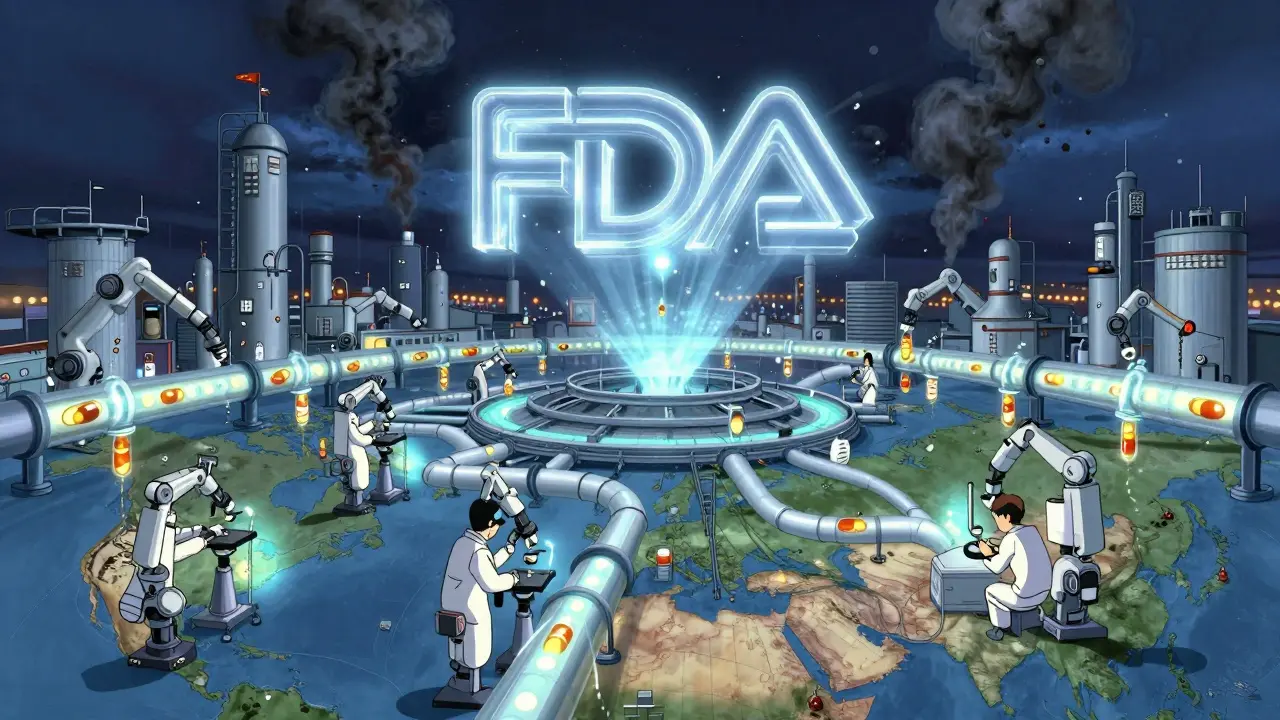
Getting a generic drug to market isn’t quick. It takes 18 to 36 months from development to approval. The process includes:
The FDA approved over 1,000 generic drugs in 2022 alone. Thanks to the Generic Drug User Fee Amendments (GDUFA), which lets manufacturers pay fees to fund faster reviews, approval times dropped by 35% since 2012.
Generics make up 90% of all prescriptions filled in the U.S., but they cost only 23% of total drug spending. In 2022, Americans saved over $313 billion by using generics instead of brand names. That’s not just good for wallets-it’s good for public health. When drugs are affordable, people take them as prescribed. Blood pressure meds get taken. Insulin gets used. Seizure drugs aren’t skipped.
The FDA’s system isn’t perfect. Complex drugs are still a challenge. Some patients report differences. But the data is clear: for the vast majority of people, generics are just as safe and effective as brand name drugs. The FDA doesn’t cut corners. It just cuts the cost of repeating research that’s already been done.
The FDA is investing in new tools to keep up with evolving drug technology. In 2024, they’re launching a pilot program with MIT using artificial intelligence to predict harmful impurities before they appear in production. They’re also developing advanced modeling techniques to replace some animal and human bioequivalence studies with computer simulations.
And they’re not stopping. The Congressional Budget Office warns that without a 15% funding increase to GDUFA by 2027, review times will creep back up. That could delay access to affordable generics. But for now, the system works. It’s strict, it’s science-based, and it keeps millions of Americans safe while saving billions.
Yes. The FDA requires generic drugs to meet the same strict safety, strength, quality, purity, and performance standards as brand name drugs. They must contain the same active ingredient, work the same way in the body, and be manufactured under the same rules. The only differences allowed are in color, shape, flavor, or inactive ingredients-none of which affect safety or effectiveness.
U.S. law prohibits generic drugs from looking exactly like brand name drugs to avoid confusion and protect trademarks. So generics may have different colors, shapes, or markings. But these are only cosmetic changes. The active ingredient, dosage, and how your body absorbs the drug are identical.
The side effects listed on the label are the same as the brand name drug. However, some people may react differently to inactive ingredients-like dyes or fillers. For example, someone allergic to a specific dye in a brand pill might have a reaction to the generic if it uses the same dye. These reactions are rare and unrelated to the drug’s effectiveness. If you notice a new side effect after switching, talk to your doctor or pharmacist.
Many are. In fact, over half of all generic drugs in the U.S. are made by the same companies that produce brand name drugs. Others are made by specialized generic manufacturers, but all must meet the same FDA inspection standards. The FDA inspects both U.S. and foreign facilities using the same criteria-no exceptions.
These are harder to copy. The FDA requires additional testing for complex generics-like matching particle size in inhalers or skin absorption in creams. Approval rates are lower, and review times are longer. But the safety standards are just as strict. The FDA has a special program to develop new testing methods for these drugs, and many now require clinical studies to prove they work the same way.
For most people, this isn’t true. But for drugs with a narrow therapeutic index-like thyroid medication or blood thinners-even small changes in absorption can make a difference. Some patients are sensitive to inactive ingredients or have inconsistent absorption patterns. If you feel different after switching, don’t assume the generic is faulty. Talk to your doctor. You may need to stick with one version for consistency, even if it costs more.
The FDA inspects foreign manufacturing sites just like U.S. ones. In 2022, over 70% of generic drug production happened overseas. Since 2020, the FDA has increased inspections of these sites by 22%. They use risk-based assessments and can refuse to import any product that doesn’t meet standards-even if it’s approved.

I switched to generics years ago and never looked back. My blood pressure med costs me $4 a month now instead of $150. My body didn't notice the difference and neither did my bank account. Seriously, why are people still scared of these?

People think the FDA is some saintly guardian but let me tell you something the system is built on loopholes and corporate favors. They approve generics because it saves money not because it's safer. You think they really care if your thyroid meds are 91% bioequivalent or 89%? Nah they care about quarterly profits

I used to be super skeptical too but my pharmacist sat me down one day and showed me the FDA's bioequivalence charts. Honestly it made me feel better than the brand ever did. Also my cat who hates pills now takes her meds without a fight because the generic is smaller and less chalky lol

Just want to add that the cGMP standards for overseas plants are insane. I worked in pharma quality control for a decade and let me tell you the audits are brutal. One time a facility in India got shut down because a technician used the wrong glove type during packaging. That's how serious they are. Don't let the country of origin scare you.

I switched to a generic levothyroxine and felt like I was slowly turning into a zombie 😭 My heart was racing at 3am and I couldn't breathe. My doctor said it was "within FDA limits" but what does that even mean when you're barely functional?? I went back to brand and now I'm alive again. #GenericTrauma

I work in a pharmacy in Delhi and we ship generics to the US every week. The same machines that make your brand drugs make ours. The same inspectors come. The only difference is the label. People think because it's cheaper it's lesser but that's like saying a handmade clay pot is weaker than a porcelain one just because it costs less. Both hold water just fine

I read somewhere that 70% of generics are made by the same companies that make the brand names... so like... we're all just paying for the marketing? Like the pill is literally identical but the box has a different logo and we're supposed to believe it's different? Madness

The FDA's bioequivalence range of 80-125% is statistically robust and validated by over 40 years of pharmacokinetic data. However, for narrow therapeutic index drugs, the 90-111% range is empirically derived from clinical outcome studies. The variability in patient response is not due to inferior manufacturing but rather inter-individual pharmacogenomic differences. The FDA's recent allowance for generic manufacturers to update safety labeling independently represents a significant advancement in pharmacovigilance and patient safety infrastructure.