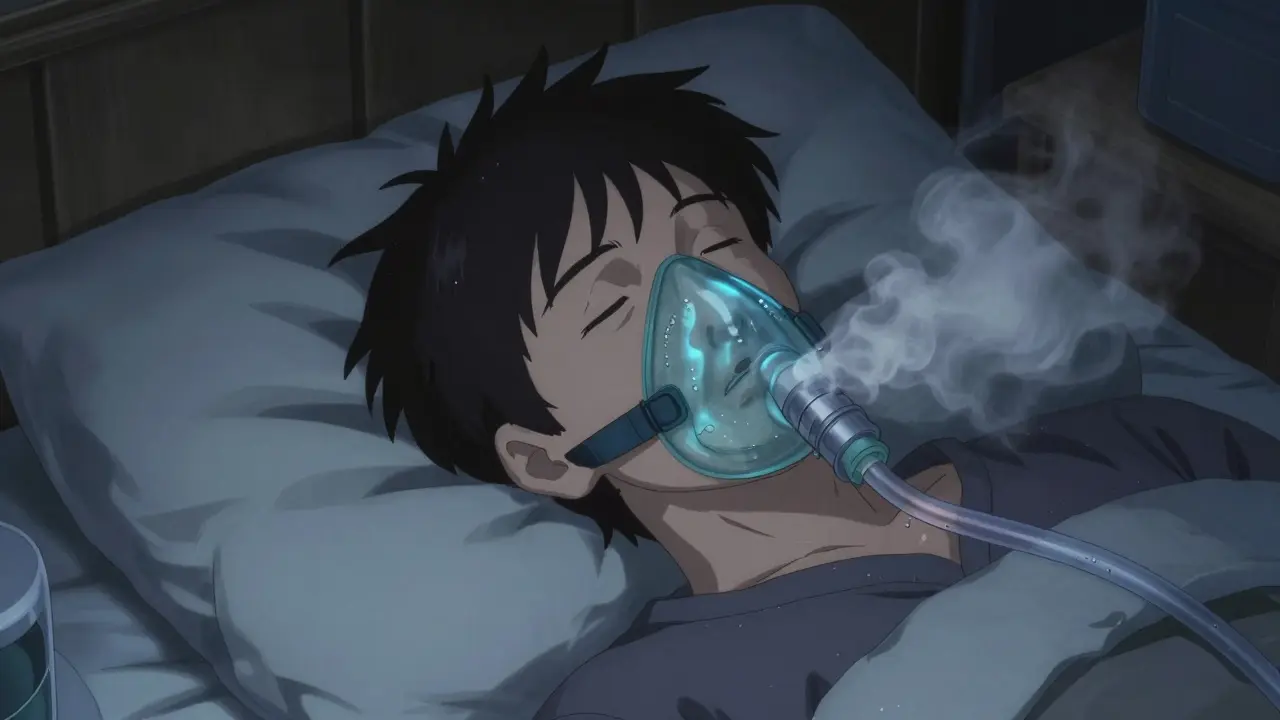
Getting used to CPAP therapy isn’t just about putting on a mask and falling asleep. For many, the real challenge starts after the first night: dry mouth, air leaking out of the mask, or feeling like the pressure is too high-or too low. These aren’t rare problems. CPAP dry mouth affects nearly half of users, mask leaks are reported by over half, and pressure discomfort is one of the top reasons people quit therapy altogether. The good news? Most of these issues can be fixed without replacing your machine or giving up on treatment.
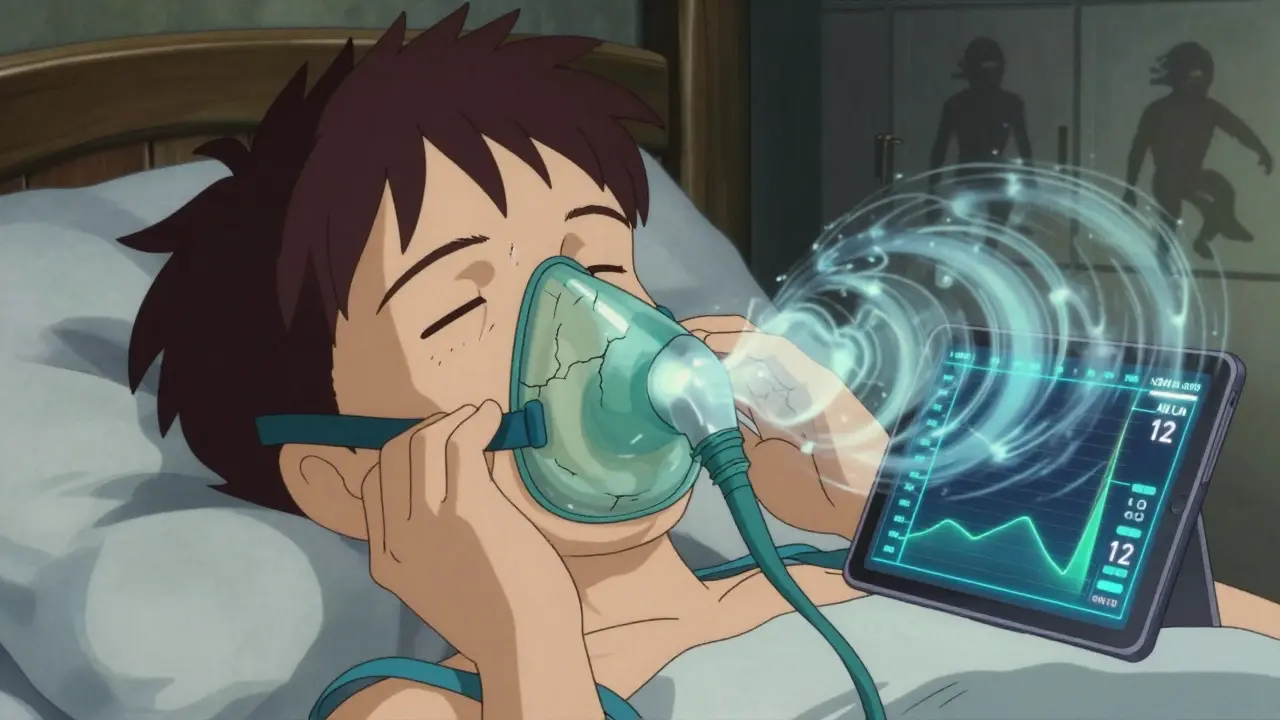
Dry mouth on CPAP isn’t caused by the humidifier being too weak-it’s caused by mouth breathing. When you breathe through your mouth during sleep, the pressurized air escapes and dries out your throat. A humidifier adds moisture to the air, but it can’t stop air from escaping. The solution is to prevent mouth breathing: use a chin strap or switch to a full-face mask.
Modern CPAP machines track leaks in real time. A leak over 24 liters per minute is considered significant and can reduce therapy effectiveness. If your machine shows a leak above this level for several nights in a row, it’s time to check your mask fit. You can also listen for a hissing sound or feel air blowing on your face while the machine is on. If you notice either, tighten the headgear or replace the cushion.
Most machines allow minor adjustments-usually ±2 cm H2O-but going beyond that voids your warranty and can be unsafe. Pressure settings are based on your sleep study results and should be adjusted by a sleep specialist. If you feel your pressure is too high or too low, use your machine’s data (AHI, leak rates) and contact your provider. They can review your usage remotely and recommend a safe adjustment.
Replace your mask cushion every three months. Over time, the silicone softens, stretches, or develops tiny cracks that cause leaks. Even if it looks fine, it’s likely lost its seal. Most DME providers recommend replacement every 90 days. If you notice air escaping, red marks, or discomfort, replace it sooner.
No-if your machine is working properly and you’re using it correctly, your apnea-hypopnea index (AHI) should be below 5. If you’re still having events, check for leaks, mask fit, or pressure settings. AHI above 5 for three straight nights means your therapy isn’t effective. Talk to your sleep specialist. It could be a simple fix: a new mask, adjusted pressure, or a different sleep position.

I started CPAP last year and thought I was doomed. Dry mouth had me waking up every hour like a desert nomad. Then I tried a chin strap-$12 from Amazon-and it changed everything. No more midnight thirst. No more weird tongue feel. I didn’t even need to change my mask. Sometimes the fix is just… simple.
Still use humidifier at level 3. Too high and I get rainout. Too low and I’m back to square one. Balance is everything.

OMG YES THIS!! I was about to quit until I found out about the cushion replacement thing. I was using the same one for over a year 😳 and it was leaking like a sieve. Changed it at 3 months like u said and now I sleep like a baby. Also EPR was a game changer. My machine used to feel like a jet engine trying to blow my face off. Now it’s like a gentle breeze. Thank u for this post!! 🙌

Thank you for the comprehensive breakdown. Many patients are unaware that mask leaks are often due to headgear tension-not cushion quality-and that pressure settings are not static. It’s critical to emphasize that therapy effectiveness is measured not by comfort alone, but by objective metrics like AHI and leak rates. Regular follow-ups with a sleep specialist should be treated as part of routine care, not an afterthought. This kind of clarity reduces abandonment rates significantly.

I had the dry mouth thing too. Tried humidifier on max, then on min, then everything in between. Nothing worked. Then my wife said, ‘Why not just tape your mouth shut?’ I was like… wait what? So I got a chin strap. Took two nights to get used to it. Now I forget I’m even wearing it. Best $15 I ever spent.
Also-clean your filter. I didn’t for months and my machine sounded like a dying vacuum. Changed it once a month and it’s quiet again. Simple stuff matters.

The assertion that ‘most leaks are fixed by adjusting headgear’ is statistically misleading. The cited 72% figure lacks a source, and no peer-reviewed study supports this as a universal rule. Moreover, recommending a humidifier setting of 3-4 ignores individual physiological variability. Some patients require higher humidity due to nasal atrophy, others lower due to rhinitis. This post dangerously oversimplifies a complex clinical issue under the guise of ‘easy fixes.’

THIS. THIS. THIS. I thought I was broken. I cried the first week. My husband thought I was dramatic. I was SO ANGRY. Then I tried the chin strap and full face mask and it was like magic. I slept 8 hours straight for the first time in 3 years. I’m not even joking. I hugged my CPAP machine. I named it Bob. Bob is my hero. 🥹💖

I’ve been on this for 7 years. I’ve tried everything. The machine is garbage. The whole system is designed to keep people dependent. You think you’re getting better? You’re just being fed more gear. They make you replace cushions every 90 days. That’s a scam. I’m done. I’m sleeping with my mouth open now. Let the apnea come. I’m tired of fighting a machine that doesn’t care if I live or die.

This was so helpful! I didn’t realize pressure could be too low. I thought more was always better. My AHI was stuck at 8 for months and I thought I was doing great. Then I checked the data and realized my leaks were through the roof. Changed cushion, tightened straps, lowered pressure by 1.5. AHI dropped to 2.5 in a week. I didn’t even know my machine showed all this. Thank you for the nudge to look deeper.

Why do you people think this is a medical solution? The real problem is sleep position. You sleep on your back? That’s why you have apnea. No machine will fix that. Stop wasting money. Sleep on your side. Use a pillow. Or better yet-lose weight. This whole industry is built on fear and unnecessary equipment. You’re being manipulated.

Let’s be real-this is all corporate propaganda. The sleep industry is a $12B pyramid scheme. Those ‘smart’ machines? They’re data harvesting tools. Your AHI, your leak rates, your breathing patterns-all fed into proprietary algorithms owned by ResMed and Philips. They’re not helping you. They’re building behavioral profiles for insurance underwriting. The chin strap? A Band-Aid. The real fix? Government regulation. Demand open-source CPAP firmware. Stop feeding the machine oligopoly.