
Every year, about 1 in every 1,000 contact lens wearers ends up with a serious eye infection. That might sound rare, but if you’re one of them, it’s not. These infections don’t just cause redness and pain-they can lead to corneal ulcers, permanent vision loss, and treatment bills that hit $7,500 or more. And the worst part? Most of these cases are completely preventable.
You don’t need fancy gadgets or expensive products to keep your eyes safe. You just need to follow a few simple rules, every single time. But here’s the truth: most people don’t. Studies show only 53% to 77% of contact lens users wash their hands properly before touching their lenses. That’s a huge gap between what doctors say and what people actually do.
Your hands are dirty. Always. Even if they look clean. They touch doorknobs, phones, money, pets, and your own face-then you reach for your contact lenses. That’s how bacteria, fungi, and even parasites like Acanthamoeba get into your eye.
Washing your hands isn’t a quick rinse. You need soap and water. Scrub for 20 to 30 seconds. That’s about the time it takes to sing "Happy Birthday" twice. Don’t skip the thumbs, fingertips, or under the nails. Dry with a lint-free towel. Paper towels are best. Cloth towels can harbor germs.
And no, alcohol wipes or hand sanitizer won’t cut it. They leave residue that can stick to your lenses and burn your eyes. They also don’t remove dirt or oils the way soap does. If you’re in a rush, wash your hands anyway. Your vision isn’t worth skipping this step.
Tap water isn’t sterile. It’s full of microorganisms. Some are harmless. One isn’t: Acanthamoeba. This tiny parasite lives in water pipes, showers, swimming pools, and even bottled water. When it gets on your lens, it burrows into your cornea. The result? Acanthamoeba keratitis.
This infection is brutal. It’s hard to diagnose. It’s hard to treat. And it often leads to permanent vision damage. The CDC says swimming or showering with contacts increases your infection risk by 10 to 15 times. That’s not a suggestion. That’s a warning.
And don’t think rinsing your case with water is safe. It’s not. Even if you think you’re just rinsing it out. The same goes for using saliva to wet a lens. Don’t do it. Ever. Your mouth has bacteria too.
Not all solutions are the same. Your lenses are made from specific materials. Your solution has to match. Using the wrong one can make your lenses brittle, crack them, or leave toxic residue.
Saline solution? That’s just salt water. It doesn’t disinfect. It’s only for rinsing lenses before insertion-after they’ve already been cleaned and disinfected. Rewetting drops? Those are for comfort while wearing, not cleaning. Never use them to store lenses.
Hydrogen peroxide systems are great for deep cleaning, but they need time to neutralize. Wait 4 to 6 hours after disinfection before putting lenses in. Never rinse lenses with hydrogen peroxide right before wearing. You’ll burn your eye.
Always use the solution your eye care professional recommends. If you’re not sure, ask. Don’t switch brands because it’s on sale. Don’t use your friend’s solution. Don’t buy the cheapest one. Your eyes aren’t a place to cut corners.
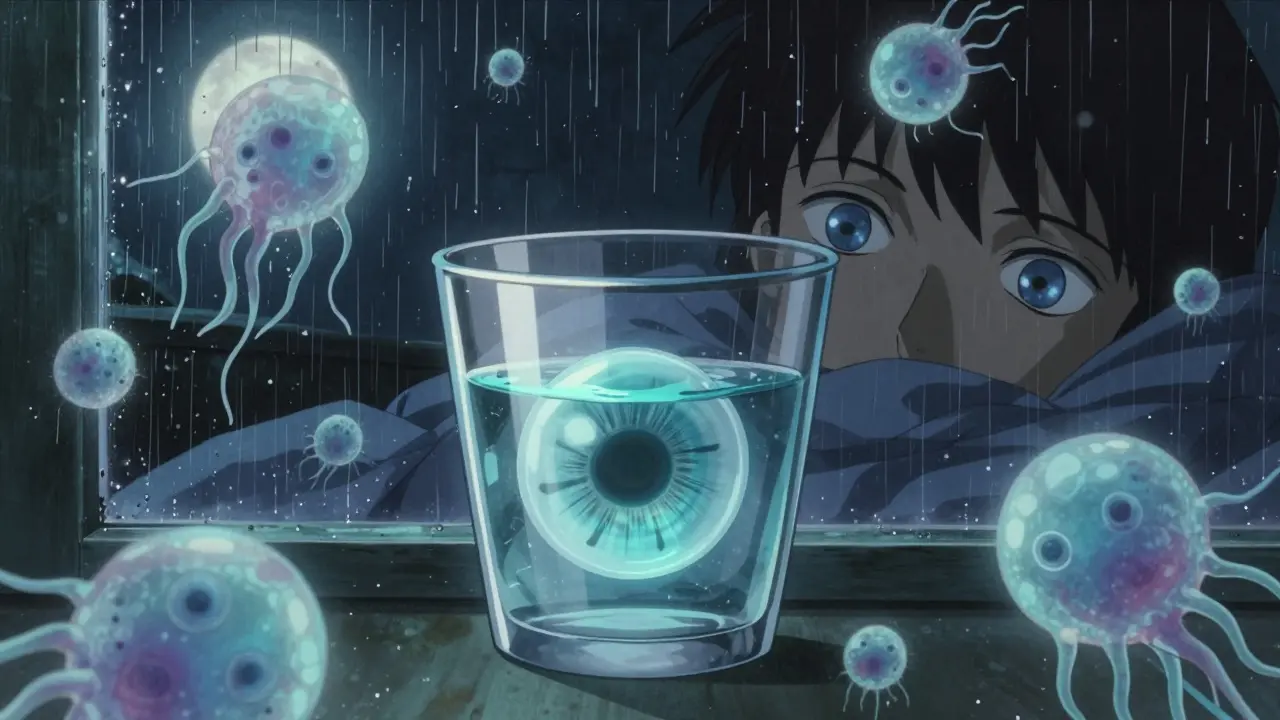
Your lens case is a germ factory. If you’re not replacing it regularly, you’re basically storing your lenses in a bacterial soup.
Replace your case every three months-no exceptions. Many people wait six months or longer. That’s a mistake. Even if it looks clean, biofilm builds up. That’s a slimy layer of microbes that disinfecting solutions can’t fully kill.
After each use, empty the case. Rinse it with fresh solution-not water. Then leave it open, upside down, to air dry. Never close the case with solution inside. That’s a breeding ground. And never top off old solution with new. That cuts disinfection power by 30% to 50%. Always start fresh.
Unless your doctor specifically prescribed extended-wear lenses, you should never sleep in them. That’s true even if you’re just napping. Your cornea needs oxygen. Lenses block it. When you sleep, your eyes produce less tear flow. That’s when infections take hold.
Studies show 40% to 50% of users sleep in lenses not meant for overnight wear. That’s the #1 cause of preventable corneal ulcers. And it’s especially common in teens and young adults. The FDA says 85% of contact lens complications happen in people aged 18 to 24.
Remove lenses before swimming, showering, or even washing your face. If water gets on your lenses, take them out, clean them with fresh solution, and disinfect them. If you’re wearing daily disposables, just throw them away and use a new pair.
Follow your replacement schedule. Daily, biweekly, monthly-stick to it. Don’t stretch them. Even if they feel fine. Lenses break down over time. They collect protein deposits and bacteria. The longer you wear them past their date, the higher your risk.
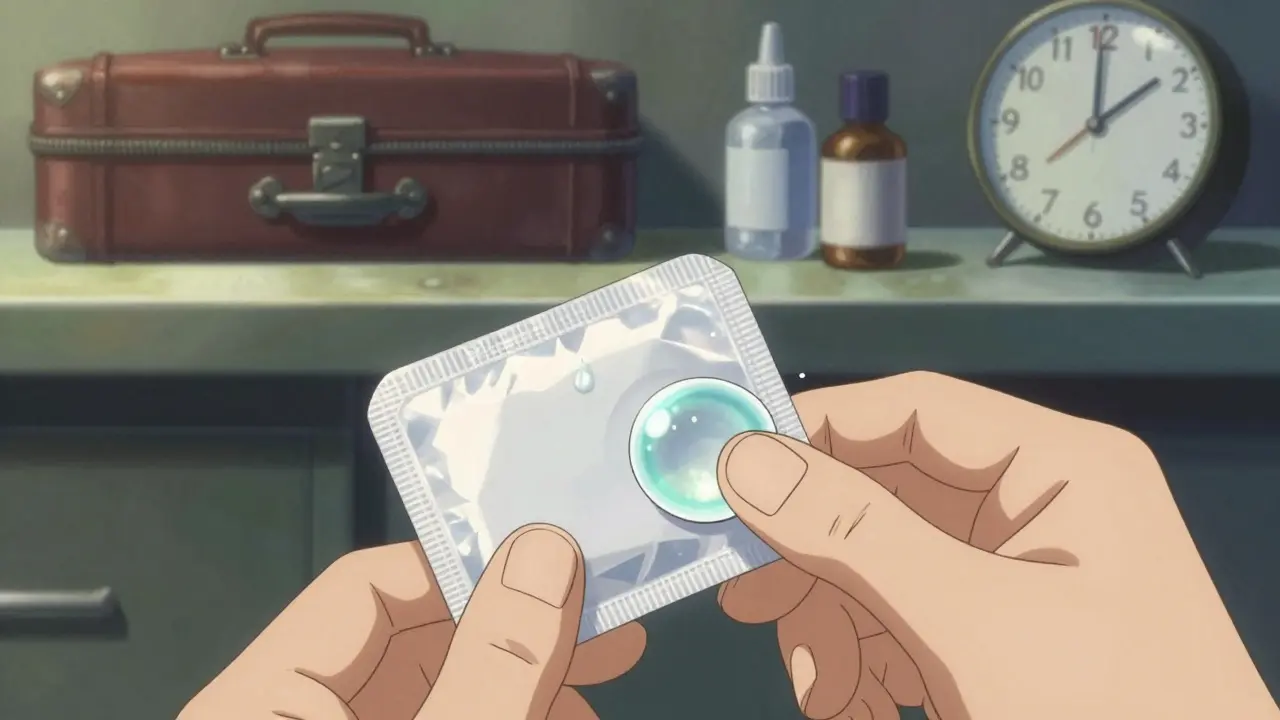
More than 65% of contact lens users in the U.S. now wear daily disposables. That’s up from 45% in 2018. And it’s not just a trend-it’s a safety win.
No case. No solution. No cleaning. No risk of contamination from storage. You open a new pair every morning, wear them all day, and toss them at night. Simple. Clean. Safe.
They cost more per pair, but you save money on solutions and cases. And you save your vision. If you’ve had an infection before, or if you’re someone who forgets to clean lenses, daily disposables are the smartest choice.
One Reddit user wrote: "Woke up with a painful red eye after sleeping in dailies once. Never doing that again." That’s not an exaggeration. That’s a real story.
Another user said: "Since I started replacing my case every month and never topping off solution, I’ve had zero infections in two years." That’s the power of consistency.
Don’t wait for pain to start following the rules. By the time your eye hurts, the damage might already be done. The CDC estimates 80,000 to 100,000 contact lens-related infections happen in the U.S. each year. The UK sees 6 to 8 cases of Acanthamoeba keratitis per 10,000 users-higher than anywhere else in the world.
These aren’t just numbers. They’re people. People who lost vision. People who spent thousands on treatment. People who wish they’d listened.
There’s no magic trick. No shortcut. No app that reminds you. Just discipline. Every day. Every time. Your eyes will thank you.
No. Saline solution only rinses lenses-it doesn’t disinfect them. Using it to clean or store lenses puts you at risk for serious eye infections. Always use a proper disinfecting solution recommended by your eye care professional.
Only if your eye doctor specifically prescribed extended-wear lenses. Most contact lenses aren’t designed for overnight use. Sleeping in them blocks oxygen to your cornea and increases infection risk by up to 10 times. Even a short nap can cause problems.
Replace your lens case every three months. Many people wait longer, but biofilm builds up even in clean-looking cases. For extra safety, replace it every month-especially if you’ve had an eye infection before.
No. Daily disposables are designed to be worn once and thrown away. Reusing them-even for a second day-can cause irritation, infection, and corneal damage. They’re not made to be cleaned or stored.
Acanthamoeba keratitis is caused by a parasite found in water. It’s hard to diagnose and resistant to most treatments. It can lead to permanent vision loss and requires months of expensive medication. Treatment often costs $7,500 or more. Prevention is simple: never expose your lenses to water.
If you’ve been skipping steps in your contact lens routine, don’t panic. Just start again today. Wash your hands. Use fresh solution. Replace your case. Take your lenses out before bed. Your eyes don’t need perfection-they just need consistency.

I switched to daily disposables last year after a nasty infection. No more cases, no more solution, no more stress. Just pop in a new pair every morning and toss them at night. Best decision I ever made for my eyes.

Bro I used tap water to rinse my lenses once and I'm still alive. You people are scared of everything. My grandma wore contacts for 40 years and never washed her hands. She's 89 and still sees fine. Maybe the doctors are just trying to sell you more stuff?

There's something deeply human about how we ignore the small, consistent acts of care that protect our most vital senses. We'll spend hours optimizing our coffee routine but skip handwashing because we're 'in a rush.' It's not about discipline-it's about remembering that our bodies aren't machines we can hack. They're fragile, living systems that ask for little and give so much.
Maybe the real problem isn't the lens wearers-it's the culture that tells us shortcuts are smarter than care.

Let me be perfectly clear: using water to clean your lenses is not just 'bad practice'-it is a reckless, negligent, and medically indefensible act that endangers not only your own vision, but potentially others', through cross-contamination. The CDC data is not 'suggestive'-it is categorical. And yet, people still do it. Why? Because convenience is now the only moral framework many people recognize. You want to save time? Then buy daily disposables. Or don't wear contacts at all. But don't pretend you're being 'practical' when you're just being dangerously careless.
Also, if you're 'topping off' solution-you're not saving money-you're gambling with your cornea. And no, your 'clean-looking' case isn't clean. Biofilm is invisible until it's too late.

Okay but who even made these rules? Are these guidelines written by eye doctors or by the solution companies? I swear 80% of this is just fearmongering to sell you $50 bottles of solution and $300 cases. I’ve worn my lenses for 6 months past their date and I’ve never had an issue. My eyes feel fine. Maybe the real danger is corporate greed pretending to be medical advice?

Let’s be real-this whole thing is a performance of cleanliness. You think washing your hands for 30 seconds makes you virtuous? You’re not protecting your eyes-you’re performing virtue signaling for other lens-wearers on Reddit. Meanwhile, you’re still touching your face 23 times an hour. You’re still using your phone with greasy fingers. You’re still sleeping with your contacts in because you ‘forgot.’
The truth? You don’t need rules. You need to stop touching your eyes. Period. All this handwashing and case-replacing is just distraction. The real solution? Stop wearing contacts. Glasses don’t lie.

Y’all act like you’re the only ones who’ve ever had an eye infection. I’m from Nigeria-we don’t have access to all this fancy solution and daily disposables. My sister uses boiled and cooled water to clean her lenses because it’s all she can afford. She’s had two infections, yes-but she’s still seeing. You think your $80 solution is making you holy? Some of us are just trying to see the bus stop. Stop lecturing people who don’t have your privilege.
And don’t even get me started on ‘replace your case every 3 months.’ Where? In a village with no pharmacy? You’re not helping. You’re just making people feel guilty for surviving.

Daily disposables aren’t safer-they’re just more profitable. You’re paying 10x more per lens to avoid basic hygiene. That’s not innovation. That’s corporate laziness disguised as safety. And the fact you’re all patting yourselves on the back for buying expensive plastic instead of learning to clean properly? Pathetic.