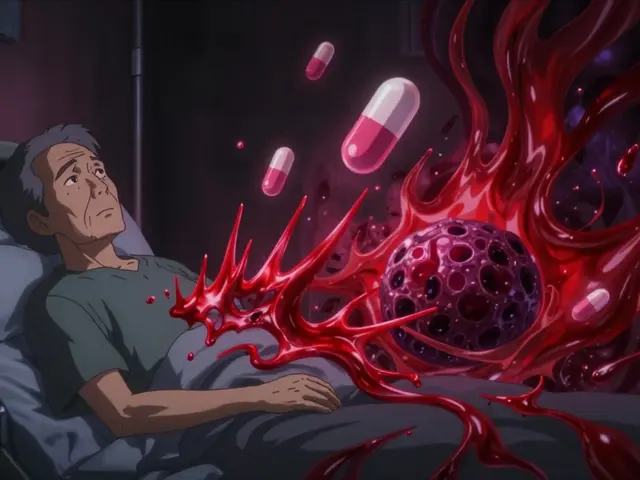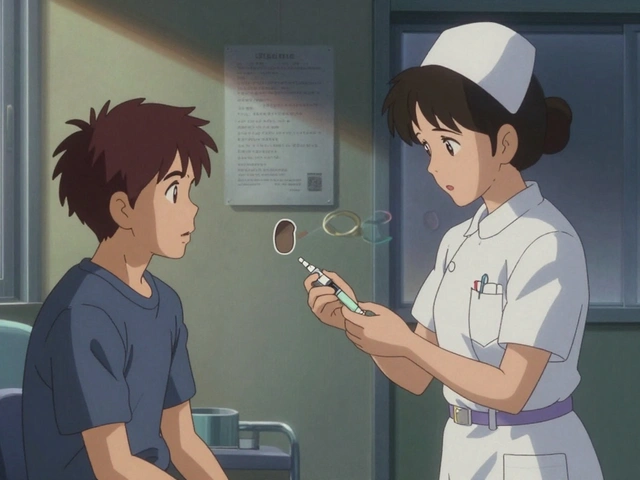

Most people think expired medications suddenly stop working on the day the label says they do. That’s not true. The truth is, medications start losing strength the moment they’re made. The expiration date isn’t a cliff edge-it’s a safety buffer. It’s the last day the manufacturer guarantees the drug still has at least 90% of its original potency, assuming it was stored properly. After that, it doesn’t vanish. It just gets weaker. And sometimes, it gets dangerous.
Take ibuprofen. It’s one of the most stable drugs out there. Studies show that even after years past its expiration date, if kept cool and dry, it often still has 90% or more of its original strength. But not all drugs are like that. Liquid antibiotics like amoxicillin suspension? They start falling apart within weeks after being mixed, even if refrigerated. Epinephrine auto-injectors like EpiPen? Their potency drops noticeably after just a few months past expiration. That’s not speculation-it’s documented in clinical studies.
The reason? Some drugs are simply more fragile. Levothyroxine, used for thyroid conditions, degrades easily with heat and humidity. Furosemide, a diuretic, can form crystals. Tetracycline antibiotics can break down into toxic compounds when exposed to light. These aren’t edge cases. They’re real risks. The FDA recalled over 400 batches of drugs between 2007 and 2012 because of exactly these kinds of degradation issues-impurities, crystals, or simply not enough active ingredient left.
Pharmaceutical companies test drugs under extreme conditions to predict how they’ll age. They put them in ovens at 40°C and 75% humidity for months to simulate years of real-world exposure. That’s how they set expiration dates. But that’s under controlled lab conditions. Your house? It’s messy. Your car in summer? Even worse.
Smart packaging helps-some new bottles have moisture barriers and oxygen-free seals-but most over-the-counter meds still come in basic plastic or glass. If you want your pills to last, store them in a cool, dry, dark place. A bedroom drawer, a kitchen cabinet away from the stove, or a dedicated medicine box in a closet. Avoid the bathroom. Avoid the car. Avoid the windowsill.
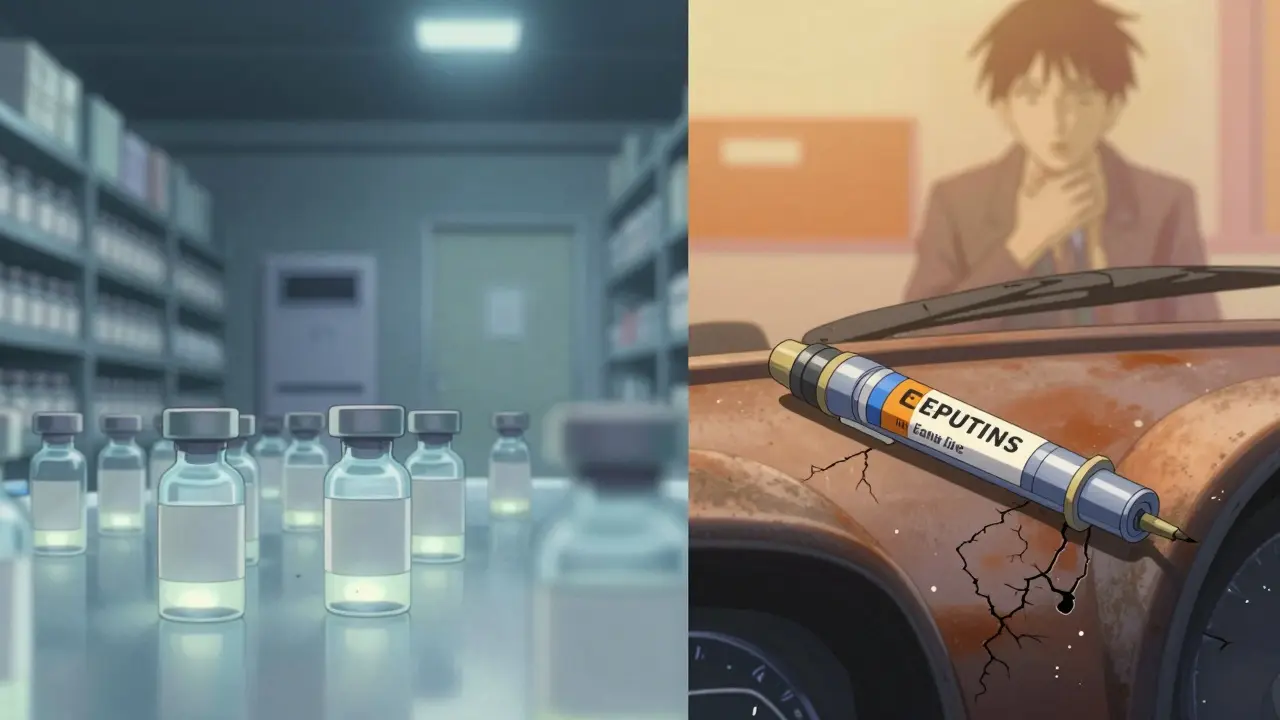
For example, a slightly weaker ibuprofen tablet might just mean you need to take two instead of one. Not ideal, but unlikely to cause harm. But a weakened antibiotic? That’s dangerous. If the dose isn’t strong enough to kill all the bacteria, the survivors become resistant. That’s how antibiotic resistance spreads. One study showed that expired tetracycline can break down into compounds that damage kidneys. Epinephrine in an expired EpiPen? If it’s lost even 10-20% of its strength during an allergic reaction, it might not save your life.
Drugs with a narrow therapeutic index-where the difference between a safe dose and a toxic one is tiny-are especially risky. Think warfarin, lithium, digoxin, or thyroid meds. Even a 5% drop in potency can throw your whole treatment off. That’s why doctors don’t recommend using these past expiration dates, even if they look fine.
On the flip side, the U.S. military runs a program called the Shelf Life Extension Program (SLEP). Since 1986, they’ve tested thousands of stockpiled drugs. Over 88% passed potency tests years-sometimes over a decade-past their labeled expiration dates. But here’s the catch: those drugs were stored in climate-controlled warehouses, not in a humid bathroom. That’s the difference between theory and reality.
That doesn’t mean the drug dies at midnight on the expiration date. But it does mean the manufacturer can no longer guarantee its safety or strength. And that’s the key word: guarantee. Without lab testing, you can’t know how much potency is left. You can’t see degradation. You can’t smell it. You can’t taste it. A tablet might look perfect but contain only 60% of the active ingredient.
For non-critical meds-like occasional painkillers or antihistamines-you might be fine using them a few months past date. But for anything you rely on daily, or anything that could be life-saving, the risk isn’t worth it. The FDA’s official stance is clear: once the date passes, there’s no assurance of safety or effectiveness. That’s not fearmongering. That’s science.
Some researchers are even exploring personalized expiration dates-dates based on how you store your meds. But right now, that’s still in the lab. For now, the best advice is simple: if it’s critical, don’t risk it. If it’s for pain or allergies, and it’s only a few months past date, stored properly, it’s probably okay. But never use expired insulin, epinephrine, antibiotics, or heart meds.
The bottom line? Medications don’t expire like milk. They fade like a battery. Slowly. Quietly. And sometimes, dangerously. The expiration date is your last line of defense. Don’t ignore it unless you’re willing to gamble with your health.
If stored properly in a cool, dry place and only a few months past expiration, most solid painkillers like ibuprofen or acetaminophen retain enough potency to be effective. Studies show ibuprofen can remain stable for years beyond its label date. However, if the pills are discolored, cracked, or smell odd, throw them out. Don’t use them for serious pain or chronic conditions without checking with a pharmacist.
It depends on their chemical structure. Liquid medications, especially those that need refrigeration like amoxicillin suspension, degrade faster because water breaks down the active ingredients. Drugs like epinephrine and levothyroxine are chemically unstable and sensitive to heat and light. In contrast, solid tablets like aspirin or ibuprofen are more protected by their coating and structure. Excipients-non-active ingredients like binders or fillers-can also speed up degradation. For example, some ibuprofen brands break down faster due to certain polymers in their formula.
No. Using expired antibiotics is risky. Even a small drop in potency can fail to kill all the bacteria, allowing the strongest ones to survive and multiply. This contributes to antibiotic resistance, a global health threat. In some cases, degraded antibiotics can form toxic compounds. Never take expired antibiotics for an active infection. Always get a new prescription.
Don’t flush them or toss them in the trash. Many pharmacies and local health departments offer drug take-back programs. If none are available, mix pills with an unappealing substance like coffee grounds or cat litter, seal them in a container, and throw them in the household trash. This prevents accidental ingestion or misuse. For controlled substances, check with your pharmacist for special disposal rules.
Yes. Both are subject to the same U.S. Pharmacopeia standards requiring at least 90% potency at expiration. The difference is in how they’re used. Prescription drugs are often more critical to health, so the consequences of reduced potency are higher. But the science behind expiration dates is identical for both types. Neither is guaranteed to work after the date, regardless of whether it’s OTC or prescription.

Expired meds don't magically turn to poison but they do lose potency like a phone battery in winter
Stop treating expiration dates like religious dogma
Check the pill condition and store properly
Most OTC stuff is fine months past date if dry and cool

People panic over expiration dates like it's the end of the world
Meanwhile the military has stockpiles that work 15 years later
Storage matters more than the printed date
But hey if you want to be safe throw money away on new pills every year

It's important to note that while many medications retain potency beyond their labeled date, this is not universally true - especially for liquids, injectables, or those with narrow therapeutic windows.
For example, epinephrine, insulin, and thyroid medications require strict adherence to expiration dates due to potentially life-threatening consequences of under-dosing.
Additionally, degradation products - such as those from degraded tetracycline - can be nephrotoxic.
While the FDA’s Shelf Life Extension Program shows promising data, those drugs were stored under ideal, controlled conditions - not in a steamy bathroom or a hot car.
So while occasional ibuprofen might be safe, relying on expired heart meds or antibiotics is a gamble with your health - and public health.
Always consult a pharmacist when in doubt.
And please, for the love of science - store your meds properly.
Dark, dry, cool - not above the toilet.
It’s not complicated, but it saves lives.
And if you’re unsure - when in doubt, throw it out.
It’s not wasteful - it’s responsible.

Western medicine is full of fear tactics
India uses expired meds all the time and no one dies
Big pharma just wants you to buy more
Stop being brainwashed

There is no scientific consensus on extended potency beyond expiration dates.
Manufacturers test for a finite window.
Anything beyond that is anecdotal.
Using expired drugs is irresponsible.
End of discussion.

So let me get this straight
We're supposed to believe that a pill from 2018 is still doing its job like it's fresh off the assembly line
But the FDA says no
And yet somehow people still take expired antibiotics like they're taking gummy vitamins
And then wonder why superbugs are winning
Oh and the bathroom cabinet? Yeah that's basically a science experiment in a plastic bottle
Good luck with that

I keep all my meds in a glass jar in the back of my closet with silica packets
My ibuprofen is 3 years past date and still works fine
But I'd never touch my mom's thyroid med if it was expired
It's not about fear
It's about knowing what's worth risking and what isn't
Some pills fade slowly
Others go from lifesaver to liability in weeks
Know your meds
Know your storage
Know your risk

It is a well-documented fact that pharmaceutical degradation is a function of time, temperature, humidity, and exposure to ultraviolet radiation - all of which are uncontrolled in domestic environments.
Furthermore, the FDA’s requirement for stability testing is not arbitrary; it is grounded in rigorous statistical analysis of degradation kinetics.
When individuals disregard expiration dates, they are not exercising personal freedom - they are engaging in public health negligence.
Antibiotic resistance is not a theoretical concern - it is a global crisis fueled in part by subtherapeutic dosing from degraded medications.
Moreover, the presence of unknown degradation byproducts in expired pharmaceuticals introduces unquantifiable toxicological risks.
There is no moral high ground in taking expired epinephrine - only a high probability of death.
And yes - your bathroom cabinet is a petri dish for chemical instability.
Stop romanticizing anecdotal experiences - they are not data.
Science does not care how much you "trust" your pills.
It cares about molecular integrity.
And if your pill looks fine but has lost 30% potency - you will not know until it fails you.
That is not fearmongering - that is chemistry.

They say don't use expired meds but then the military has stockpiles that work 20 years later
So which is it
Are we being lied to or just scared into buying more
And why do we trust big pharma's expiration dates more than real-world data
Also who stores meds in a fridge like they're milk
My grandma kept hers in a drawer and lived to 92
Maybe the real problem is we're too scared to be practical

so like… i had some tylenol from 2020 and it still worked fine
but then i saw a vid of some guy who took expired antibiotics and got sepsis
so now i just throw everything out
but like… why does the system make it so hard to know what’s safe
also why is my pharmacy charging me $15 for a 10-pill bottle of ibuprofen
like… i’m not rich

My grandma always said "if it looks good, smells good, and doesn’t hurt to swallow - it’s probably fine" 😌
She took her blood pressure meds 2 years past date and never missed a beat
But she also kept them in a sealed tin in a drawer - not the bathroom
So… storage matters
And sometimes… common sense matters more than a label
Also… 🙏 don’t use expired epi pens. That’s just common human decency.