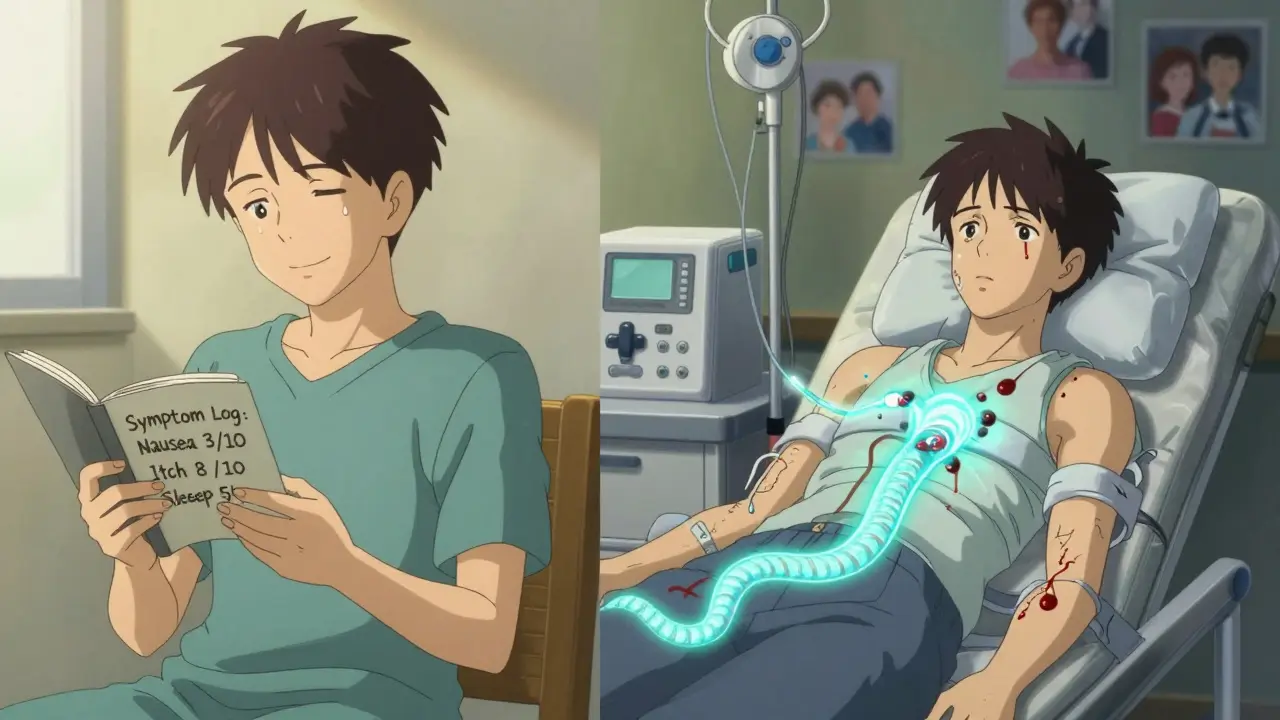
When your kidneys start to fail, your body doesn’t just slow down-it starts to poison itself. The waste products that should be flushed out by healthy kidneys begin to pile up in your blood. This isn’t just fatigue or a bad day. This is uremia: a dangerous buildup of toxins that triggers real, debilitating symptoms like constant nausea and skin so itchy you can’t sleep. And if you’re waiting for your doctor to say ‘it’s time’ for dialysis, you might be waiting too long.
Uremia isn’t a single symptom. It’s a whole-body crisis. Imagine waking up every morning with a metallic taste in your mouth, like you’ve been chewing on coins. Food that used to taste good now feels like sand. You eat less, then less again, until you’ve lost 10 or 15 pounds without trying. That’s nausea from uremia-and it’s not just discomfort. It’s your body screaming that it’s drowning in waste.
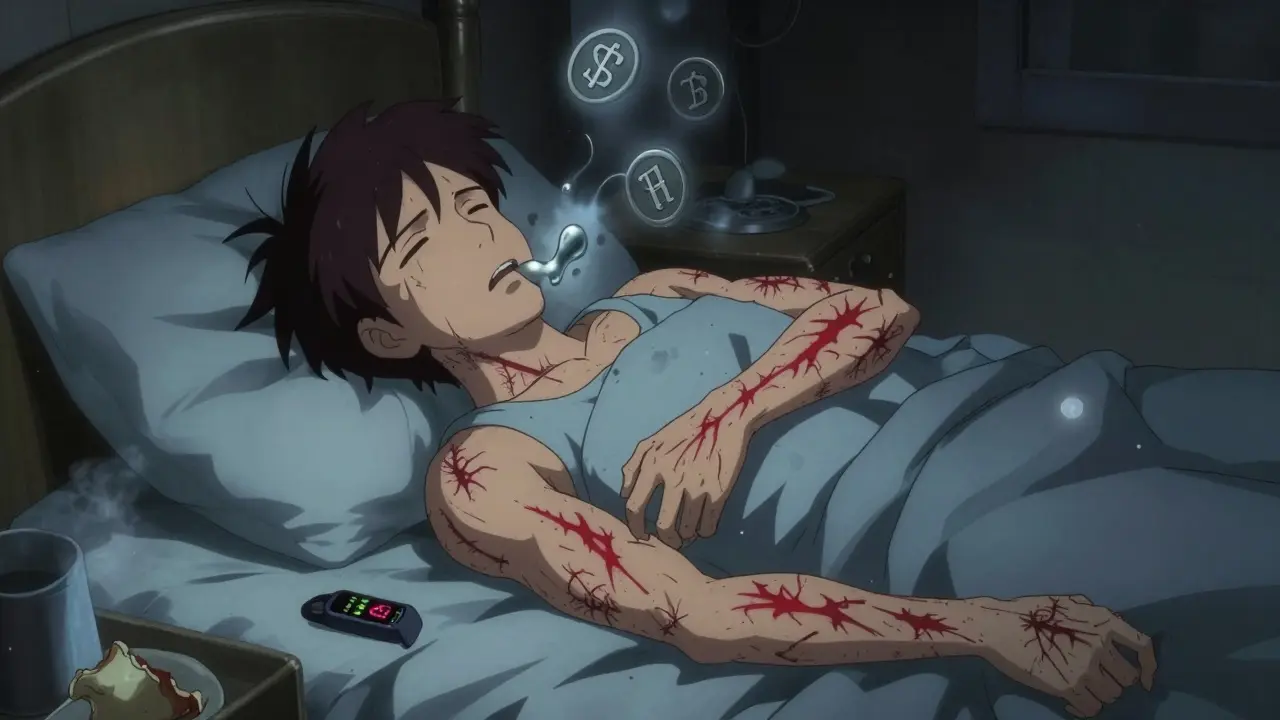
Then there’s the itch. Not a dry skin itch. Not an allergic rash. This is deep, burning, unrelenting itching that doesn’t go away with lotion or antihistamines. It hits your back, your arms, your legs-not in patches, but across wide, symmetric areas. And it gets worse at night. You scratch until your skin bleeds. You stop sleeping. Your Fitbit shows your sleep score dropping from 85 to 42. This isn’t just annoying-it’s destroying your life.
These aren’t rare side effects. Nearly 7 out of 10 people with end-stage kidney disease report nausea. More than two-thirds say they can’t escape the itch. And these symptoms don’t show up overnight. They creep in over weeks, often dismissed as stress, aging, or even depression. By the time they’re recognized, many patients have already waited months past the point where dialysis could have helped.
Your kidneys don’t just filter out urea. They remove dozens of other toxins-chemicals like p-cresyl sulfate and indoxyl sulfate-that build up when kidney function drops below 15%. These aren’t just numbers on a lab report. They directly activate nerve pathways in your brain that trigger nausea. Studies show higher levels of these toxins correlate with worse nausea, with a strong statistical link (r=0.78) between toxin levels and symptom severity.
The itch? That’s inflammation. People with severe uremic pruritus have CRP levels-markers of body-wide inflammation-that are nearly three times higher than those without it. Your skin isn’t the problem. It’s your blood. Toxins trigger immune cells to release chemicals that irritate nerves under your skin. That’s why creams don’t work. You’re not treating the skin-you’re treating a systemic failure.
And here’s the scary part: these symptoms often appear when your eGFR (a measure of kidney function) is still above 10. That’s not ‘end-stage’ by old standards. But by today’s understanding, it’s already too late to wait. The longer you delay dialysis, the more damage these toxins do-not just to your comfort, but to your heart, your bones, and your ability to recover.
For decades, doctors waited until your creatinine hit 10 mg/dL or your eGFR dropped below 5 before starting dialysis. That’s changed. The 2023 KDOQI guidelines say: start dialysis when symptoms become unbearable, not when numbers hit a magic line.
There’s no single threshold. But here’s what experts now agree on:
The IDEAL trial found no survival advantage to starting dialysis early (eGFR 10-14) vs. late (eGFR 5-7). But here’s the catch: patients who waited until symptoms were severe had worse quality of life. Those who started earlier, but only when symptoms appeared, had better outcomes. The key isn’t timing-it’s symptom burden.
Some doctors still push for early dialysis to prevent complications. Others say let symptoms guide you. The truth? It’s personal. If you’re miserable, you don’t need to wait for your eGFR to hit 7. You need relief now.
Waiting isn’t just about discomfort. It’s about survival.
Patients with untreated uremic symptoms have a 58% higher risk of dying in the first year after starting dialysis than those who started before symptoms became severe. Why? Because toxins damage your heart lining (uremic pericarditis), weaken your bones, and make your blood clot abnormally. By the time you’re vomiting constantly and scratching your skin raw, your body is already under extreme stress.
And it’s not just physical. People with severe itching are 28% more likely to change careers or quit work entirely. Depression rates jump. Social isolation grows. One Reddit user wrote: ‘I stopped seeing friends because I was too tired to shower, and too ashamed of my skin to show up.’
Delayed diagnosis is common. A 2022 national poll found 41% of patients saw three or more doctors before someone finally said, ‘This is kidney failure.’ The average delay? Over 8 months. That’s eight months of unnecessary suffering.
Before dialysis starts, there are steps to ease the pain-temporary, but critical.
For nausea:
For itching:
But here’s the reality: none of these are cures. They’re band-aids. They help you survive until dialysis. They don’t fix the root problem.
The field is moving fast. In 2023, the FDA approved nemifitide, a new drug that targets the same brain receptors as opioids-but without the addiction risk. In phase 3 trials, it reduced itch by 45% more than placebo. It’s not widely available yet, but it’s coming.
And the next big shift? Measuring how you feel, not just your lab numbers. The 2024 KDIGO guidelines are expected to include patient-reported outcomes as a trigger for dialysis. That means if your itch score hits 15 on the new PROMIS-Itch scale, you qualify for dialysis-even if your eGFR is still at 12.
This is huge. It puts the patient’s experience at the center of care. No more waiting until you’re on the brink. If you’re suffering, you deserve help.
If you or someone you love has chronic kidney disease and is dealing with nausea or itch, don’t wait for your doctor to bring it up. Bring it up yourself. Say: ‘I can’t eat. I can’t sleep. I’m losing weight. I’m scratching until I bleed.’
These aren’t ‘normal’ parts of aging. They’re signs your body is failing. And dialysis isn’t a last resort-it’s a rescue. Starting it before you’re critically ill means you’ll recover faster, live longer, and actually enjoy life again.
Don’t let outdated thinking keep you from relief. The data is clear: treat the symptoms, not just the numbers. Your quality of life matters as much as your lab results.
You don’t have to suffer in silence. Relief is possible. And it starts with speaking up.
The earliest signs are often subtle: loss of appetite, a metallic taste in your mouth, mild nausea, and persistent itching that doesn’t improve with moisturizers. These symptoms usually appear when kidney function drops below 15%-long before creatinine hits dangerous levels. Many people mistake them for stress or aging, but they’re early warnings from your kidneys that they’re failing.
Yes. Uremic symptoms can develop in stage 4 and 5 chronic kidney disease (CKD), even before dialysis begins. In fact, many patients experience nausea, itching, fatigue, and confusion months before they start treatment. This is why early monitoring by a nephrologist is critical-symptoms don’t wait for lab results to become severe.
Dialysis removes many of the toxins causing these symptoms, so most patients see major improvement. But not everyone. About 30% of dialysis patients still experience itching, and nausea can persist if dialysis isn’t adequate (Kt/V <1.4) or if other factors like high phosphate levels remain. That’s why symptom management continues even after starting treatment.
You shouldn’t wait at all. If you’re experiencing persistent nausea that affects your eating, or severe itching that disrupts sleep, dialysis should be started within weeks-not months. Delaying increases your risk of hospitalization, heart damage, and death. The goal isn’t to wait until you’re near death-it’s to start before you’re in crisis.
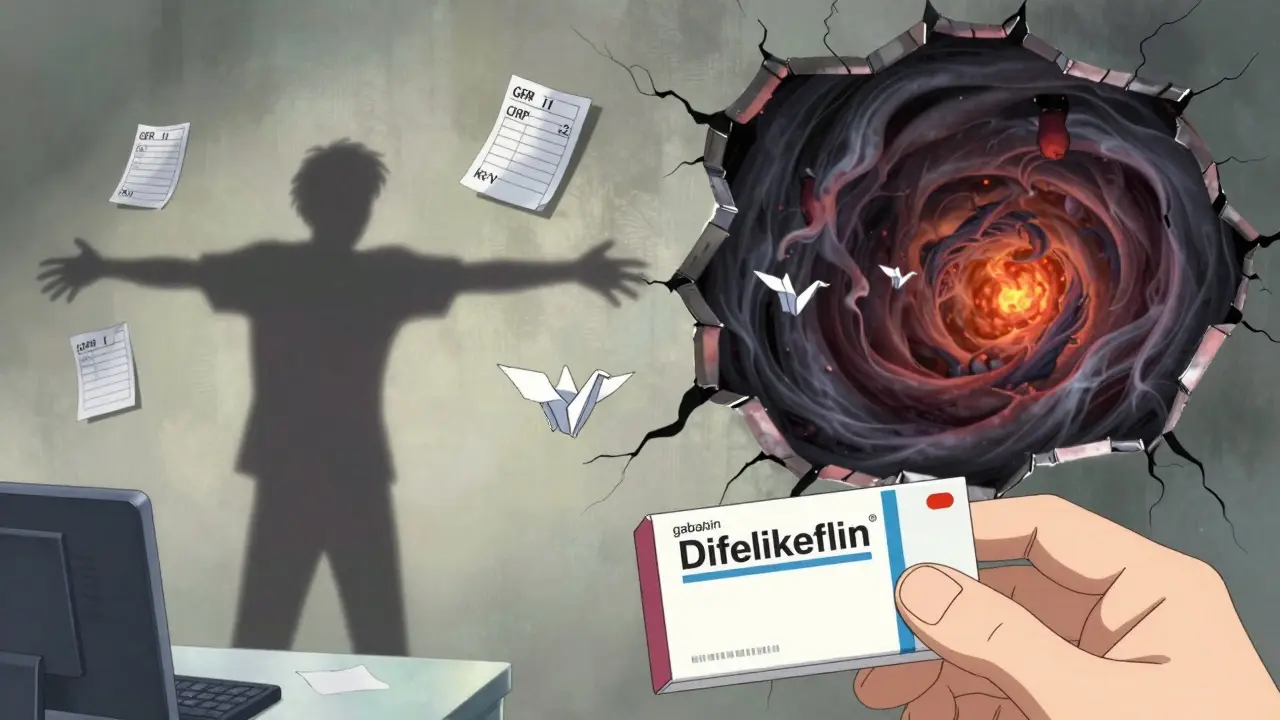
Yes. Gabapentin, pregabalin, and topical capsaicin can help reduce itch. But the most effective new treatments are difelikefalin (Korsuva) and nalfurafine-drugs approved specifically for uremic pruritus. These work by targeting brain receptors that control itch signals. They’re not cures, but they can restore sleep and quality of life while you prepare for dialysis.
Some still follow old guidelines that focus on eGFR alone. Others worry about costs, access, or complications from early dialysis. But research shows delaying dialysis until symptoms are severe leads to worse outcomes. The latest guidelines from KDOQI and KDIGO emphasize symptom burden over numbers. If you’re suffering, you deserve treatment-not a waiting game.
Diet alone won’t fix uremic symptoms, but it can help manage them. Limiting phosphorus (avoiding processed foods, colas, dairy) and protein (to reduce toxin buildup) can ease nausea. Staying hydrated helps flush toxins slightly. But once toxins are in your blood, diet can’t remove them fast enough. Dialysis is the only treatment that directly clears these substances from your system.

This article is pure gold. I've been screaming at my nephrologist for months about the itching and nausea-got told it was 'just stress.' Turns out my toxin levels were off the charts. I started dialysis at eGFR 9 and my sleep score went from 38 to 81 in two weeks. If you're reading this and still waiting for a number? Stop. Your body is not a spreadsheet.

It's funny how we treat the body like a machine that needs fixing, but ignore the screaming. Uremia isn't a diagnosis-it's a cry from the soul. We keep measuring creatinine like it's the only language the body speaks. But pain? It doesn't speak English. It speaks in sleepless nights and bleeding skin. Maybe we need to learn to listen before it's too late.

AMERICA NEEDS TO STOP WAITING FOR THE GOVERNMENT TO FIX THIS 😤
My uncle died waiting for a 'proper' referral. They told him to 'try yoga.' YOGA?? His blood was full of poison and they wanted him to breathe deep?? 🇺🇸 We don't need more guidelines-we need action. Dialysis isn't a luxury. It's a human right. Stop making people beg for their own survival.

Did you know that the pharmaceutical industry profits from prolonged kidney failure because they sell the band aid drugs like gabapentin and ondansetron for years before dialysis even begins
And dont get me started on how insurance companies delay referrals because they dont want to pay for dialysis until its absolutely necessary
This isnt medicine its a business model built on suffering
And they call themselves healers
Im not even mad
Im just disappointed

Man I felt this. My mom had this for like 10 months before anyone listened. She stopped hugging people because her skin was raw. We took her to three docs before one said 'yo this is kidney failure.' Now she's on dialysis 3x a week and she laughs again. You guys need to speak up. No one's gonna save you if you stay quiet.

They wait until you're almost dead to help you. That's not medicine. That's cruelty with a stethoscope. I'm tired of people saying 'it's just the natural progression.' No it's not. It's neglect dressed up as protocol. If your car leaked oil and the mechanic said 'wait till it dies,' you'd fire him. Why do we accept this for our bodies?

My cousin was a nurse in a dialysis unit. She said the sickest patients? The ones who waited till they were vomiting blood or scratching through their shirts. The ones who started early? They'd come in grumpy but alive. One guy even started a podcast. Life after dialysis ain't perfect but it's way better than dying slowly while your doc checks your eGFR like it's a stock price.

It's fascinating how the medical establishment clings to outdated metrics while patients suffer. The KDOQI guidelines are a step forward, but they're still just paper. The real revolution is in patient-reported outcomes-finally acknowledging that subjective experience has objective value. This isn't just clinical-it's epistemological. We must recenter care around lived reality, not lab values.

Thank you for writing this. I was scared to speak up because I didn't want to seem 'dramatic.' But I lost 12 pounds and couldn't sleep for 3 weeks. I printed this article and handed it to my doctor. She cried. Then she scheduled my dialysis evaluation the next day. You're not being dramatic. You're being brave.