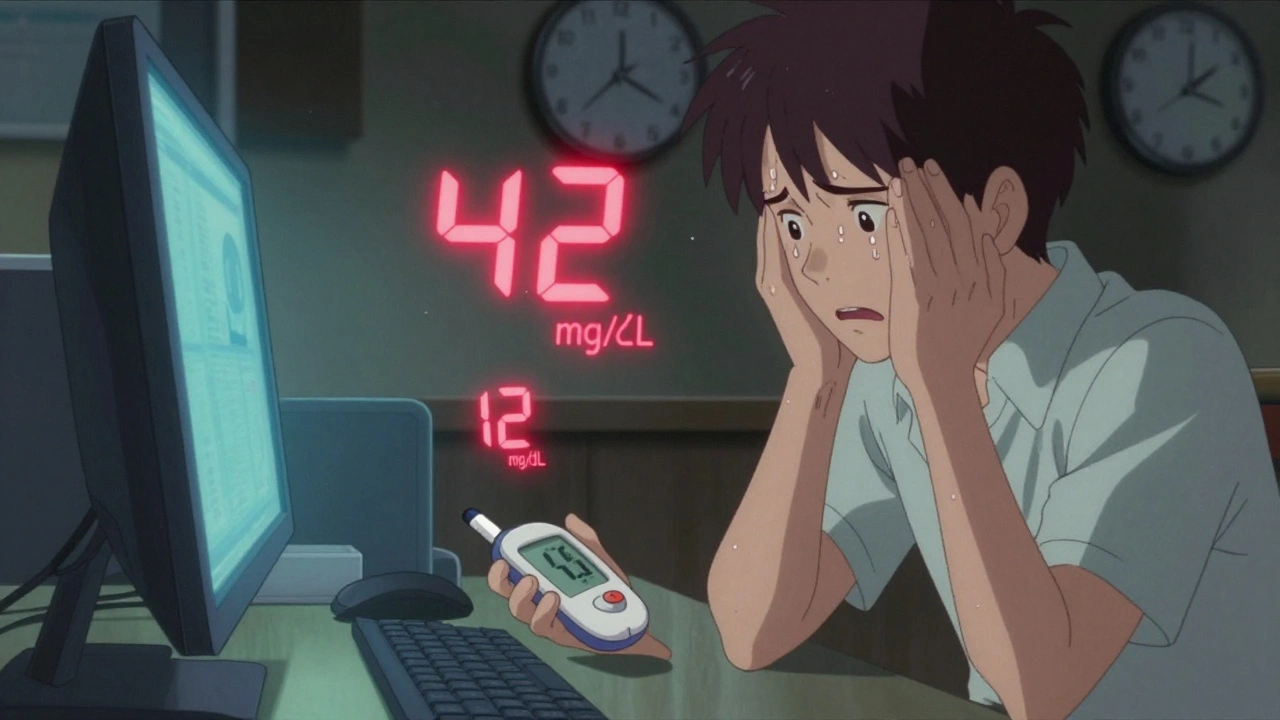
When your low blood sugar, a condition where glucose levels drop below what your body needs to function properly. Also known as hypoglycemia, it can happen to anyone—even people without diabetes—especially if they skip meals, over-exercise, or take certain medications. It’s not just about feeling hungry. Your brain runs on glucose, and when levels dip too low, you don’t just get cranky—you might sweat, shake, feel dizzy, or even lose focus enough to make a dangerous mistake behind the wheel or at work.
Insulin, a hormone that moves sugar from your blood into your cells is often the culprit in people with diabetes. Too much insulin, or not enough food after taking it, pulls sugar out of your bloodstream too fast. But it’s not just insulin—other diabetes drugs like sulfonylureas can do the same. Even non-diabetics can get low blood sugar from drinking too much alcohol without eating, or from rare conditions like insulinomas. And let’s not forget blood sugar levels, the measurable amount of glucose circulating in your bloodstream. Normal is around 70 to 99 mg/dL when fasting. Below 70? That’s your body’s warning sign.
What does low blood sugar feel like? It starts subtle: a pounding heart, cold sweat, sudden hunger. Then it escalates—trembling, blurred vision, confusion, slurred speech. In severe cases, you might pass out or have a seizure. That’s why recognizing the early signs matters. If you have diabetes, keep fast-acting sugar handy: glucose tabs, juice, or even regular soda—not diet. Eat 15 grams of carbs, wait 15 minutes, check again. If you’re not diabetic but keep getting these symptoms, talk to a doctor. It could be reactive hypoglycemia, a thyroid issue, or something else entirely.
This collection of posts doesn’t just cover the basics. You’ll find real-world advice on how to avoid low blood sugar while traveling, what to do if you miss a meal while on medication, how certain drugs like antibiotics or beta-blockers can mask symptoms, and why people with kidney disease are more at risk. You’ll also learn how to explain this to family members so they know what to do if you collapse. There’s no fluff here—just clear, tested steps to stay safe, whether you’re managing diabetes or just trying to understand why you feel awful after lunch.
Learn how to recognize, treat, and prevent low blood sugar (hypoglycemia) if you have diabetes. Includes practical steps, emergency treatment, prevention tips, and latest 2025 advances.