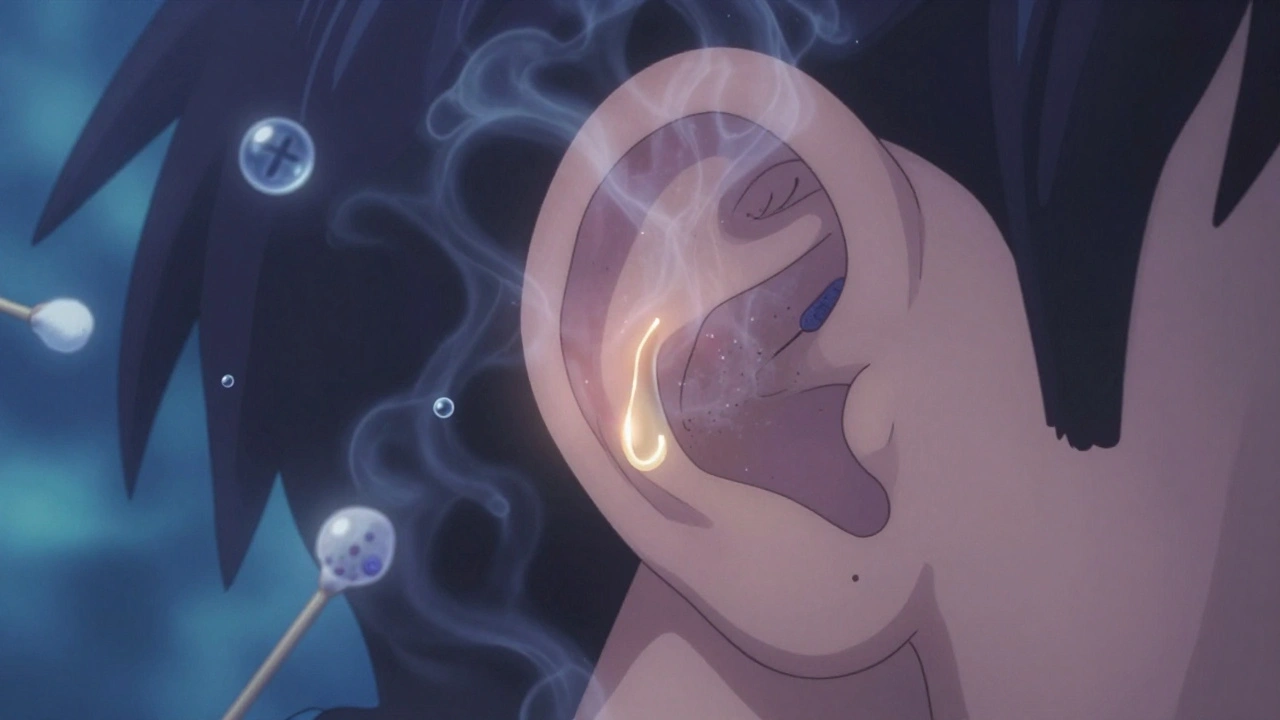
A perforated eardrum isn’t something you can ignore. It’s not just a minor earache-it’s a tear in the thin membrane that separates your ear canal from the middle ear. This tiny tissue does big work: it helps you hear, keeps germs out, and balances pressure. When it tears, your ear becomes vulnerable. But the good news? Most of the time, it heals on its own-if you let it.
There’s no one-size-fits-all answer, but most small perforations heal in three to six weeks. Larger tears can take up to two months, sometimes longer. The timeline depends on three things: how big the hole is, what caused it, and whether you protect it properly.
Small holes-like those from a minor pop or a quick cotton swab slip-often start closing within a couple of days. Pain usually fades by day three. By week two or three, you’ll notice less discomfort as new tissue begins to form. Around four to six weeks, hearing starts to improve as the membrane strengthens. By six to eight weeks, most people have full recovery: pressure feels normal again, and hearing returns to baseline.
But if the tear is bigger-say, from a loud explosion, a bad ear infection, or a deep object pushed into the ear-it can take months. And if you keep exposing it to water, pressure, or infection, healing slows down or stops altogether. Some cases never heal without help.
It’s not always an accident. The most common causes are:
Some people assume a pop in the ear means it’s fixed. It doesn’t. That pop might be the sound of the tear happening. Don’t wait for pain to go away before taking action.
Protection isn’t optional. It’s the difference between healing on its own and needing surgery.
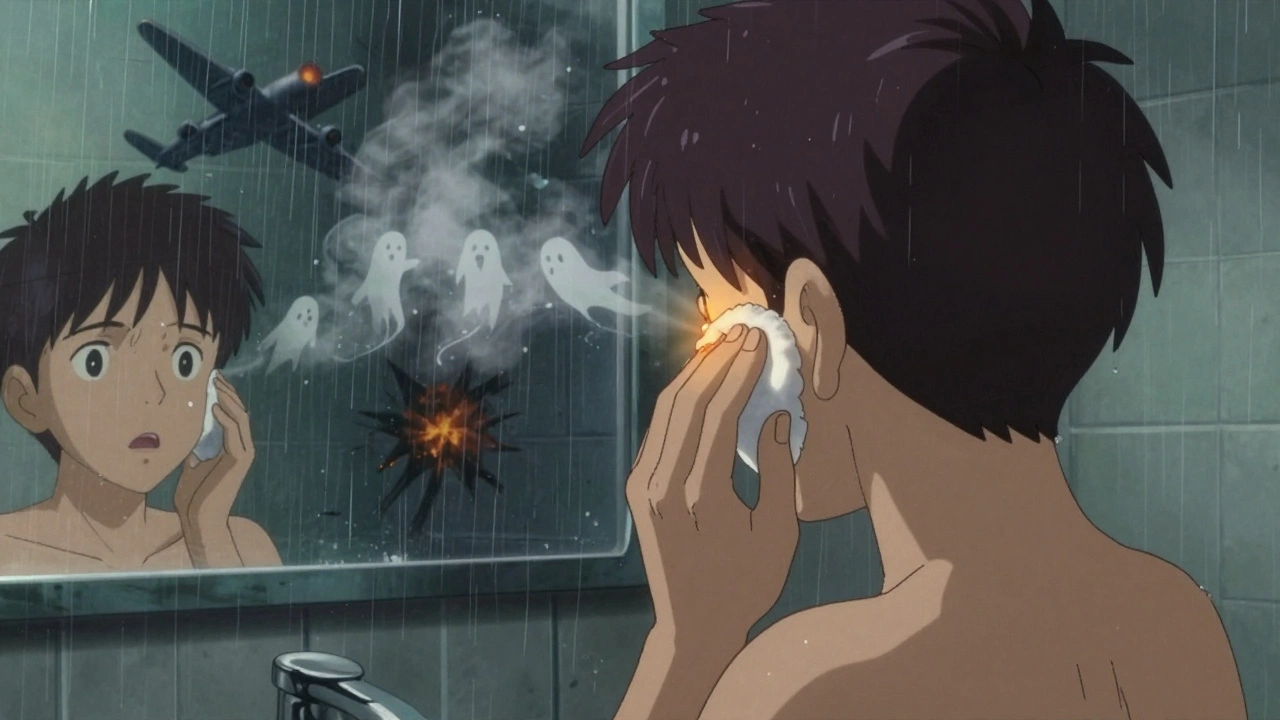
Keep it dry. Water is the #1 enemy. Bacteria thrive in moisture, and an infected eardrum won’t heal. Showering? Use a waterproof earplug or a cotton ball coated with petroleum jelly. Don’t let water drip in. Swimming? Not until your doctor says so. Even a splash can set you back weeks.
Don’t clean your ear. No cotton swabs. No ear candles. No picking. Let the ear clean itself. The body naturally pushes out debris. Interfering risks pushing more damage into the hole or introducing infection.
Avoid pressure changes. Flying? Hold off until healing is confirmed. Diving? Absolutely not. Even blowing your nose too hard can create pressure that pushes against the healing membrane. If you need to clear your nose, do it gently-one nostril at a time.
Don’t use ear drops unless prescribed. Over-the-counter drops can contain alcohol or other irritants that harm healing tissue. Only use what your doctor gives you.
Most perforated eardrums heal without treatment. But you should see a doctor if:
If an infection is present, your doctor will likely prescribe antibiotics-either pills or eardrops. These aren’t just for comfort; they prevent the infection from spreading deeper into the middle ear or even to the mastoid bone behind the ear.
If healing stalls past 6-8 weeks, you’ll be referred to an ENT specialist. They’ll check if the hole is closing with a scope. If it’s not, they may suggest a minor procedure.
Only about 5-10% of perforations need surgery. But when they do, the results are usually excellent.
Myringoplasty is the most common. It’s a quick 10-30 minute procedure where the doctor patches the hole with a small piece of your own tissue, gel, or paper. Newer techniques use hyaluronic acid or platelet-rich plasma-materials that help tissue grow faster. Success rates have jumped from 75% to 85-90% in the last five years.
Tympanoplasty is used for larger or more complex tears. It takes 30-120 minutes and involves rebuilding the eardrum with a graft. Recovery is longer, but hearing often improves significantly.
Both procedures are outpatient. Most people go home the same day. The key? Follow all post-op instructions. Skip them, and the repair can fail.
Ignoring protection isn’t just risky-it’s costly. About 5-10% of people who don’t follow care guidelines end up with chronic ear infections or drainage. In 1-2% of untreated cases, the infection spreads to the mastoid bone, requiring hospitalization. Around 3-5% experience permanent hearing loss. Dizziness and balance problems can become long-term issues too.
Here’s the reality: proper care reduces the chance of surgery by 70-80%. That’s not a guess. It’s based on clinical data from major hospitals like Mount Sinai and Mayo Clinic.
Once the eardrum is fully healed, most people regain normal hearing. Any hearing loss during recovery is almost always temporary. You’ll be able to fly, swim, and hear music again without worry.
But don’t assume you’re invincible. If you’ve had one rupture, you’re more likely to have another. Be cautious with loud noises. Don’t stick things in your ear. Watch for signs of infection-especially if you’re prone to ear problems.
Follow-up appointments matter. Even if you feel fine, your doctor needs to confirm the eardrum is sealed. A tiny hole can look closed but still be vulnerable underneath.
A perforated eardrum isn’t an emergency-but it’s not something to treat lightly. Most heal on their own. But only if you give them the right conditions: dry, quiet, and protected.
Don’t rush back to swimming. Don’t blow your nose like you’re clearing a drain. Don’t ignore drainage or persistent hearing loss. The body is smart. It wants to fix itself. Your job? Just get out of its way.
Healing takes time. But the reward? Full hearing, no surgery, and no long-term damage. That’s worth waiting for.
Yes, most small perforations heal on their own within 3 to 6 weeks. Larger tears may take up to 2 months. Healing depends on size, cause, and whether you protect the ear from water, pressure, and infection. Around 90% of cases heal without surgery if proper care is followed.
Use a waterproof earplug or a cotton ball coated with petroleum jelly. Press it gently into the outer ear canal. Avoid letting water run directly into the ear. Never use earbuds or headphones that go inside the ear canal during healing.
No, not until your doctor confirms healing. Changes in cabin pressure during flight can cause pain, delay healing, or even reopen a partially healed tear. Wait at least 6-8 weeks, and get clearance before flying.
Contact your doctor immediately. Drainage-especially if it’s pus, bloody, or foul-smelling-means infection is present. Untreated infections can lead to chronic issues or spread to deeper ear structures. Antibiotics may be needed to clear it.
Yes, acetaminophen or ibuprofen are safe for pain relief. Avoid aspirin in children. But painkillers only mask symptoms-they don’t help healing. The real work is keeping the ear dry and protected. If pain lasts more than 2-3 days, see a doctor.
Permanent hearing loss is rare-only 3-5% of cases. Most hearing loss is temporary and improves as the eardrum heals. If hearing doesn’t return after 2-3 months, see an ENT specialist. They can test for other issues like scar tissue or damage to the middle ear bones.
You won’t know for sure without a check-up. Your doctor uses an otoscope to look inside your ear and confirm the membrane is closed. Even if symptoms disappear, a small hole can remain. Don’t assume you’re healed just because you feel better.

This post saved my sanity last year when I blew out my eardrum during a concert. I thought I was fine after the pain went away, but I kept showering like normal and ended up with an infection. Don't be me. Dry ears only. Period.
And no cotton swabs. Ever.

Look I get it you want to be careful but people in India and Southeast Asia have been cleaning ears with bobby pins since the 80s and we're still here. My uncle had three perforations and never saw a doctor once. He just used warm salt water and waited. You don't need to turn this into a medical emergency every time you sneeze too hard. Stop fearmongering with your 90% healing stats and your ENT referrals. The body knows what it's doing.
Also I'm still waiting for someone to explain why flying is bad if you've got a hole in your eardrum. Air goes in and out either way right? What's the big deal?

Shubham's comment raises a real cultural point. In many parts of the world, ear care is deeply tied to tradition and home remedies. The Western medical model isn't universal, and that's okay.
That said, the data here is solid. Studies from Johns Hopkins and the WHO show that untreated perforations in humid climates like India's have a 3x higher risk of chronic otitis media. The salt water rinse might help, but it doesn't replace sterile protection from water ingress. You can respect tradition and still protect your hearing.
Also, the pressure issue with flying? It's not about air going in and out-it's about the differential pressure across the membrane. A hole reduces that stress, yes, but if it's healing, sudden pressure shifts can tear it again or cause scar tissue. It's physics, not fear.
And yes, I'm a doctor. And yes, I've seen the scars.

It's fascinating how we treat the body like a machine that needs perfect conditions to function, when in reality evolution gave us a resilient, adaptive system. The eardrum isn't fragile glass-it's living tissue that's been healing for 300 million years.
Yet we panic at the first pop, rush to doctors, install earplugs like we're astronauts, and treat a minor tear like a life-or-death crisis. Is it wise to avoid water? Yes. Is it wise to live in fear of every shower or sneeze? No.
Perhaps the real issue isn't the perforation-it's our cultural obsession with controlling every biological process. Let the body do its work. We're not broken. We're just impatient.

When I had my perforation after scuba diving in Bali, I did everything wrong. I swam in the ocean after two weeks because I was bored. I used earbuds. I blew my nose like a foghorn. I thought I was tough.
Three months later, I was in surgery. They had to graft tissue from my earlobe. It was awful. Painful. Expensive.
Now I tell everyone: don't be like me. You think you're being brave? You're just being stupid. Let it heal. It's not a race. Your hearing is worth more than your pride.
And yes, I cried in the recovery room. Don't make me cry again.

Okay but like... what if you're a musician and you need to hear your own damn ears? I play guitar and I can't just sit around for 8 weeks like a monk. I had a perforation and I kept playing. I used silicone earplugs that reduce volume without muffling. I didn't go to concerts but I didn't quit music either.
There's a middle ground. You don't have to be a hermit. Just be smart. Not scared. Not perfect. Just smart.
Also I still use earbuds. But only after 6 weeks. And only for 10 minutes at a time. #EarHustle

Just want to add something practical: if you're using petroleum jelly on a cotton ball, make sure it's not too saturated. I did that once and it dripped in and caused a weird burning sensation. Use just enough to seal the opening, not drown it.
Also, if you're using a waterproof earplug, don't push it deep. Just place it at the entrance. You're not trying to plug a sink-you're trying to block water from entering a wound.
And yes, I'm a nurse. I've seen too many people turn a simple injury into a months-long nightmare because they thought they knew better.
You're not special. The eardrum doesn't care how busy you are. Let it heal.

Let me guess-this post was written by a pharmaceutical rep or ENT marketing team. 90% healing rate? 70-80% reduction in surgery? Where's the study? Who funded it? Mount Sinai and Mayo Clinic? Those places bill you $500 just to look at your ear.
And don't get me started on hyaluronic acid patches. That's just expensive glue. You think your body can't heal without corporate-grade biomaterials? Please.
Meanwhile, millions of people in developing countries heal naturally with no access to doctors, no earplugs, no petroleum jelly. They just live. And they're fine.
This isn't medicine. It's fear-based consumerism wrapped in scientific jargon.
Also, I'm not paying for a $200 ENT visit to confirm a hole closed. I'll know when I can hear again. Not before.
George, I hear your skepticism. And you're right-medicine has become overly commercialized. I've seen it too.
But the data isn't from marketing. It's from the 2021 Cochrane Review on tympanic membrane repair and the 2023 Lancet study on otitis media outcomes in low-resource settings. The 90% healing rate is for uncomplicated cases with basic care-not zero care.
And yes, people in developing countries heal. But they also suffer higher rates of mastoiditis, meningitis, and permanent hearing loss. The fact that they survive doesn't mean they thrive.
I'm not selling anything. I'm a retired ENT. I've done 300+ myringoplasties. I've seen kids lose hearing because their parents thought "it'll heal on its own" and waited too long.
Protecting your ear isn't about fear. It's about giving your body the best shot. You don't need a $200 visit. You need a cotton ball, some jelly, and patience.
That's not capitalism. That's basic biology.