Educational Tool: Explore how specific medication classes affect older adults.
Taking 5+ medications significantly increases the risk of adverse reactions due to complex drug-drug interactions.
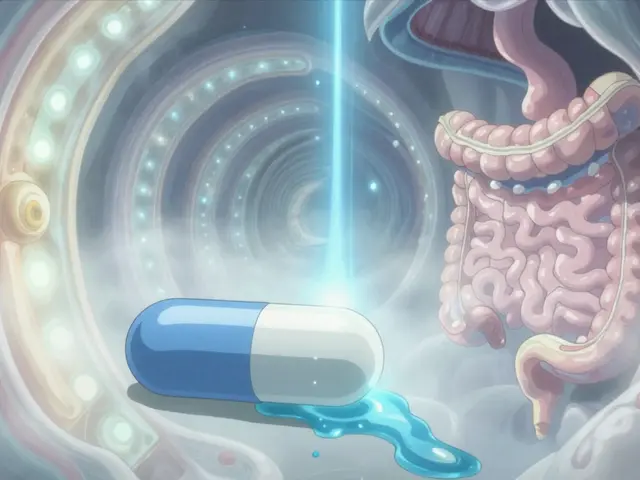
Due to increased body fat, fat-soluble drugs like benzodiazepines are stored longer, extending the drug's half-life and prolonging sedation.
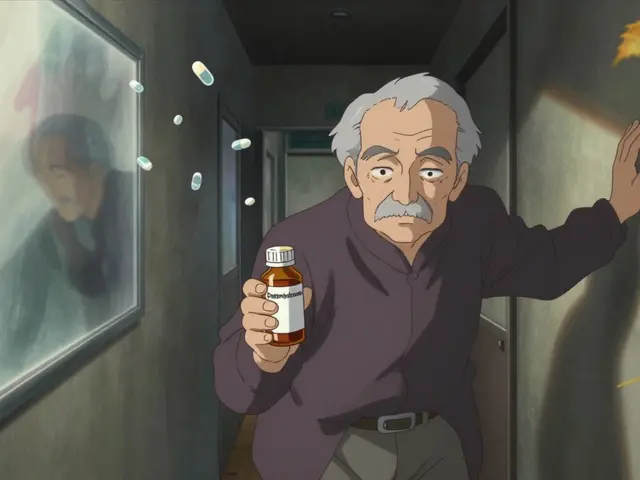
Increased risk of falls, sudden confusion, and prolonged sedation which may be mistaken for dementia.
Imagine a medication that works perfectly for a 40-year-old but causes a 75-year-old to become suddenly confused or suffer a dangerous fall. This isn't usually because the drug is "bad," but because the human body changes fundamentally as it ages. For older adults, the risk of adverse drug reactions is more than twice as high as it is for younger people. In fact, roughly 15% of older patients experience significant side effects across hospital and home care settings. The core issue is that our organs don't process chemicals the same way at 80 as they did at 20.
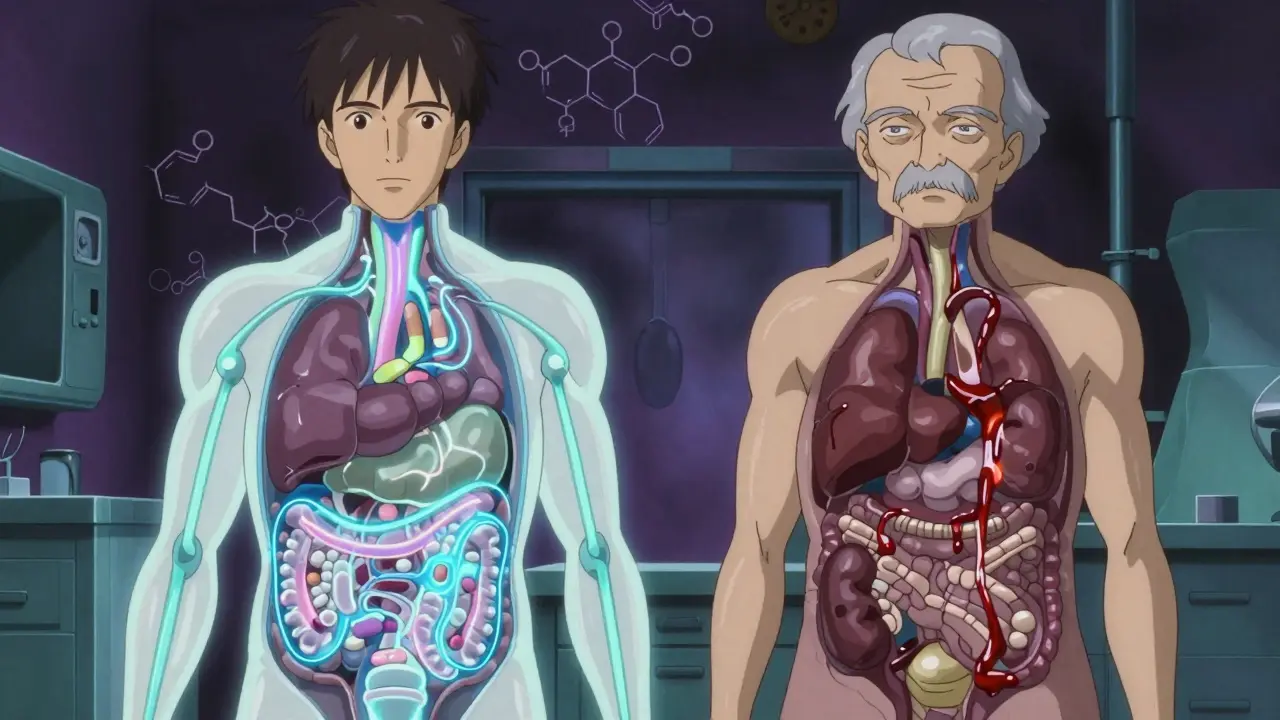
It all comes down to how the body handles a pill. As we age, three major physiological shifts happen that change the "math" of medication dosing. First, there is a significant drop in hepatic blood flow-the amount of blood reaching the liver-which can decrease by as much as 40% between age 25 and 75. Since the liver is the body's primary chemical processing plant, drugs stay in the system much longer.
Second, kidney function declines. The glomerular filtration rate (GFR), which is basically how fast your kidneys filter waste, drops by about 0.8 mL/min every year after age 40. If the kidneys can't flush a drug out, it builds up in the bloodstream, potentially reaching toxic levels even with a "standard" dose. Finally, body composition shifts. Older adults tend to have a higher percentage of body fat-rising from around 25% in young adulthood to up to 40% by age 70. This is a problem because fat-soluble drugs get trapped in these fatty tissues, extending the drug's half-life.
Take benzodiazepines like Diazepam as an example. In a younger person, the body clears it relatively quickly. In an older adult, the half-life can extend to several days. This leads to prolonged sedation, which is a direct ticket to a hip fracture if the patient tries to get up in the middle of the night.
The risk doesn't just come from age; it comes from the number of bottles on the nightstand. Polypharmacy is the concurrent use of five or more medications. When you combine this with multimorbidity-having several chronic conditions at once-you create a perfect storm for drug-drug interactions.
One of the most dangerous combinations involves NSAIDs (like ibuprofen or indomethacin) paired with corticosteroids. This combination can increase the risk of peptic ulcer disease by 15 times. Similarly, mixing oral anticoagulants (blood thinners) with NSAIDs dramatically spikes the risk of hemorrhagic ulcers, often leading to emergency hospitalizations.
These interactions often happen because of the cytochrome P-450 system in the liver. Certain drugs block or accelerate these enzymes, making other medications either useless or dangerously potent. When you add frailty into the mix, the body has even less resilience to handle these chemical stressors, turning a mild side effect into a medical crisis.
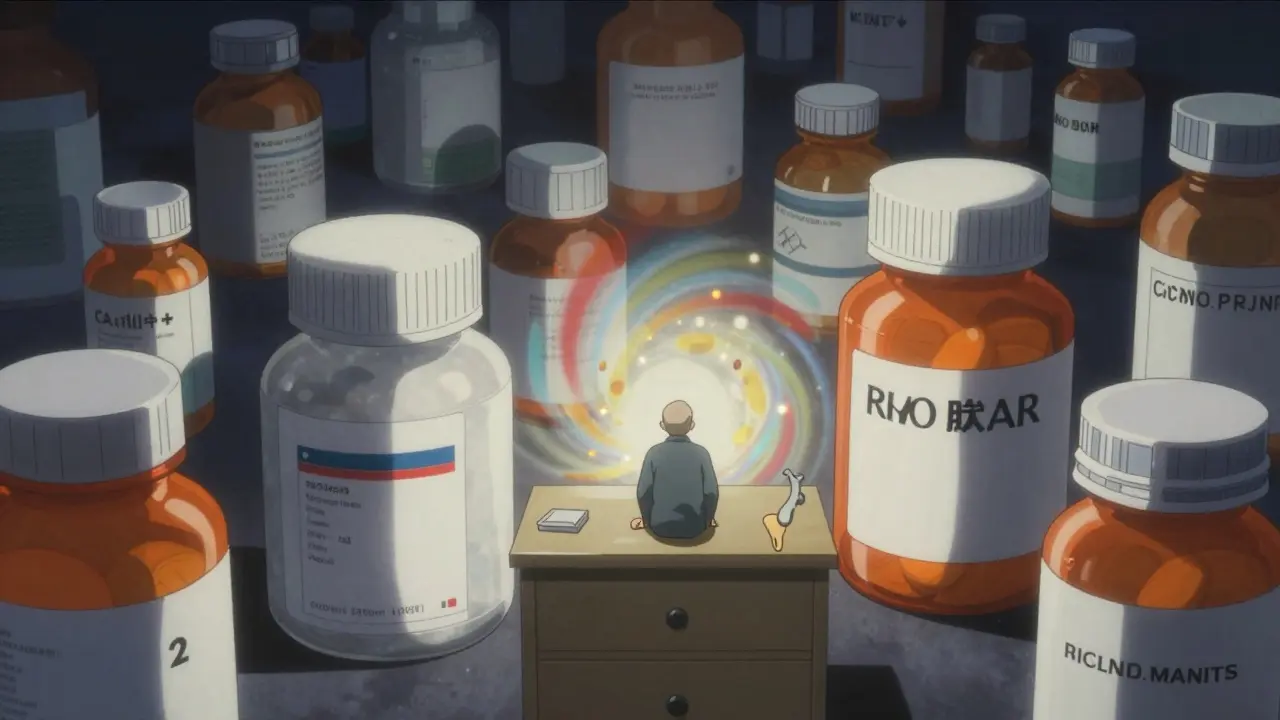
Here is the tricky part: side effects in older adults don't always look like a rash or an upset stomach. Instead, they often show up as "geriatric syndromes." If an older person suddenly seems confused, starts stumbling, or experiences a memory dip, doctors often assume it's dementia or "just getting old." In reality, it could be a drug reaction.
Roughly 20% to 30% of falls in older adults are directly caused by medication. Dizziness and orthostatic hypotension (a sudden drop in blood pressure when standing) are common culprits. Other non-specific signs include unexpected weight changes or a general sense of lethargy. This is why a "global evaluation" of health is better than just looking at one symptom at a time.
| Medication / Class | Specific Risk in Elderly | Common Manifestation |
|---|---|---|
| Pentazocine | Mixed agonist-antagonist properties | Confusion and hallucinations |
| Indomethacin | High CNS sensitivity | Central nervous system side effects |
| SSRIs | Increased bleeding/bone density risk | Falls and fractures |
| Glyburide | Prolonged action/Hypoglycemia | Severe low blood sugar |
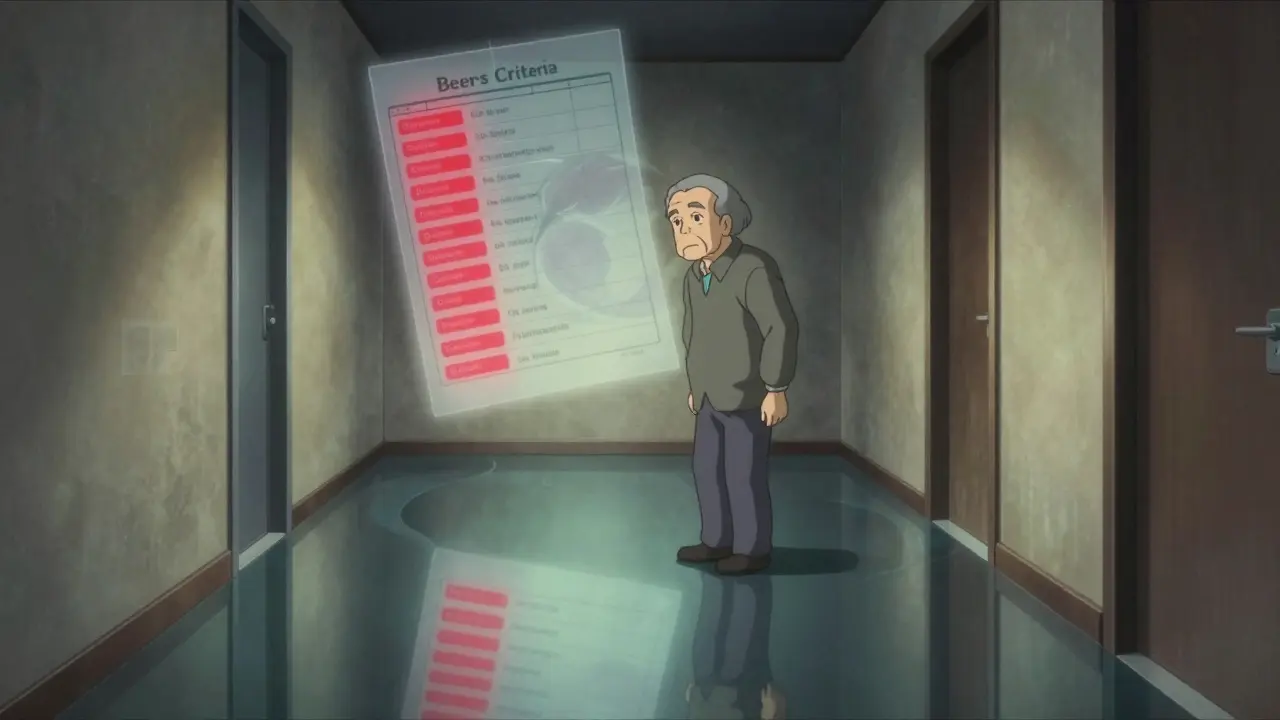
To fight these risks, doctors use specialized screening tools. The most famous is the Beers Criteria. First published by Dr. Mark Beers in 1991 and updated regularly by the American Geriatrics Society, this list identifies medications that are potentially inappropriate for older adults. It acts as a red flag for clinicians to either avoid a drug or use it with extreme caution.
While the Beers Criteria are the gold standard, they aren't perfect. They sometimes miss newer drugs or fail to account for the specific context of a patient's unique health needs. Because of this, some providers use the STOPP/START criteria. STOPP focuses on screening prescriptions that should be stopped, while START identifies necessary treatments that are often omitted in older patients.
The goal isn't to stop all medications-that would be dangerous. The aim is "deprescribing," which is the systematic process of reducing medications that no longer provide a benefit or whose risks now outweigh their rewards. For example, a drug that was essential at age 60 might be a liability at age 85.
If you are managing care for an older loved one, the most powerful tool you have is a comprehensive medication list. This isn't just a list of prescriptions from the pharmacy. It must include:
Physical and cognitive barriers often make this hard. Someone with poor eyesight might take the wrong pill, or someone with early-stage dementia might double-dose because they forgot they already took their medication. Using pill organizers or automated dispensers can mitigate these errors. More importantly, always ask the doctor: "Does this medication increase the risk of falls?" or "Could this be causing the confusion we've noticed?"
It is primarily due to physiological changes: reduced liver blood flow (making drug metabolism slower), a decline in kidney filtration rates (slowing down drug elimination), and an increase in body fat (which traps fat-soluble drugs). These factors extend the time drugs stay in the body, increasing the chance of toxicity.
Polypharmacy is the use of five or more medications simultaneously. It is dangerous because it increases the probability of drug-drug interactions, where one medicine alters the effect of another, often leading to severe adverse reactions or neutralizing the benefit of a necessary therapy.
Unlike younger patients who might get a rash, elderly patients often show non-specific symptoms. These include sudden confusion, dizziness, an increase in falls, memory loss, and orthostatic hypotension (dizziness upon standing). These are often mistaken for dementia or general aging.
No. You should never stop a medication without consulting a doctor. The Beers Criteria provide guidance on risks, but some patients may still benefit from these drugs in specific contexts. A healthcare provider must perform a clinical review to decide if the benefit outweighs the risk for that specific individual.
Keep a master list of all substances (including vitamins and herbs), use a pill organizer, and ensure all doctors are aware of every drug being taken. Regularly review the list with a pharmacist to check for dangerous combinations.

It's really heartbreaking how we often dismiss these signs as just aging. We need to be so much more patient and present with our elders because their bodies are fighting a battle with chemistry that we can't see. Just listening to them and observing the small shifts in their behavior can literally save their lives. It's a reminder that we're all just fragile beings navigating a complex world, and kindness is the best medicine of all.

big pharma just wants them hooked on more pills to hide the side effects of the first pill

Wow this is such a helpful breakdown 🌸 I never realized how much the body fat percentage actually played a role in how meds work! Definitely going to keep a closer eye on my grandma's routine now ✨🙏

True enough. It's kind of wild how the medical system just keeps adding more scripts instead of looking at what to take away. Deprescribing sounds like a much more balanced approach for everyone involved.

The sheer negligence of the modern medical establishment is an affront to basic ethics. We treat the elderly like biological waste bins for experimental cocktails and then act surprised when they fall apart. It is a moral failing of the highest order that 'deprescribing' is treated as a specialized tool rather than a fundamental requirement for any competent physician. We have sacrificed human dignity at the altar of pharmacological profit and efficiency, ignoring the philosophical truth that the end of life should be about quality, not the management of avoidable chemical toxicity.

Spot on. You have to be assertive with doctors. Don't just nod your head and leave the office. Demand a full review of every single supplement and pill on that list or you're just gambling with your parents' health.

OMG this is exactly what happened to my aunt! She started acting so weird and we thought she had early onset dementia but it was literally just her blood pressure meds reacting with some herbal tea she started drinking! I almost had a heart attack when we found out! It is absolutely terrifying how a tiny pill can just erase someone's personality overnight!

Usa healthcare is a joke lol 🤡 they just want more money from our seniors while they suffer!! totaly ridicullous how we handle this stuff 🇺🇸

imagine thinking this is a new revelation 🙄 the intellectual depth here is lacking but i guess it's fine for the masses 💅✨

Precision in medication management is imperative. Families must maintain rigorous documentation.

I'm just so exhausted dealing with this. My mother is on ten different things and every time I try to bring it up the doctors just brush me off. It's like they don't even care that she's slipping away. This whole system is designed to fail us and honestly I'm just done trying to play the game while my family suffers in this godforsaken country.

Yes!! Let's get those medication lists organized right now! 📝 It is so incredibly important to be the advocate for our elders because they can't always speak for themselves! Let's turn this awareness into action and make sure our loved ones are safe and sound! 🌟💪💖