
This tool helps identify potential warning signs related to medication-induced suicidal thoughts. Important: This is not a medical diagnosis. If you or someone you know shows warning signs, please contact a healthcare professional immediately.
This assessment is for educational purposes only. If you're experiencing any warning signs, please contact your healthcare provider immediately or call emergency services.
When someone starts a new medication for depression, anxiety, or another mental health condition, the goal is to feel better - not worse. But for a small number of people, especially young adults, the very drugs meant to help can trigger dangerous thoughts or urges they never had before. This isn’t common, but it’s real. And knowing the warning signs could save a life.
It’s not just antidepressants. While most people think of SSRIs like fluoxetine or sertraline when this comes up, the problem can happen with a range of drugs - even antibiotics like doxycycline. The U.S. Food and Drug Administration (FDA) confirmed in 2007 that there’s a clear link between certain medications and increased risk of suicidal thoughts or behaviors in people under 25. Since then, all antidepressants carry a black box warning - the strongest alert the FDA can issue.
The real danger isn’t the depression itself. It’s what happens in the first few weeks after starting or changing a dose. Research from Stanford University in 2023 found that 78% of these dangerous reactions occur within the first 28 days. That’s why the first month is so critical. If someone feels suddenly more anxious, agitated, or restless after starting a new pill, it’s not just "getting used to it." It might be a red flag.
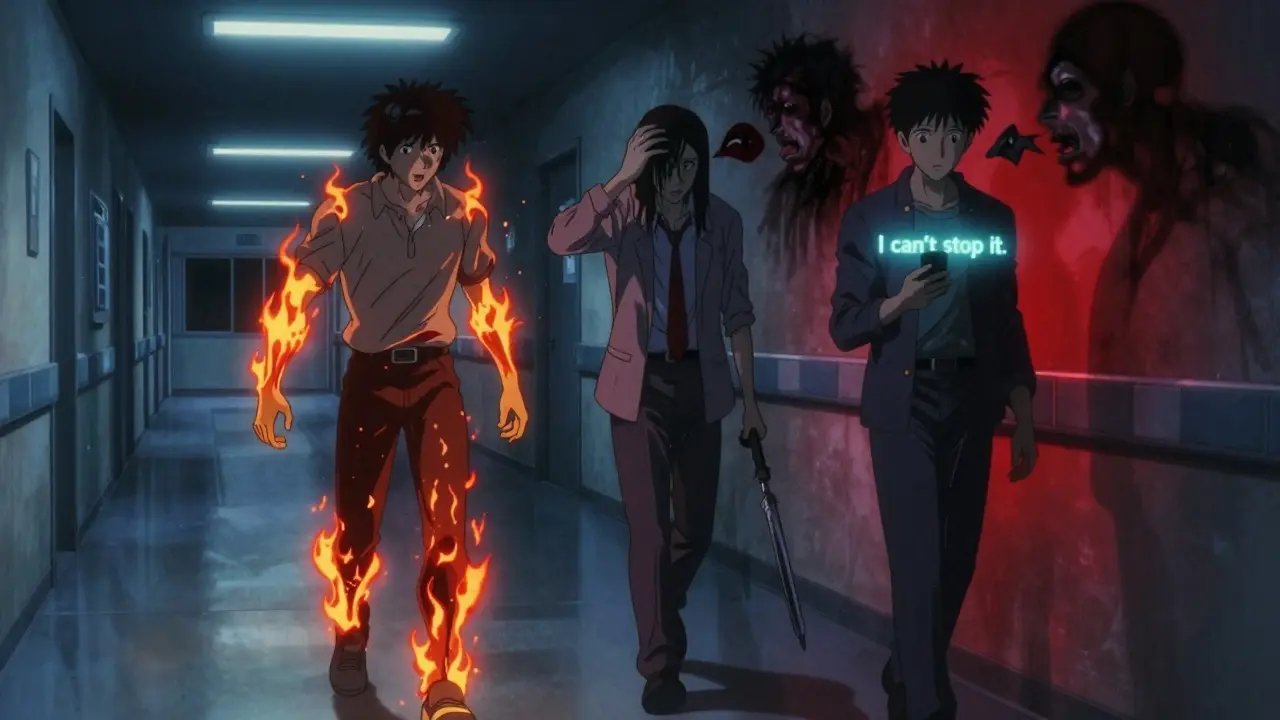
Not every person will show the same symptoms. But studies tracking thousands of cases over decades have identified three clear patterns that often appear before a crisis:
These three signs together are known as the "activation syndrome." The FDA lists other symptoms too - panic attacks, insomnia, irritability, and hostility. But these three are the most reliable predictors.
It’s not random. Certain people are more likely to experience this reaction.
Here’s something surprising: if a medication doesn’t seem to be working after a few weeks, that actually lowers the risk. The danger isn’t from the depression lingering - it’s from the drug triggering a sudden surge in agitation. That’s why the worst days are often before the person starts feeling better.
Antidepressants are the most common culprits, but they’re not the only ones.
| Medication Class | Examples | Typical Onset | Key Risk Factor |
|---|---|---|---|
| SSRIs | Fluoxetine, sertraline, escitalopram | 3-14 days | High incidence of akathisia |
| SNRIs | Duloxetine, venlafaxine | 2-10 days | Fast-acting, sharp mood shifts |
| TCAs/MAOIs | Nortriptyline, trazodone | 5-21 days | Agitated depression pattern |
| Antibiotics | Doxycycline | 7-21 days | May affect brain chemistry via CYP450 |
| Other | Clozapine, dextromethorphan, formoterol | Varies | Unlisted on labels in some cases |
One startling finding from a 2024 study: doxycycline had the highest causality score among non-psychiatric drugs. That means even a common antibiotic can, in rare cases, lead to suicidal thoughts - likely by disrupting brain chemicals linked to mood. And here’s the scary part: many of these risks aren’t listed on the drug labels. A 2024 study found at least nine medications with unreported suicide risks, affecting millions of people every year.

If you or someone you care about starts a new medication, here’s what to do:
Studies show that when people stop the medication causing the problem, 87% see their suicidal thoughts go away. That’s not a coincidence. It’s proof that this isn’t about the illness - it’s about the drug’s effect.
Progress is happening, but slowly.
By 2024, the FDA plans to require all new antidepressants to include specific testing for activation syndrome during clinical trials. Genetic testing for CYP2D6 and CYP2C19 enzyme variants - which affect how the body processes drugs - can now predict 68% of cases. And new smartphone apps are tracking sleep, voice tone, and movement to detect early signs with 79% accuracy.
Still, only 68% of doctors document patient education about these risks, according to a 2022 audit. That means most people aren’t being warned. And only 10% of these reactions are reported to official systems. Underreporting is a huge blind spot.
The goal isn’t to scare people away from treatment. For most, antidepressants work. But for a small group, the wrong drug can turn hope into horror. Awareness, not fear, is the answer.
Yes. This is called medication-induced suicidality. People who’ve never had suicidal thoughts can develop them within days of starting an antidepressant, especially if they’re under 25. It’s not a sign of worsening depression - it’s a side effect. The thoughts feel foreign, intense, and out of character.
Most cases occur within the first 28 days. The highest risk window is days 3 to 14. Some drugs, like doxycycline, may take up to 21 days to trigger symptoms. If you notice sudden changes in mood, restlessness, or strange urges during this time, don’t ignore them.
No. While antidepressants are the most common cause, other drugs like antibiotics (doxycycline), painkillers (piroxicam), and even asthma inhalers (formoterol) have been linked to suicidal thoughts. The FDA has found at least nine medications with unlisted risks. Always ask about psychiatric side effects, even for non-mental health drugs.
Contact your prescriber immediately. Don’t stop the medication on your own - but don’t wait either. Keep a log of symptoms: when they started, how intense they are, and whether they’re getting worse. Your doctor may adjust the dose, switch medications, or add support. In 87% of cases, stopping the drug resolves the issue.
Yes. The Columbia-Suicide Severity Rating Scale (C-SSRS) is widely used in clinics and is 89% accurate at spotting emerging risk. New smartphone apps track sleep, voice tone, and movement patterns to detect early changes with 79% accuracy. Ask your provider if they use these tools.

Bro this is wild but so real. I started sertraline last year and within 5 days I felt like my brain was a live wire. Pacing like a caged animal, couldn’t sleep, thought I was losing my mind. Told my doc - they switched me out in 48 hours. No more suicidal thoughts. Just weird side effects. Don’t ignore the buzz.
PS: They don’t warn you enough. Like why is doxycycline even on this list??

It’s not just about the meds. It’s about how we treat the mind like a broken circuit that needs a quick fix. We throw pills at people like they’re software bugs and expect them to reboot cleanly. But the human nervous system isn’t a laptop. It’s a forest. A storm passes through, and sometimes the lightning hits the wrong tree. Akathisia isn’t anxiety - it’s the body screaming that the chemical it’s been fed doesn’t belong here. And yeah, doxycycline? I read the 2024 study. It messes with gut-brain axis signaling. We’re barely scratching the surface of how antibiotics, steroids, even antihistamines can hijack mood regulation. We need a paradigm shift - not just more warning labels, but a whole new way of thinking about pharmacology. This isn’t depression treatment. It’s neurochemical roulette.
And yet… I still believe in medicine. Just not the way we’re using it right now.

They’re hiding this. I’ve seen it. My cousin was on doxycycline for acne. 10 days in, she texted her mom: "I don’t want to live anymore." Then deleted it. But she kept the draft. The doc said "it’s just stress." Now she’s on disability. The FDA knows. Pharma knows. But they don’t want you to know. Why? Because if people stop taking meds for minor stuff, the profits collapse. They’re letting kids die to keep the money flowing. And don’t get me started on how they bury the data. I’ve got screenshots. I’ve got emails. This is a cover-up.
WHO IS PAYING YOUR DOCTOR??

Thanks for posting this. Needed to read it.
My sister went through this. We caught it early. She’s okay now.

Use the C-SSRS. Ask for it. If your provider doesn’t know it, find someone who does. Simple as that.

Had this happen to me in college. Thought I was just depressed. Turns out it was the fluoxetine. Took me 6 months to realize it wasn’t me - it was the pill. Stopped it. Felt like myself again in 10 days. Don’t suffer silently. Talk to someone. Even if it feels weird.
Also - logging mood daily helped me see the pattern. No fancy app needed. Just a notebook.

so like... the brain is a black box and we just throw chemicals at it and hope for the best? i mean wtf. we dont even know how most of these drugs work on a biological level. we just know they change serotonin or whatever and then people either feel better or want to jump off a bridge. its like trying to fix a car by throwing random parts at the engine. and the doctors? theyre just following the script. the script written by big pharma who got rich off this. and now we got these "activation syndromes" like its some new fad. no its just the side effect of treating minds like machines. and we dont even have good tests. just guesswork. and people die. and no one gets punished. its all so fucked up.

Did you know that the FDA’s black box warning was only added because of a whistleblower lawsuit? And that the original data was buried for over a decade? And that the studies proving this link were funded by the same companies making the drugs? The whole system is rigged. They don’t want you to know that your antidepressant might be poisoning your mind. They want you to stay on it forever. Because that’s where the money is. And now they’re pushing genetic testing? That’s just another way to upsell you on lifelong prescriptions. They’re not protecting you - they’re profiting from your fear. I’ve seen the documents. This isn’t medicine. It’s a pyramid scheme with a stethoscope.

As someone from India, I’ve seen this firsthand. My cousin was prescribed an SSRI after a breakup - within days, she became unrecognizable. Agitated, pacing, whispering to herself. We took her off it immediately. She’s fine now. But here’s the thing - in many places, doctors don’t even ask about family history. They just write the script. This isn’t just a Western problem. It’s global. And the lack of awareness? It’s deadly. We need community education - not just clinical guidelines. Talk to your aunt. Tell your neighbor. This isn’t shame. It’s survival.

Man I wish I’d known this back in 2019. I started Lexapro and suddenly I felt like I was trapped inside my own skull. Thoughts like "I should just end it" popped up like pop-ups on a bad browser. But I didn’t feel sad - I felt like someone else was thinking them. I told my mom and she freaked out. We went to the ER. They said "it’s normal" - I knew it wasn’t. I stopped cold turkey because I was scared. Big mistake. Went through hell for 2 weeks. But I’m glad I listened to my gut. Now I take a low dose of bupropion and I’m good. Just… if you’re starting something new, don’t wait. If it feels off, it probably is. Trust yourself. Even if your doctor says "it’s just adjustment."
Also - I’ve been using the Moodfit app. It’s not perfect but it helped me track the weird spikes. Worth a try.

Stop being so sensitive. If you can’t handle a little side effect, don’t take the pill. Life’s hard. Pills aren’t magic. You want to live? Grow up.

This post is overly dramatic. Most people benefit from antidepressants. The risks are minimal. You’re creating panic where none is needed. People need to take responsibility for their mental health - not blame pharmaceuticals.

Oh wow. So now we’re treating depression like a haunted house? "The pills are haunted, don’t touch them!"
Look - yes, some people have bad reactions. That’s true for every single drug ever made. Penicillin kills some. Aspirin causes bleeding. Even coffee can trigger panic in sensitive people. But we don’t ban coffee. We don’t stop prescribing penicillin. We monitor. We educate. We adjust.
This post reads like a fear campaign. And honestly? It’s doing more harm than good. People are scared to take meds they need. That’s worse than a few bad reactions. The real crisis? The 70% of people who never get treated because they’re terrified of side effects. We need balance. Not panic. Not conspiracy. Just better science. And maybe… less sensationalism.
Also - doxycycline? Come on. One study. One outlier. Don’t turn a rare side effect into a public health panic. You’re not helping. You’re scaring people away from real treatment.