Every year, medication errors harm at least 1.5 million people in the United States. If you or a loved one takes multiple prescriptions, this statistic hits hard. Managing several pills a day feels overwhelming, especially when one drug might cancel out another or cause side effects. That is why creating a solid medication schedule is not just about organization; it is about safety. By structuring when and how you take your medicines, you can significantly reduce the risk of harmful interactions while ensuring your treatments actually work.
This guide walks you through building a schedule that keeps you safe. We will look at proven systems like the Universal Medication Schedule, tools that help you remember doses, and how to work with your healthcare team to catch errors before they happen. You do not need a medical degree to do this, but you do need a plan.
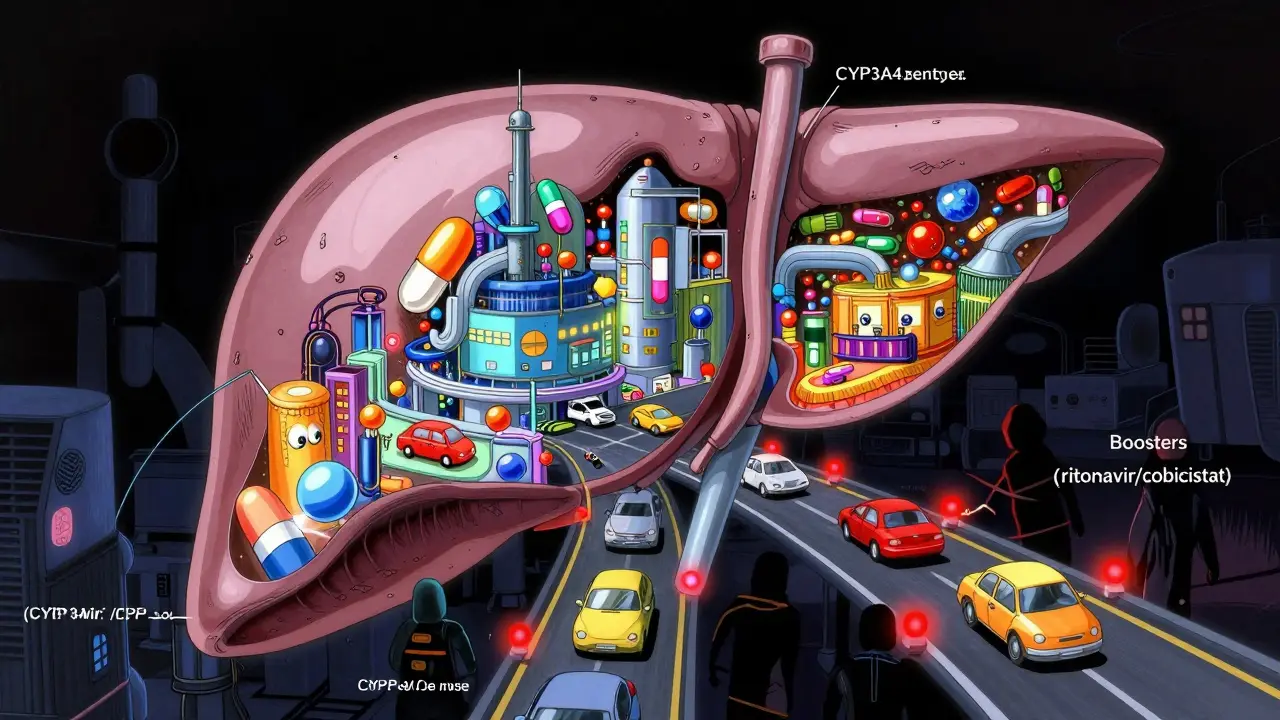
Before you start scheduling, you need to know what you are avoiding. A Drug Interaction is a situation where one medication affects the activity of another, potentially reducing effectiveness or causing harm. These interactions happen in three main ways: drug-to-drug, drug-to-food, and drug-to-condition.
Consider the scenario where you take a blood thinner like warfarin. If you also take certain pain relievers like ibuprofen, your risk of bleeding increases dramatically. Or imagine taking thyroid medication with calcium supplements. The calcium can block your body from absorbing the thyroid drug, meaning you are taking a pill that does nothing for your condition. These are not rare occurrences. Patients taking five or more medications experience drug interactions at rates as high as 82% according to a 2019 study published in the Journal of the American Geriatrics Society.
The cost of these errors is staggering. Medication-related problems cost the U.S. healthcare system an estimated $528.4 billion annually. This is not just about money; it is about emergency room visits and hospital stays that could have been prevented. Understanding that your medications talk to each other is the first step in taking control of your health.
Doctors often write instructions like "take twice daily" or "take with food." These phrases are vague. What does "morning" mean to you? 6 AM? 10 AM? Research shows that ambiguous instructions lead to confusion. A study by Michael S. Wolf at Northwestern University Feinberg School of Medicine found that 34% of patients misinterpreted standard dosing instructions.
To fix this, researchers developed the Universal Medication Schedule is a standardized approach to simplify medication timing instructions using specific timeframes. This system replaces vague terms with clear windows:
When the Universal Medication Schedule was implemented in clinical trials, medication misinterpretation dropped from 34% to just 6%. Adherence improved by nearly 13 percentage points. This standardization helps you and your pharmacist speak the same language. Instead of guessing, you know exactly when a pill belongs. If your doctor writes "take at noon," you know it must be between 10 AM and 2 PM.
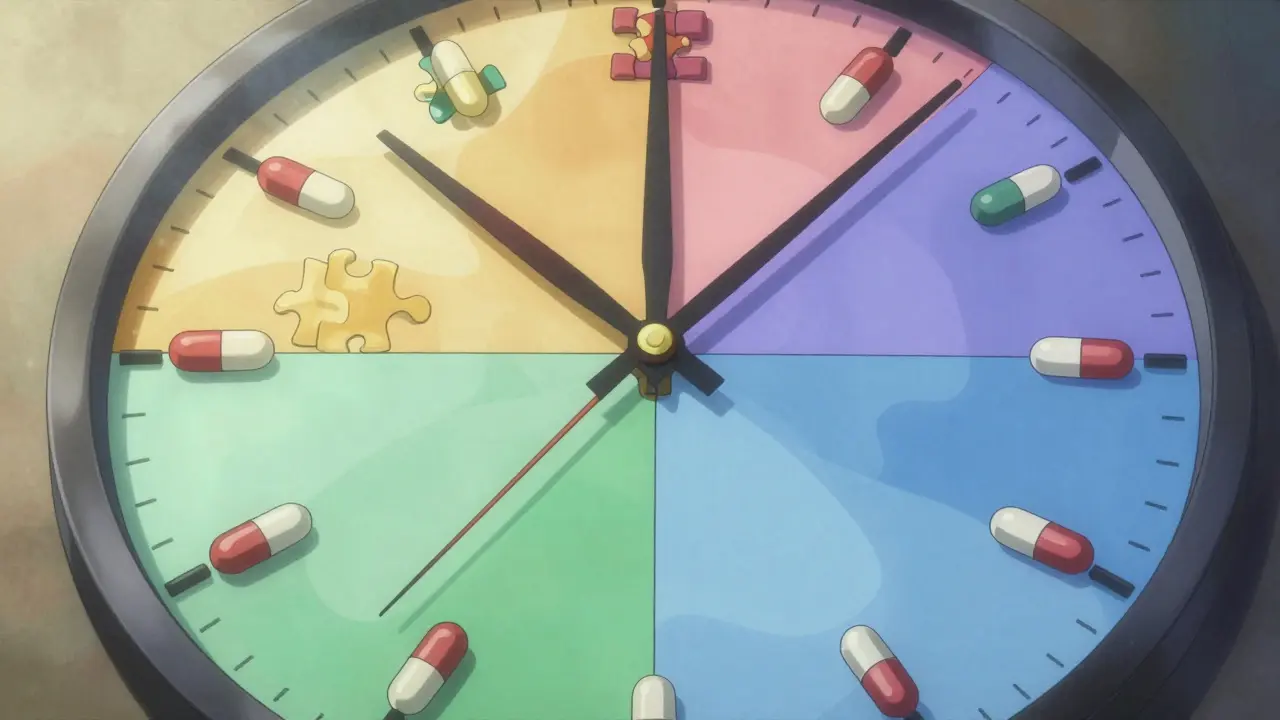
Creating a schedule is a project, but it becomes routine quickly. Follow these steps to build a system that works for your lifestyle.
Memory fails us all, even the most organized people. Tools can bridge the gap between intention and action. You have two main choices: digital apps or physical organizers.
Digital Medication Management Apps
Apps like Medisafe and MyTherapy send alerts to your phone. A 2021 study in the Journal of Medical Internet Research showed these apps demonstrate 20-35% higher adherence rates than paper-based systems. They can track refills, log doses, and even alert family members if a dose is missed. However, adoption is a barrier for some. Only 38% of users over 65 consistently engage with app reminders. If you are comfortable with smartphones, these are excellent for detailed tracking.
Pill Organizers
Physical pill organizers with AM/PM compartments or 7-day segmented containers reduce dosing errors by 45% according to a 2018 meta-analysis in the Annals of Internal Medicine. They are simple and do not require charging. Many users prefer color-coding by condition. For example, blue for heart medication, red for diabetes, and green for vitamins. This visual cue helps you quickly spot if you missed a specific category.
Medication Calendars
For those who prefer paper, medication calendars tracking doses with specific date/time entries improve adherence rates from 50% to 75% for chronic conditions. Traditional paper calendars remain effective for 72% of patients with limited technology access. They lack automated reminders, but the act of checking off a box provides a sense of completion.
| Tool Type | Adherence Rate | Best For | Limitations |
|---|---|---|---|
| Digital Apps | 20-35% higher than paper | Tech-savvy users, complex regimens | Low adoption in elderly (38%) |
| Pill Organizers | Reduces errors by 45% | Visual learners, simple routines | Requires manual filling |
| Paper Calendars | Improves adherence to 75% | Low tech access, caregivers | No automated reminders |

You cannot manage medication interactions in a vacuum. Your doctors and pharmacists are your partners. The Agency for Healthcare Research and Quality identifies medication reconciliation as one of the top 10 patient safety practices. It reduces medication discrepancies by 48% during care transitions.
Every time you see a new specialist, bring your updated medication list. Do not rely on their electronic health records to be perfect. A 2022 report noted that patients see an average of 13.1 specialists over five years, complicating coordinated medication management. Fragmentation is the enemy of safety. When you visit, ask your doctor to review your list against the Beers Criteria is a list of medications that may be potentially inappropriate for older adults. Updated in 2023, this criteria identifies 30 high-risk medication combinations that should be avoided in older adults, particularly those involving anticoagulants and NSAIDs which increase bleeding risk by 60-70% when combined.
Pharmacists are often the most accessible experts. Clinical pharmacist-led medication therapy management reduces drug interactions by 32% and emergency department visits by 24%. Ask for a comprehensive medication review at least once a year. If you notice symptoms like dizziness, gastrointestinal distress, or unusual bruising, contact them immediately. These could be signs of an interaction you missed.
Even with a plan, things go wrong. Here is how to handle the most common problems.
Conflicting Instructions
67% of survey respondents cited conflicting timing instructions from different specialists as a major barrier. If your cardiologist says "take with food" and your endocrinologist says "take on empty stomach," you need to resolve this. Call the prescribing doctors. Often, one instruction can be adjusted without losing efficacy. Do not guess.
Missed Doses
What happens if you miss a morning dose? The rule of thumb is: if you remember it within a few hours, take it. If it is close to the next dose, skip it. Never double up to catch up. This rule prevents overdose. Keep a log of missed doses to discuss with your pharmacist.
Traveling
Time zones and routines change when you travel. Keep your medications in your carry-on bag, not checked luggage. If you cross time zones, adjust your schedule gradually. For critical medications like insulin or blood thinners, consult your doctor before the trip to create a travel-specific schedule.
As-Needed Medications
Managing scheduled meds alongside as-needed ones (like painkillers) is tricky. Track these separately on your calendar. If you start using an as-needed medication frequently, it is a sign to see your doctor. It may mean your underlying condition needs better management.
Start by creating a complete list of all your medications, including supplements. Then, consult a pharmacist to check for interactions. Finally, group your medications into the Universal Medication Schedule timeframes: morning, noon, evening, and bedtime.
Not always. Some medications need to be separated by hours to absorb properly. For example, calcium and thyroid meds should be two hours apart. Always check with your pharmacist before combining doses.
Group these with your meals. If you take something with breakfast, schedule it for the morning window. If it requires an empty stomach, take it at least one hour before eating or two hours after.
If you remember within a few hours, take it. If it is close to your next dose, skip the missed one. Do not take two doses at once to make up for the missed one.
Apps offer higher adherence rates for tech-savvy users, but pill organizers are better for those who prefer physical cues. The best tool is the one you will use consistently every day.

It is truly remarkable how often we overlook the simple mechanics of daily health maintenance until a crisis occurs. My mother struggled with her prescriptions for years before we sat down and mapped everything out on a calendar. The confusion surrounding morning versus noon dosing is something that plagues so many families in our community. I have seen neighbors accidentally double up on vitamins because the instructions were never clear enough for them to understand. When you consider the sheer volume of pills some individuals consume, the risk of interaction becomes a very real and tangible threat. We need to talk more about how cultural habits around food might interfere with these absorption windows mentioned in the text. It is not just about taking the pill but understanding the biological clock that dictates when it works best. I remember when my aunt took calcium with her thyroid meds and wondered why her energy levels never improved despite compliance. The pharmacist eventually caught the error and explained the two-hour separation rule that everyone seems to forget. This kind of knowledge should be passed down through families just like recipes or traditional remedies. We cannot rely solely on doctors to remember every single supplement we take because they do not see us every day. Having a brown bag review is something I advocate for strongly among my own circle of friends and relatives. It feels empowering to hold the full list in your hands and see exactly what is entering your bloodstream. The tools mentioned like apps are great but sometimes a simple piece of paper works better for those who are not tech savvy. We must ensure that everyone has access to this information regardless of their income or education level. Safety is a universal right that should not depend on how well you can navigate a complex healthcare system.

The systematic approach to medication management reduces the probability of adverse events significantly. Standardization of time windows eliminates ambiguity that often leads to non-adherence. One must consider the pharmacological properties of each substance to determine optimal administration intervals.

meds are hard to track sometimes and i make mstkes too. the list is way to long for my mom to rember all the times. sometimes i think the doctors dont care about the mix up.

i guess it makes sense to write things down so you dont forget later. maybe having a chart on the fridge would help people like us who get distracted easily.

timing matters more than the drug itself in many cases

One must adhere to the prescribed protocols to ensure optimal therapeutic outcomes. Deviation from established schedules may compromise the efficacy of the treatment regimen.

Stop listening to generic advice and talk to your doctor directly about your specific case. Relying on internet suggestions is dangerous and could lead to serious health complications.

Organizing the daily routine helps keep things safe! 🌟💊 It is amazing how much easier life gets when you have a plan for your health.

Big pharma wants you dependent on schedules that keep you buying more pills than you need. 🧐💊 They profit from confusion so they never make the instructions clear enough.

You are doing great by taking steps to manage your health safely! 💪❤️ It is important to trust your own instincts and ask questions when things feel off.

people ignore the warnings until they end up in the hospital

just ignore the apps and use a box.

Pharmacokinetic profiles vary significantly between compounds and self-regulation is often insufficient. Bioavailability is compromised by concurrent ingestion of certain dietary elements.

it is hard to rember all the times but the chart helps alot. i think everyone shoudl try the paper method first.

Adherence metrics improve with synchronized refill cycles.