Every year, more than 1,000 generic drugs hit U.S. shelves - saving patients billions and making prescriptions affordable. But behind each of those pills, patches, or inhalers is a long, strict, and highly technical journey through the FDA’s approval system. This isn’t just paperwork. It’s science, timing, and precision - all built around one core rule: generic drugs must work exactly like their brand-name counterparts.
Think of it like this: the brand-name drug is the original recipe. The generic is the copy. The FDA doesn’t care who made it. They care that it delivers the same active ingredient, at the same dose, the same way - and that your body absorbs it the same way too.
You can’t just pick any similar drug. The RLD must be the exact one the FDA used as the standard for approval. If the RLD has been withdrawn from the market, you can’t use it. If there are multiple RLDs, you must pick one and justify why. This step alone can take weeks of research and legal checks, especially if the original drug has multiple formulations or has been reformulated over time.
Inactive ingredients (fillers, dyes, preservatives) can be different - but they must be safe and not affect how the drug works. The FDA reviews these closely, especially for drugs with narrow therapeutic indexes, like warfarin or lithium, where even tiny changes can cause serious side effects.
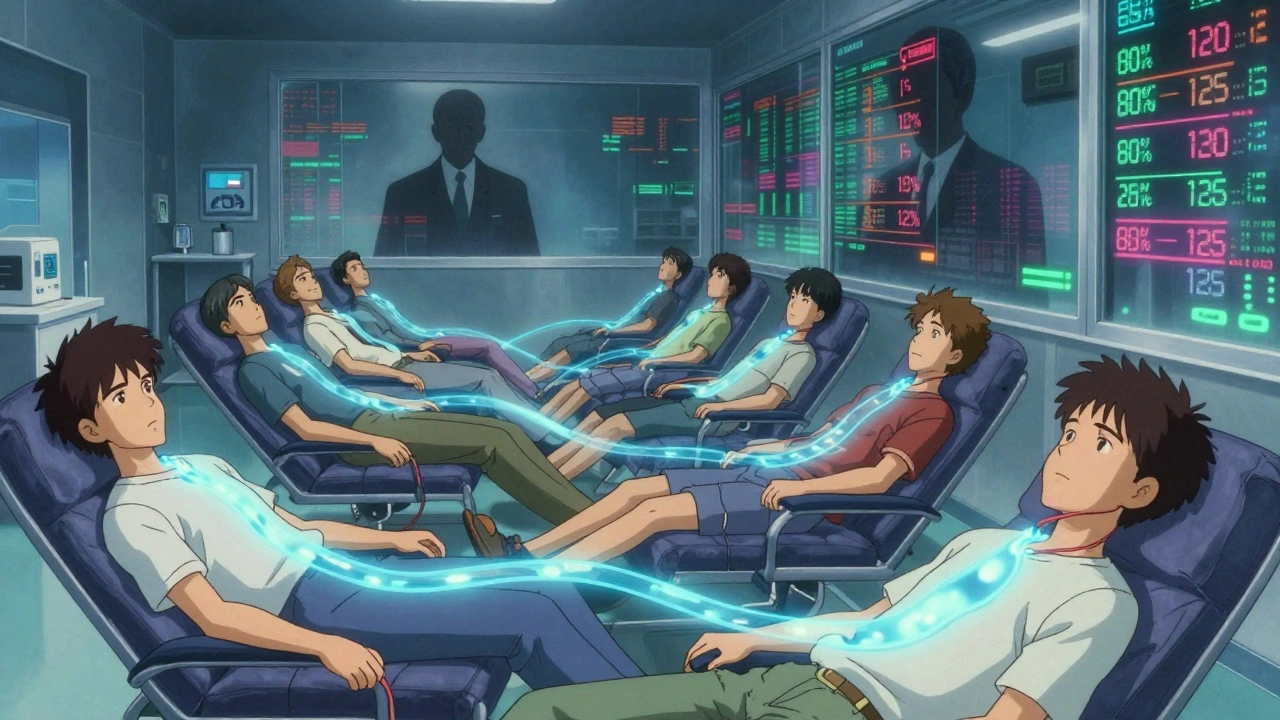
To prove this, you run a bioequivalence study - usually with 24 to 36 healthy volunteers. Each volunteer takes both your generic and the RLD on separate occasions, with a washout period in between. Blood samples are taken over several hours to measure how much drug enters the bloodstream and how quickly.
The FDA requires the average concentration of your drug to fall within 80% to 125% of the RLD’s levels. That’s not a wide range - it’s tight. If your drug peaks too fast or too slow, or if the total exposure is off by even 10%, the application gets rejected.
Complex products like inhalers, nasal sprays, or topical creams are harder. They can’t be tested the same way. The FDA has special guidance for these - and often requires additional testing, like in vitro studies or clinical endpoint trials. In fact, about 15% of ANDAs involve these complex products, and they take longer to approve.
This includes:
Manufacturing sites - even overseas ones - must pass FDA inspections. The agency doesn’t trust paperwork alone. They show up unannounced. If your facility failed a recent inspection, your ANDA won’t even be reviewed.
Formatting errors are a top reason for rejection. One misplaced file or incorrect label can delay your application for months. Many companies hire specialized consultants just to format the eCTD correctly.
If it’s accepted, the review clock starts. Under GDUFA IV (2023-2027), the FDA aims to complete 90% of first-cycle reviews in 10 months. But here’s the catch: most applications aren’t approved on the first try.
About 25% get a Complete Response Letter (CRL). That means the FDA found issues - maybe a flaw in your bioequivalence study, missing stability data, or a labeling mismatch. You get one chance to respond. If you don’t fix it right, your application is denied.
Common reasons for CRLs:
Inspections focus on cGMP compliance. They check your records, observe your processes, test samples. If they find major violations - like falsified data or poor sanitation - your ANDA is dead. Even minor issues can delay approval for months.
You must still navigate patent and exclusivity rules. If you’re the first to file an ANDA and challenge a patent (called a Paragraph IV certification), you may get 180 days of market exclusivity. That’s valuable. The first generic version of Humira made over $1.2 billion in sales during its exclusivity period in 2023.
Once approved, you can start shipping. The FDA publishes your drug in the Orange Book with a therapeutic equivalence code - usually “AB,” meaning it’s interchangeable with the brand.

Typical timeline:
Total: 18-31 months from start to approval.
Cost: $1 million to $5 million per ANDA. For complex products, it can hit $10 million.
Smaller companies focus on niche drugs or complex products. Many fail because they underestimate the cost and complexity. The FDA’s own data shows that 75% of ANDAs get approved on the first try - but that doesn’t mean they’re easy.
Artificial intelligence is being tested to sort through documents faster. By 2025, AI tools could reduce administrative review time by 25%. That means fewer delays from paperwork errors.
Meanwhile, biosimilars - generic versions of biologic drugs - are rising. The FDA expects to approve 10-15 per year by 2026, up from 5-7 today. The ANDA model is becoming the blueprint for more complex drugs.
But that savings only happens if the system works. If the FDA delays approvals, if companies can’t meet standards, if inspections are ignored - patients pay the price in higher costs and delayed access.
The ANDA process isn’t perfect. There are cases where manufacturing differences led to clinical issues, especially with narrow therapeutic index drugs. But overall, it’s one of the most successful public health policies in modern medicine - because it doesn’t sacrifice safety for speed. It demands exactness. And that’s what keeps patients safe.
On average, the FDA takes 10 to 12 months to review a complete ANDA after it’s accepted. But the entire process - from developing the drug to final approval - typically takes 18 to 31 months. This includes 6-9 months for bioequivalence studies, 3-6 months for manufacturing documentation, and 2-4 months to prepare the application. Delays happen if the FDA issues a Complete Response Letter or if manufacturing inspections uncover issues.
Yes - but only in ways that don’t affect safety or effectiveness. Generics must have the same active ingredient, strength, dosage form, and route of administration. Inactive ingredients like fillers or dyes can differ, but they must be safe and not change how the drug is absorbed. The FDA requires bioequivalence testing to prove the drug performs the same in the body. If a generic fails this test, it won’t be approved.
A Complete Response Letter is the FDA’s official notice that an ANDA cannot be approved in its current form. It lists specific deficiencies - like flawed bioequivalence data, incomplete CMC information, or labeling errors. The applicant has one chance to respond with corrections. If the response doesn’t fully address the issues, the application is denied. About 25% of ANDAs receive a CRL, making it one of the biggest hurdles in the approval process.
No. Many generic drugs are manufactured overseas - especially in India and China. But every facility, no matter where it’s located, must pass an FDA inspection to prove it follows Current Good Manufacturing Practices (cGMP). The FDA sends inspectors to foreign sites just like they do in the U.S. If a facility fails inspection, the ANDA is rejected, regardless of how good the data looks on paper.
An NDA (New Drug Application) is for brand-name drugs and requires full clinical trials to prove safety and effectiveness. It takes 6-7 years and costs over $2 billion. An ANDA (Abbreviated New Drug Application) is for generics and relies on the safety data of the already-approved brand-name drug. It only needs to prove pharmaceutical and bioequivalence. The ANDA process takes 3-4 years and costs $1-5 million - making it far faster and cheaper, but only possible after the original drug’s patents expire.
The Orange Book, officially titled “Approved Drug Products with Therapeutic Equivalence Evaluations,” is the FDA’s public database of all approved drug products. It lists brand-name and generic drugs, their active ingredients, manufacturers, patent information, and therapeutic equivalence ratings. A drug rated “AB” means it’s interchangeable with the brand-name version. Generic manufacturers use the Orange Book to identify the correct Reference Listed Drug (RLD) for their application.
Yes. The first generic company to file an ANDA that successfully challenges a brand-name drug’s patent can receive 180 days of market exclusivity. During this time, no other generic can enter the market. This incentive encourages companies to take legal risks and file early. For example, the first generic version of Humira generated over $1.2 billion in sales during its 180-day exclusivity period in 2023. But this exclusivity can be lost if the applicant doesn’t launch the drug within 75 days of approval or if they settle a patent lawsuit too early.

lol so now the FDA is just a glorified paper-pushing machine? I bet 80% of these "generic" pills are made in some basement in India with chalk and wishful thinking.

why do we even bother? they all do the same thing anyway. just give me the cheap one and shut up. 😴

This is a classic case of regulatory overreach disguised as safety! The FDA demands 10-month reviews, unannounced inspections, and eCTD formatting that even IT departments can't master... while Big Pharma sits back and patents every minor variation of aspirin! It's a rigged game-$5 million to prove a pill works? That's corporate extortion disguised as science!

I love how they say "same active ingredient" but then act like the fillers don't matter... 🤔 I had a generic version of my anxiety med and I swear I felt like a zombie for two weeks. The brand? Perfect. So yeah, "bioequivalent" doesn't mean "feels the same." 🙃

It’s fascinating, really, how this whole system is built on trust-trust that the manufacturer isn’t cutting corners, trust that the inspector will show up, trust that the FDA’s metrics actually reflect real-world outcomes. And yet, despite all the bureaucracy, it works. Most generics are fine. Most people never know the difference. Maybe the real miracle isn’t the science-it’s that we haven’t completely broken it yet.

Bro, this whole ANDA thing is like trying to bake a cake while wearing oven mitts made of legal briefs. You gotta match the flour, the sugar, the oven temp, the damn whisking motion-and if you sneeze during the eCTD upload? Good luck getting that 180-day exclusivity. But hey, at least we’re not paying $1,200 for a pill that costs 12 cents to make. 🙌

The regulatory framework governing the Abbreviated New Drug Application process constitutes a meticulously calibrated equilibrium between pharmaceutical innovation and public health accessibility. The requirement for bioequivalence within the 80–125% confidence interval is statistically robust and clinically validated. Deviations in manufacturing protocols, even at the sub-milligram level, necessitate stringent cGMP compliance to mitigate risk of therapeutic failure, particularly in agents with narrow therapeutic indices.

I used to think generics were just cheaper versions of the same thing. Then my dad had a stroke because his blood thinner didn't absorb right. Turned out the generic had a different filler that slowed absorption. He's fine now, but... I just can't unsee it. The FDA says it's safe. But when your life's on the line, "safe" doesn't feel like enough.

Let me get this straight: You spend millions to prove a pill is "the same," but the FDA still rejects 25% of applications? And you think this is efficient? This isn't science-it's a bureaucratic obstacle course designed to protect the status quo. The real generic winners? The ones who bribe inspectors or outsource to factories that "forget" to log batch numbers.

i think the fda is just trying to keep prices high by making it hard to make generics. why do they need all this paperwork? just let people make the pills and see what happens. my cousin took a generic and lived. so it works. 🤷♂️

Too much fuss. Generic works. Save money. Done.

It’s interesting how the system assumes equivalence is purely pharmacokinetic-blood concentration, AUC, Cmax-but never considers the phenomenological experience: how the pill feels in your mouth, the rhythm of your daily intake, the psychological reassurance of the brand’s color or shape. We reduce human health to a curve on a graph, and then wonder why people mistrust the system. Perhaps the real gap isn’t in the drug-but in the story we tell about it.