Every year, millions of people around the world take medications they think are real - but aren’t. Counterfeit drugs aren’t just a problem in faraway countries. They’re in your medicine cabinet, your local pharmacy, and on websites that look legitimate. The counterfeit medication trade is a $200 billion criminal industry, and it’s getting smarter. Some fakes look identical to the real thing. Others are so poorly made they’re dangerous. Knowing what to look for could save your life - or someone you love.
Look for spelling mistakes. Not just typos - misspelled drug names, wrong company logos, or misplaced punctuation. In 63% of confirmed counterfeit cases, the packaging had at least one spelling error, according to the FDA’s 2023 database. Batch numbers? If they’re missing, smudged, or don’t match the format on the manufacturer’s website, that’s a red flag. Expiry dates that look pasted on, or printed in a font that’s slightly off? That’s another warning.
Feel the seal. Tamper-evident seals should tear cleanly when opened. If it looks like it was resealed with glue or tape, walk away. One pharmacist in Birmingham told me about a patient who brought in a bottle of insulin where the cap had been reattached with a different color of plastic. The patient had bought it online for 70% less than the pharmacy price. The insulin was fake - and it didn’t work.
Consumer Reports found that websites offering drugs 60% below retail had an 87% counterfeit rate. Even sites offering 40% off still had a 12% chance of selling fake pills. The DEA’s Operation Press Your Luck in 2024 showed that nearly all counterfeit opioid pills were sold at prices 70-80% below market value. Why? Because they’re cheap to make - and deadly. Many contain fentanyl, a synthetic opioid 50 to 100 times more potent than morphine.
If it sounds too good to be true, it is. Don’t be fooled by flashy websites or testimonials. Real pharmacies don’t need to sell like carnival barkers.
Legitimate tablets have consistent weight, diameter, and coating. The USP (United States Pharmacopeia) says tablets should not vary more than 5% in weight or 2% in diameter. Counterfeit pills? They’re all over the map. Some are too thick. Others crumble when you touch them. Some have a weird, chalky feel. Others are overly glossy - like they’ve been sprayed with polish.
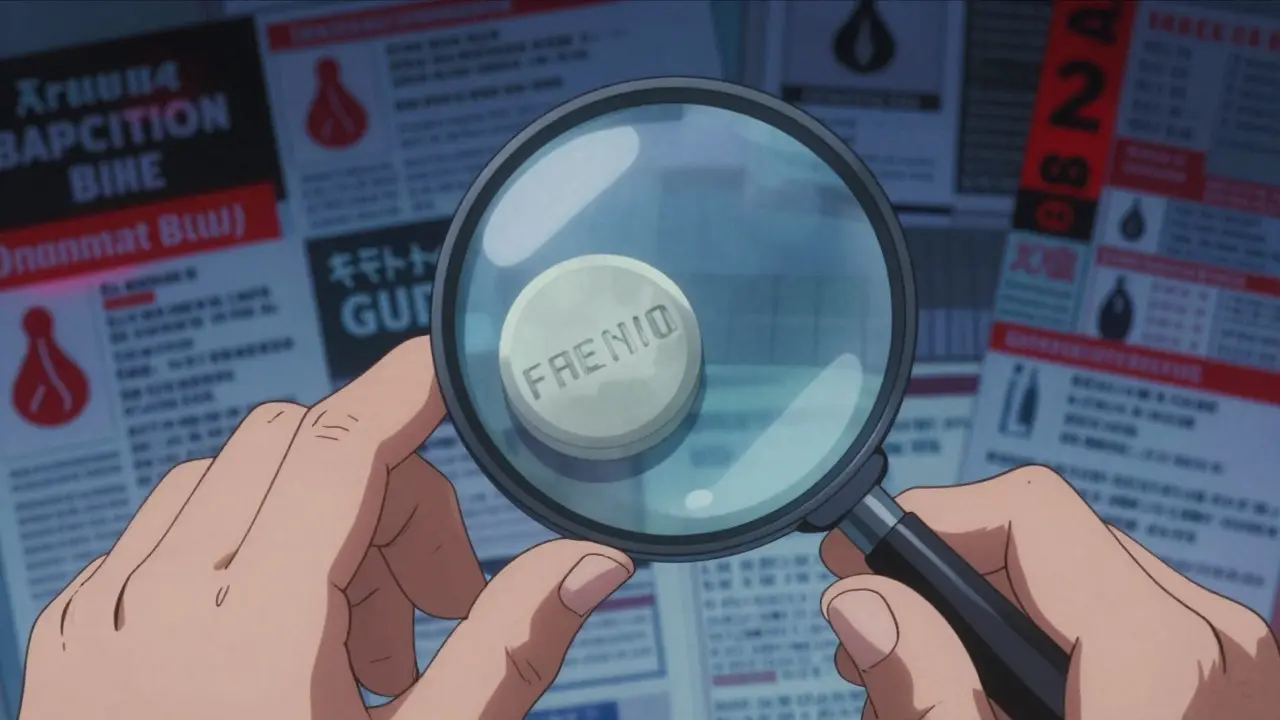
One of the most telling signs? The imprint. Every real pill has a unique code stamped into it - a letter, number, or symbol. That imprint is made with precision tooling. Counterfeiters try to copy it, but they can’t match the depth or clarity. Under magnification, real imprints have sharp edges. Fakes look blurry, uneven, or even slightly raised. Pfizer’s 2023 guide says even microscopic differences in embossing can reveal fakes. Dr. Theresa Michele from the FDA says, “We’ve seen counterfeits that look perfect to the naked eye - but under 50x magnification, the pattern is wrong.”
Legitimate tablets should stay mostly intact. They might soften, but they won’t dissolve completely. In 98.7% of counterfeit antimalarial drugs studied in 2023, the pill broke down in under 30 minutes. That’s because they’re made with cheap fillers - chalk, sugar, or even sawdust - instead of real medicine.
Reddit’s r/pharmacy community has over 2,000 reports from users who noticed this. One user wrote: “My metformin used to take 20 minutes to dissolve. This batch dissolved in 2 minutes. I called my pharmacist. They confirmed it was fake.” Another noticed the smell. “It smelled like plastic. My last bottle had no odor.” That’s another clue. Real medications don’t smell like chemicals or rubber.
Any site that sells prescription drugs without a prescription is automatically suspect. That’s not just illegal - it’s dangerous. The DEA says 92% of verified counterfeit incidents came from websites that didn’t require a prescription. Even worse, many fake sites mimic real ones. They copy logos, use similar domain names, and even fake customer reviews.
Check the site’s security. Look for “https://” and a padlock icon. But that doesn’t mean it’s safe. Scammers use secure connections too. The only reliable way to verify? Use the NABP’s .pharmacy checker. Type in the website name. If it’s not on the list - don’t buy.

The DEA found counterfeit Viagra that contained amphetamine - not sildenafil. Fake weight-loss pills have been laced with laxatives, stimulants, and even rat poison. Opioid counterfeits? They’re often filled with fentanyl. One pill can contain enough fentanyl to kill an adult. The DEA’s 2024 report showed that 100% of counterfeit oxycodone pills seized in Operation Press Your Luck contained fentanyl - at doses ranging from 0.5mg to 2.3mg per tablet. That’s 10 times the dose of a real 0.2mg fentanyl patch.
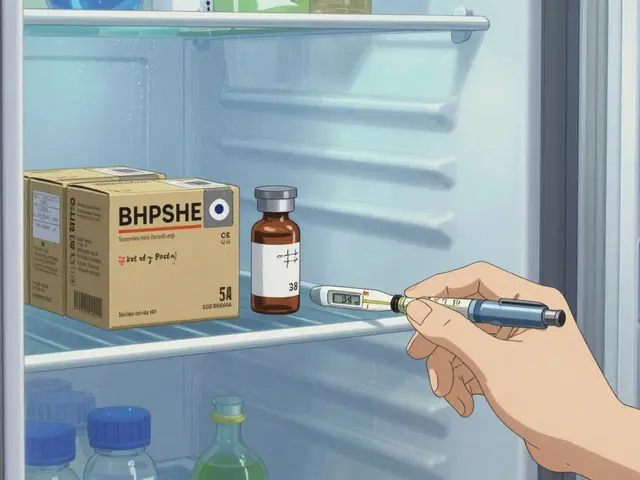
Even more alarming: counterfeit biologics - like Humira or Ozempic - are rising fast. These drugs require cold storage. Fake ones often lack refrigeration logs. That means they’re not just ineffective - they’re chemically unstable. The FDA confirmed a case in May 2024 where fake Humira had been stored at room temperature for months. The active ingredient had degraded. Patients who used it suffered severe flare-ups.
Call your pharmacist. They’re trained to spot fakes. They can compare your medication to the manufacturer’s reference images. Most major drugmakers - Pfizer, Janssen, Novo Nordisk - have online verification tools. You can upload a photo of the pill or batch number and get an answer within minutes.
Report it. File a report with the FDA’s MedWatch system. You can do it online in under five minutes. It’s anonymous. And it helps them track outbreaks. In 2024, over 1,200 counterfeit alerts were added to the FDA’s database - many started with a single patient’s report.
If you bought the drug online, contact your credit card company. Charge it back. These sites often disappear after a few months. You might not get your money back - but you’ll help shut them down.
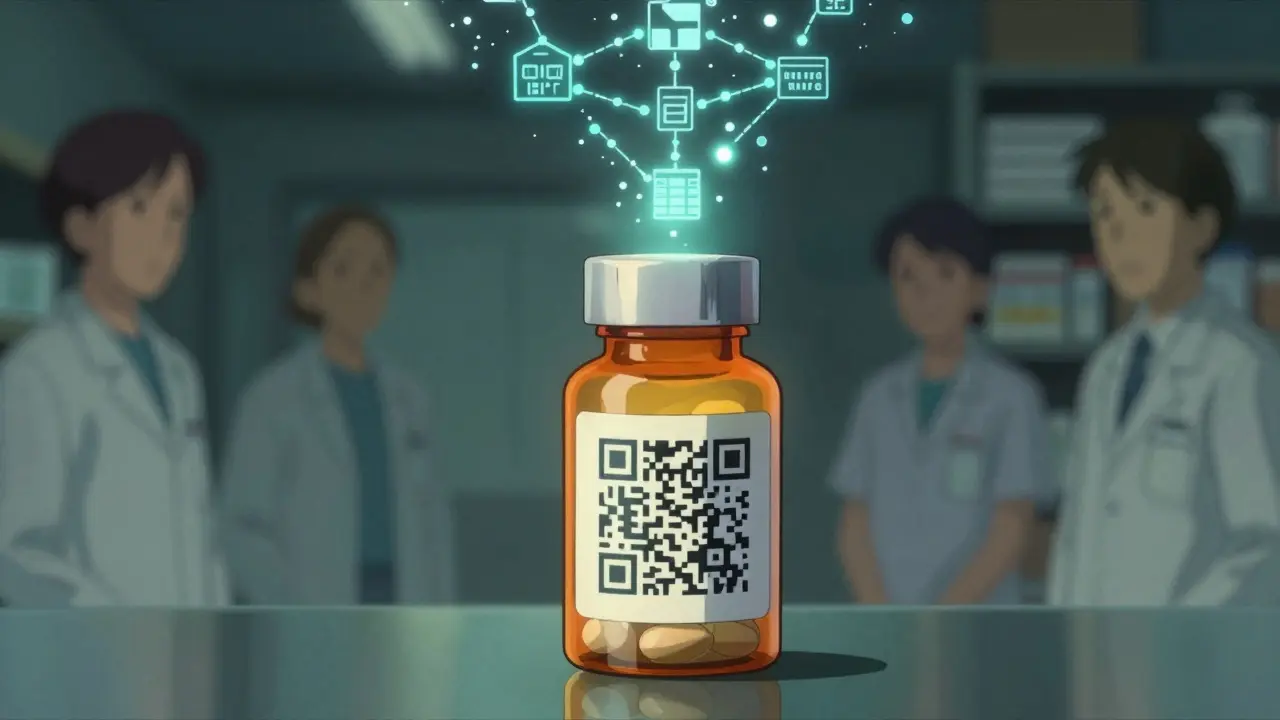
By 2027, blockchain tracking will be mandatory across 75% of the global supply chain. That means pills will have digital fingerprints you can scan. But until then, you’re your own first line of defense.
Look for inconsistencies in color, shape, size, or imprint. Real pills are uniform. Fakes often have blurry or uneven lettering, odd textures (too chalky or too shiny), or mismatched colors. Compare your pill to images on the manufacturer’s website. If the imprint is slightly off or the tablet feels brittle, it could be fake. Even microscopic differences - like depth of the stamp - can be a clue. A 2023 study found that 78% of counterfeit pills were caught by packaging or pill appearance alone.
Absolutely. Many fake pills contain no active ingredient at all. If you’re taking a fake version of blood pressure, insulin, or epilepsy medication, you’re not getting the treatment you need. That can lead to serious health crises - stroke, diabetic coma, or seizures. Even inactive ingredients matter. Some fakes use toxic fillers like talc, boric acid, or industrial dyes. In 2024, a batch of counterfeit asthma inhalers was found to contain a chemical that caused lung inflammation in users.
Only if they’re verified by the National Association of Boards of Pharmacy (NABP) and end in .pharmacy. As of January 2025, only 6,214 sites met that standard. All others - even those with professional-looking websites - are risky. Legitimate online pharmacies require a valid prescription and offer phone support from licensed pharmacists. If a site doesn’t ask for a prescription or can’t answer questions about your medication, walk away.
Because they’re expensive and in high demand. Ozempic costs around $969 per month. Counterfeiters can make a fake pill for less than $1 and sell it for $50. That’s a 50,000% profit margin. The same goes for Viagra - a real pill costs $8, but fake versions sell online for $1. With millions of people seeking these drugs for weight loss or erectile dysfunction, counterfeiters have a massive market. The DEA predicts a 200% increase in counterfeit GLP-1 agonists like Ozempic by 2026.
Stop taking it immediately. Contact your doctor or pharmacist. If you’re experiencing side effects like dizziness, chest pain, extreme fatigue, or unusual bleeding, go to the ER. Report the pill to the FDA through MedWatch - even if you feel fine. Fake pills often contain unknown substances. You might not feel effects right away, but they can cause long-term damage. Keep the packaging and pill for testing. Your pharmacist can help you get a replacement from a verified source.

Wow. Another 'awareness campaign' that somehow forgets to mention the real problem: the FDA and pharma monopolies that make drugs unaffordable so people turn to sketchy sites. You want to stop fakes? Break the patent cartels. Until then, people aren't idiots. They're just desperate.

I just found a bottle of my mom's blood pressure med and I'm so freaked out!!! The cap was slightly off-center and the numbers on the bottle looked smudged?? I called the pharmacy and they said to bring it in immediately!!! I'm so glad I read this!!!

This is actually one of the most useful public service posts I've seen in months. Seriously. I used to buy my diabetes meds online because insurance was a nightmare. Now I only use the .pharmacy sites. Took me three tries to find one that didn't look like a scam. But once I did? Saved my life. Keep sharing this stuff.

Let's be real. The whole 'fake pill' panic is just another fear-mongering tactic to keep people scared and compliant. You think the government doesn't know about this? They're the ones who let the supply chain get this broken in the first place. And now they want you to trust them more? Please. The real danger isn't the fake pills. It's the system that lets them exist.

I work in a rural pharmacy and I can tell you - we see this every week. A guy comes in with a bottle of 'Viagra' he bought from a Facebook ad. It's got a different shape, the imprint is blurry, and the color is off. He says he saved $400. I tell him it's probably laced with fentanyl. He laughs. Then he asks if we can 'just refill it' because he doesn't have the cash for the real thing. We don't judge. We help. But we need more resources. This isn't just about pills. It's about access.

Oh honey. You think the FDA is protecting you? They're the ones who approved the supply chain that made this possible. I lived in India for five years. You think they don't have fake meds there? They do. But they also have a national registry you can scan with your phone. Here? You need a PhD in pharmacy just to verify one pill. That's not safety. That's negligence.

I read the entire post. And I'm sorry, but this is just another example of corporate fearmongering disguised as public health. The 'FDA database' you cite? It's based on seizures, not real-world prevalence. The actual percentage of counterfeit drugs in the U.S. supply chain is less than 0.01%. The real issue? The cost. People aren't buying fakes because they're stupid. They're buying them because they can't afford the $1,200 insulin bill. Blame the system, not the patients.

I knew it. I KNEW IT. The government is using fake meds to control us. They let the fakes in so we get sick, then they sell us the real ones. And the .pharmacy sites? They're all owned by Big Pharma. That's why they're so hard to find. I saw a video on TikTok where a guy scanned his pill and it said 'approved' but his blood pressure spiked. That's not a coincidence. It's a program. I'm not taking anything anymore. I'm going organic. And I'm telling everyone.

You're doing amazing work sharing this!! 💪 I just shared this with my mom's support group - she's on 5 meds and was terrified after reading this. We're all going to check our bottles this weekend. You're helping save lives. Thank you!! 🙏❤️

I don't trust any of this. I read somewhere that the FDA and CDC are in cahoots with the pharmaceutical companies. The 'verified pharmacies' are just fronts. I think they're using this to track us. My last pill bottle had a QR code. I scanned it. It asked for my birthdate. That's not safety. That's surveillance.

The erosion of trust in our pharmaceutical institutions is not merely a failure of regulation - it is the culmination of a decades-long capitulation to corporate hegemony. The very architecture of our drug supply chain, riddled with opaque intermediaries, profit-driven logistics, and regulatory capture, has rendered the concept of 'authenticity' a grotesque farce. To speak of 'packaging discrepancies' as if they are the root issue is to mistake the symptom for the disease. The disease is the commodification of life-saving medicine - a system that turns human vulnerability into a commodity. And until we dismantle the altar of market logic that elevates profit over life, no amount of QR codes or .pharmacy domains will restore what has been lost.

America's drug problem isn't fakes. It's that we let foreigners make our medicine. China and India control 80% of the supply. That's national security. Stop buying from overseas. Buy American. Or don't take pills at all.