When you hear FDA generic approval, the official process by which the U.S. Food and Drug Administration confirms that a generic drug is as safe and effective as its brand-name counterpart. Also known as therapeutic equivalence, it’s what lets pharmacies swap your brand-name pill for a cheaper version without risking your health. This isn’t just a paperwork step—it’s the reason millions of Americans pay less for blood pressure meds, antibiotics, and birth control every single day.
The system works because of the Orange Book database, the FDA’s official list of approved drugs with therapeutic equivalence ratings. Also called Approved Drug Products with Therapeutic Equivalence Evaluations, it’s the backbone of generic drug competition. If a drug’s generic version is listed there with an "AB" rating, it means the FDA has tested it and confirmed it delivers the same amount of active ingredient, at the same speed, into your bloodstream as the brand name. That’s not guesswork—it’s science. And it’s why your pharmacist can legally substitute your brand-name drug without asking your doctor again. But here’s the catch: just because two pills have the same active ingredient doesn’t mean they look the same. That’s why you might get a blue pill one month and a white one the next. The FDA doesn’t control color, shape, or size—only the medicine inside. These changes are legal, safe, and happen because different manufacturers make the same generic drug. You’re still getting the same treatment, just packaged differently.
Behind all this is the Hatch-Waxman Act, the 1984 law that balanced innovation and affordability by letting generic makers copy brand drugs after patents expire, without repeating expensive clinical trials. Before this law, generics were rare and often unreliable. Now, nearly 9 out of 10 prescriptions filled in the U.S. are generics—and they save the healthcare system over $300 billion a year. But not all generics are created equal in perception. Some people worry that a cheaper pill must be weaker. That’s a myth. The FDA requires generics to meet the same strict standards for purity, strength, and stability as brand-name drugs. What’s different? The inactive ingredients—like dyes or fillers—that don’t affect how the medicine works. And if you’ve ever had a reaction to a new pill color or shape, it’s likely not the drug itself—it’s the psychological bump from change.
That’s why stories matter. When patients understand how FDA generic approval works, they’re more likely to stick with their meds, save money, and avoid dangerous gaps in treatment. You’ll find real-life examples below—like how genetic testing before taking azathioprine prevents life-threatening side effects, or why switching from one generic to another shouldn’t scare you if the Orange Book says it’s safe. You’ll also see how medication guides, pill appearance changes, and drug interactions tie into this system. This isn’t about corporate profits. It’s about access, safety, and making sure everyone gets the medicine they need without going broke.
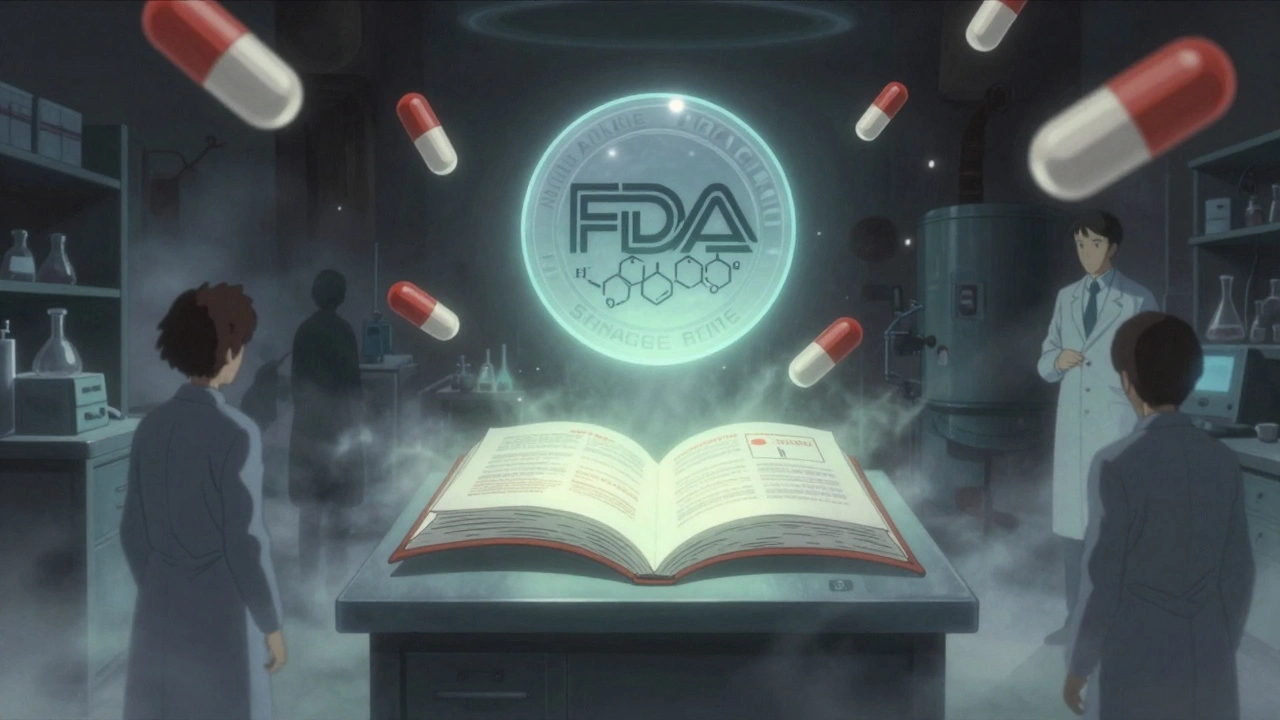
Learn how the FDA approves generic drugs through the ANDA process - from bioequivalence studies to manufacturing inspections - and why this system saves billions while ensuring safety.