When people talk about antibiotic myths, false beliefs about how antibiotics work and when they should be used. Also known as antibiotic misconceptions, these ideas lead to dangerous choices that make infections harder to treat. You might think antibiotics cure the flu, or that stopping early if you feel better is fine. Neither is true—and both contribute to antibiotic resistance, when bacteria evolve to survive drug exposure, making common infections deadly again. This isn’t science fiction. The WHO calls it one of the top 10 global health threats. Every time you take an antibiotic when you don’t need it, you’re helping superbugs win.
Another big myth? That antibiotics are harmless if you don’t feel sick after a few days. But antibiotic misuse, taking them for viral infections like colds or using leftover pills from a previous prescription. is why resistant strains like MRSA and drug-resistant TB are spreading. Even your dentist might give you amoxicillin for a toothache without checking if it’s bacterial. Most tooth pain isn’t. Same with ear infections in kids—many clear up on their own. Yet antibiotics are still overprescribed. And when you take them unnecessarily, you’re not just risking your own gut health or yeast infections—you’re putting everyone at risk. These drugs don’t just disappear after you finish the bottle. They linger in water, soil, and your body, quietly training bacteria to fight back.
Then there’s the idea that if a doctor says "take it for 10 days," you must finish every pill—even if you’re fine after three. That’s outdated advice. New studies show that for many infections, shorter courses work just as well. The real danger isn’t stopping early—it’s taking them at all when they’re not needed. What matters is matching the drug to the bug. If you have a sore throat and no fever, no pus, no swollen glands? Probably viral. Antibiotics won’t help. But if you’re coughing up green mucus, running a high fever, and your lymph nodes are swollen? That might be bacterial. Only a test can tell. Don’t guess. And don’t pressure your doctor for a script. They’re not refusing you—they’re protecting you.
Antibiotics are powerful tools, not candy. They save lives when used right. But myths turn them into weapons against us. The posts below cut through the noise. You’ll find real stories from people who thought they were allergic to penicillin—until they tested negative. You’ll see how one missed dose can turn a simple infection into a hospital stay. You’ll learn why some "natural" remedies are just as risky as pills. And you’ll get clear, no-fluff answers to the questions that keep people confused: Can I drink alcohol with this? Do I really need all these pills? Why does my kid get sick again after antibiotics? This isn’t theory. It’s what’s happening in clinics, pharmacies, and homes right now. Read on. Your next decision could matter more than you know.
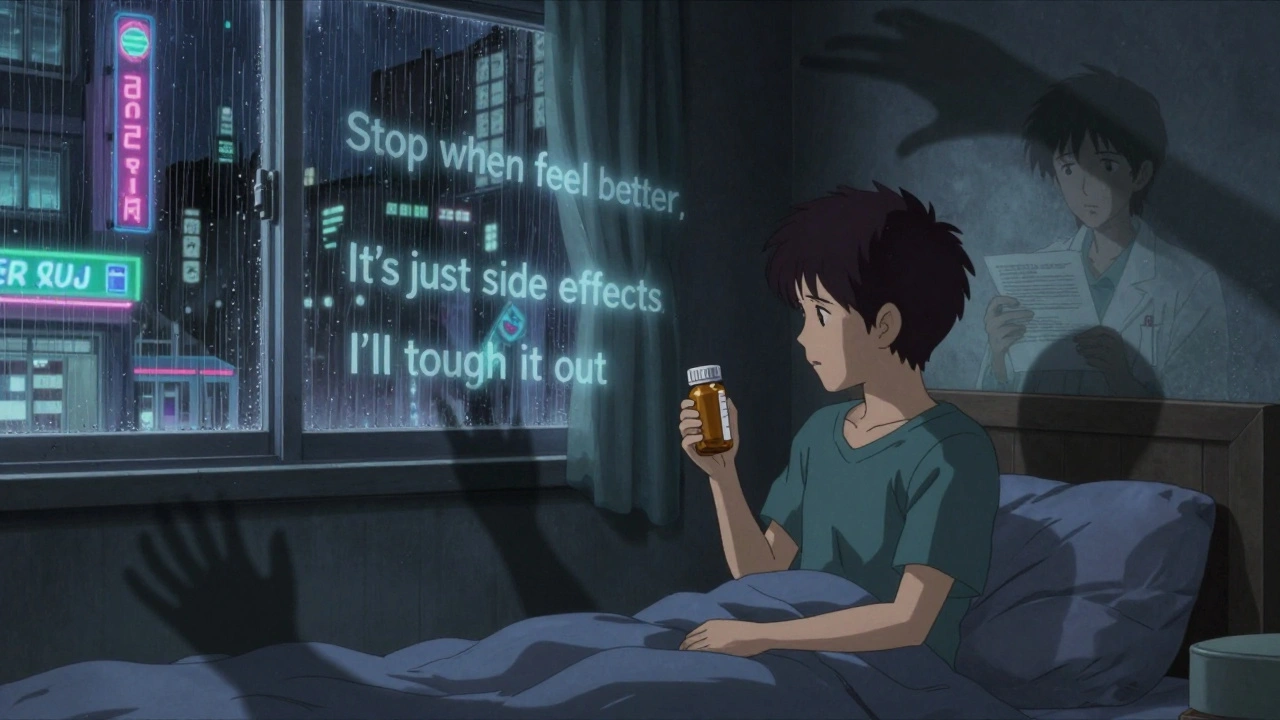
Many people stop taking medications because of myths about side effects-like stopping antibiotics early or quitting statins over muscle pain. These myths are dangerous and preventable. Learn the facts, avoid risks, and stay healthy.