Lung cancer remains a silent killer, claiming more lives than any other cancer type. In 2020 alone, there were approximately 229,000 new diagnoses in the United States. While it is the third most commonly diagnosed cancer, its mortality rate keeps it at the top of the list. The reason for this grim statistic is usually late detection. By the time symptoms appear, the disease has often spread beyond the point where treatment is curative. This is where Low-Dose CT comes in.
This imaging technology acts as a powerful tool for spotting tumors before they grow large enough to cause problems. Unlike standard chest X-rays, which often miss early lesions, LDCT scanners capture detailed cross-sectional images of the lungs. The goal isn't just to find cancer, but to find it early enough that surgery can remove it completely.
But scanning everyone isn't practical or safe due to radiation exposure and costs. Instead, we focus on high-risk groups. This targeted approach saves money and prevents unnecessary tests. If you or a loved one fall into specific categories, getting screened could be the difference between life and death. Let's look at exactly who qualifies and what to expect.
The rules for who gets screened have evolved over time. The U.S. Preventive Services Task Force issued its most significant update in March 2021. Before this, eligibility was stricter, requiring people to be at least 55 years old with heavier smoking histories. The updated guidelines expanded the net to catch more cases earlier.
To qualify, you generally need to meet three specific criteria. First is your age range. You must be between 50 and 80 years old. Second is your smoking status. You must currently smoke or have quit within the last 15 years. Third is your smoking intensity, measured in pack-years.
A pack-year represents smoking one pack of cigarettes daily for one year.
Many people confuse this term. It is a cumulative math problem. If you smoked one pack a day for 20 years, that is 20 pack-years. If you smoked two packs a day for 10 years, that is also 20 pack-years. The threshold is 20 pack-years. Under previous rules, this requirement was 30 pack-years, so lowering it opens doors for many more individuals. If you stopped smoking 16 years ago, you likely stop qualifying even if you smoked heavily back then. The benefit of quitting is huge, but the screening window closes after 15 years of abstinence.
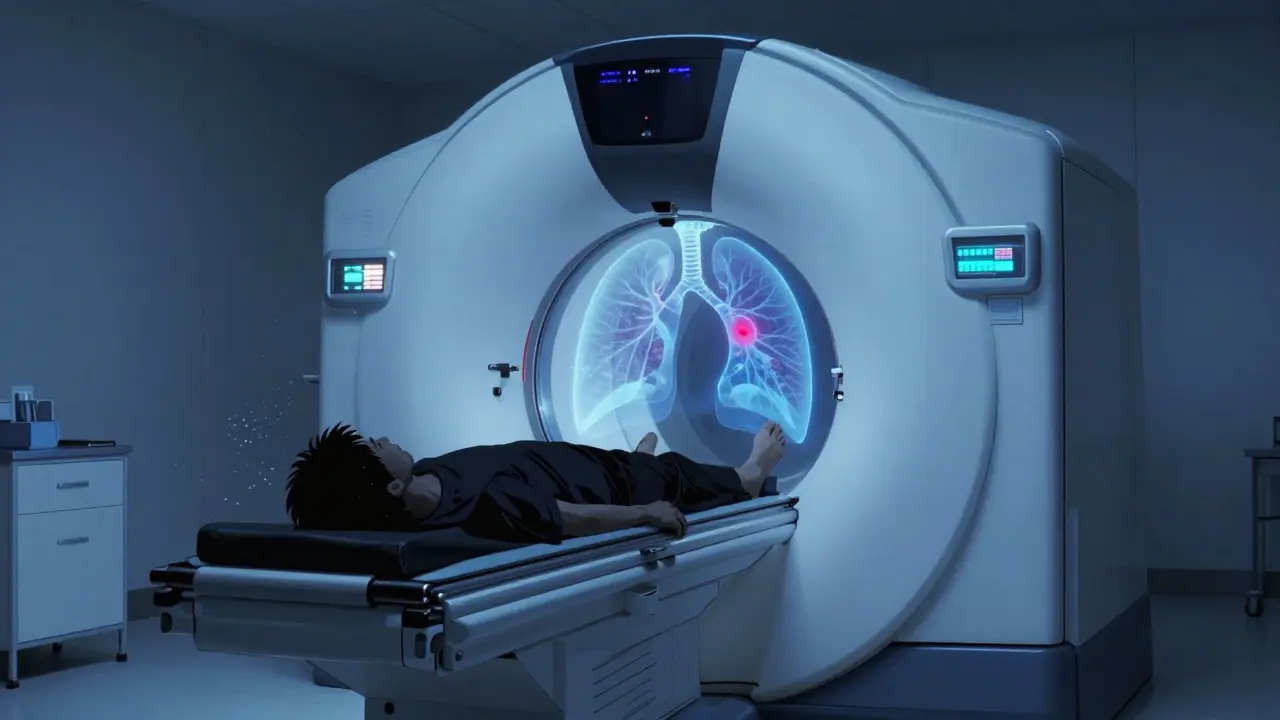
Knowing the process reduces fear. The actual scan is incredibly fast. You lie on a table while a computer tomography machine rotates around you. There is no injection required for this specific test, unlike contrast-enhanced CTs used for other diagnostics. The entire procedure typically takes less than 10 minutes.
Radiation safety is a common concern. A standard CT scan delivers around 7 to 8 millisieverts of radiation. A low-dose CT for lung cancer screening delivers only about 1.5 millisieverts. That is comparable to the background radiation we receive naturally from the environment over several months. Given the potential life-saving benefit of catching cancer early, this low radiation cost is widely considered acceptable by major medical bodies.
| Feature | Chest X-Ray | Low-Dose CT |
|---|---|---|
| Detection Rate | Lower | High (early stage) |
| Scan Duration | Minutes | Less than 10 minutes |
| Image Detail | 2D Image | 3D Cross-sections |

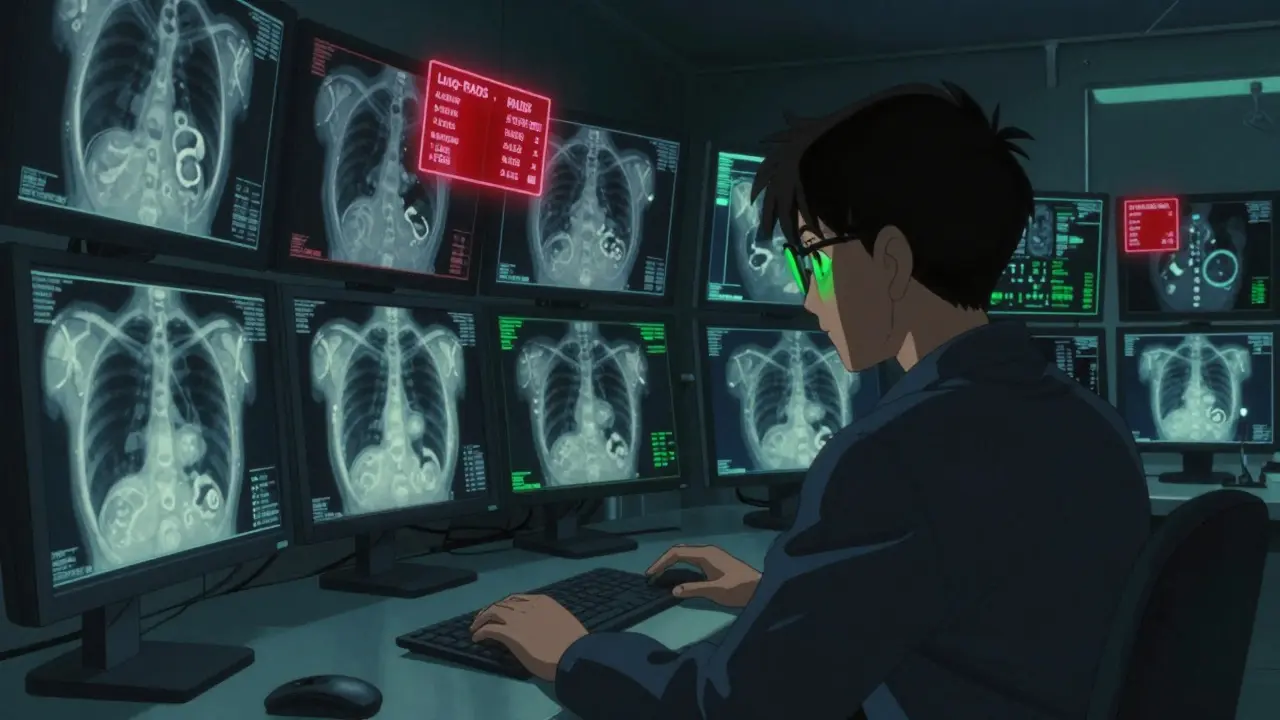
Once the scan is done, you aren't left guessing about what the doctors see. Radiologists use a standardized coding system called Lung-RADS (Lung Imaging Reporting and Data System). This version 1.1 system categorizes findings into levels ranging from 1 to 4, plus X.
This system helps eliminate confusion. You know exactly whether you go home with peace of mind or need to come back sooner. It ensures that doctors across different hospitals follow the same protocol, reducing errors in communication.
No medical test is perfect. The National Lung Screening Trial, published in 2011, showed that LDCT reduced lung cancer mortality by 20% compared to chest X-ray. Later modeling suggests a 14% to 20% reduction in deaths annually if everyone eligible got screened. These are meaningful numbers that translate to real lives saved.
However, false positives are real. About 13.9% of screens show something suspicious that turns out not to be cancer. This requires follow-up scans, sometimes biopsies, and causes significant stress. One study in 2022 noted that 37% of patients with false positives reported moderate to severe anxiety lasting more than six months. It is vital to understand this before signing up.
Overdiagnosis is another concern. This happens when a test finds slow-growing cancers that would never have harmed you in your lifetime but end up being treated aggressively. Balancing this risk against the chance of missing a fast-growing tumor is why shared decision-making visits are mandatory before screening begins.
Eligibility is only half the battle; payment is the other. Since 2017, Medicare has covered annual screenings for beneficiaries aged 50 to 77 with a 20 pack-year history. For private insurance, the Affordable Care Act mandates coverage without copays or deductibles for preventive services recommended by the USPSTF. This includes LDCT screening.
You do not just walk into an imaging center. You need an order from a provider after a counseling session. This visit covers your risk, the potential harm of radiation, and the possibility of needing invasive procedures. Once you have that referral, you can seek out a facility. Look for centers accredited by the American College of Radiology. As of late 2023, there were roughly 1,842 accredited facilities covering about 40% of U.S. counties.
Transportation can be a hurdle. Some users report traveling over 100 miles to find a certified site. Community health programs and patient navigators help bridge this gap, yet adoption rates remain lower than desired-around 8.3% of eligible adults in 2022.
The field is moving quickly beyond manual interpretation. In September 2023, the FDA cleared the first AI-assisted software for LDCT analysis. Tools like LungAssist demonstrated a 15% reduction in false positives in trials. While human oversight is still required, artificial intelligence is helping radiologists distinguish between scar tissue and malignancy more accurately.
Risk prediction models are also evolving. The PLCOm2012 model now factors in education level and family history alongside smoking data. This allows providers to identify high-risk individuals who might technically fall outside the strict pack-year cutoff but still warrant surveillance.
To calculate pack-years, multiply the number of packs you smoked per day by the number of years you smoked. For example, smoking 1.5 packs a day for 10 years equals 15 pack-years (1.5 x 10).
Yes, Medicare Part B covers annual low-dose CT scans for ages 50-77 with a 20 pack-year history. You must have a doctor's order and complete a shared decision-making visit.
If you quit smoking more than 15 years ago, you generally do not qualify for screening. Your risk drops significantly after that period, and guidelines recommend stopping screenings.
About 13.9% of screening rounds result in false positives. These require follow-up imaging but eventually prove not to be cancer. This anxiety is a known risk discussed before screening.
Look for facilities accredited by the American College of Radiology. You can search their public registry online to locate certified imaging centers close to your home.

Balance is key here. We want to save lives without creating unnecessary stress for everyone. The guidelines help find that middle ground. It requires trust between patient and provider. Sometimes fear drives people away from testing. Understanding risk profiles helps reduce that fear significantly. Prevention starts with knowledge of personal history. Smoking cessation remains the most effective treatment overall.

My uncle waited years and died because his primary care doctor refused the referral.

Screening saves lives but creates unique burdens for families.
Many people struggle with the anxiety of waiting for results.
Radiologists see subtle shadows that regular doctors miss easily.
False positives cause unnecessary panic for months on end.
Patients often feel abandoned during the follow-up process itself.
Insurance companies frequently deny claims without proper justification.
Travel distance remains a major barrier for rural residents specifically.
Technology improves yet human error persists in interpretation stages.
We must weigh the radiation dose against potential tumor growth speed.
Guidelines change annually as new statistical data becomes available.
Doctors sometimes hesitate to recommend tests due to liability fears.
Education levels determine who understands the pack-year concept fully.
Family history plays a larger role than current smoking habits alone.
Early detection allows surgical removal before metastasis occurs anywhere.
Society needs better support systems for those undergoing repeated scans.
Ultimately the decision rests on individual risk assessment protocols.
The complexity of healthcare access defines outcomes more than technology does.

This information is critically important!!! Please review the age requirements carefully!!
Eligibility depends on strict mathematical calculations regarding pack-years!!! Do not guess your own status!
Radiation exposure is low but real precautions exist.

People still smoke knowing this risk? 🤷♀️ Should we really pay for the cleanup crew when they refused to follow rules? 😒

Why did they change the age limit now suddenly? Something about profit margins usually shifts when guidelines get updated like this.

The US has the best protocols. Other places lag behind because their systems aren't efficient enough to handle this data properly.

Insurance always makes things hard. You have the right to check your lungs. Don't let them tell you no.

Mate, get it done before it's too late. Radiation isn't the worry, ignoring symptoms is. Cheers.

Nothing like almost dying to learn the value of early detection. Let's hope the false positive rates stay down.