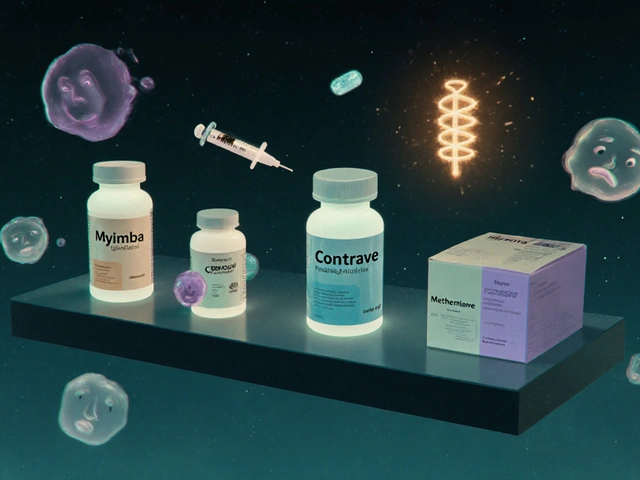
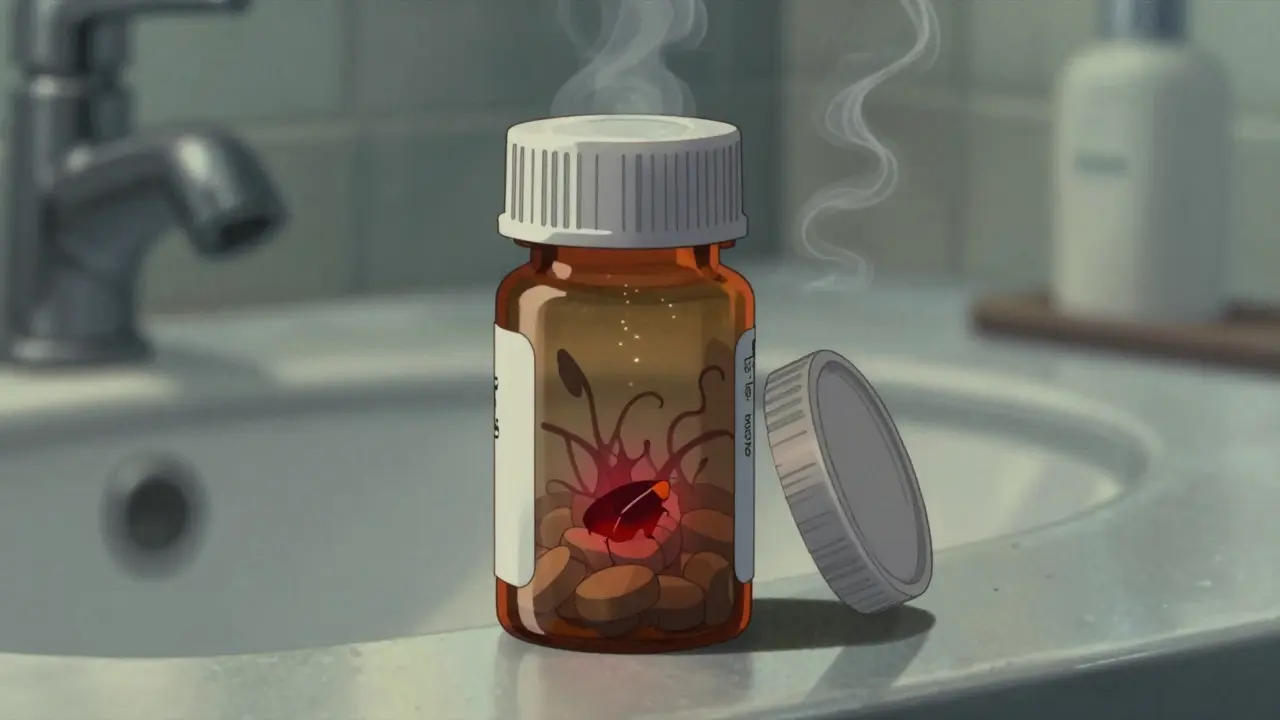
Moisture is one of the quietest killers of medications. You might not see it, but every time you open a pill bottle, you’re letting in humidity that can slowly destroy your pills and capsules. By the time you notice a change-maybe a strange smell, a chalky texture, or pills that crumble when you touch them-it’s often too late. The active ingredients have already broken down. In fact, studies show that over 67% of medication shortages in the U.S. between 2010 and 2012 were linked to moisture-related quality issues. That’s not just a manufacturing problem-it’s a patient safety issue.
Water doesn’t just make pills soggy. It triggers chemical reactions that break down the active ingredients. Take aspirin, for example. When it gets wet, it turns into salicylic acid and acetic acid-the same thing that gives vinegar its sharp smell. That’s not just ineffective; it can irritate your stomach. Vitamin C is even more vulnerable. In humid climates, it oxidizes quickly, losing its potency in weeks. Antibiotics like amoxicillin and clavulanic acid? Moisture causes them to degrade completely, leaving you with a pill that looks fine but does nothing.
It’s not just about the pill itself. The packaging matters too. A plastic bottle might keep out spills, but it doesn’t stop water vapor from creeping in. Every time you open the bottle to take a pill, you replace the dry air inside with moist air from your bathroom or kitchen. Over time, that adds up. In a 500-pill bottle taken twice a day, you’re introducing over 250 new bursts of moisture into the container before it’s empty.
There’s no single fix. Preventing moisture damage requires three working together: film coating, packaging, and desiccants.
Most pills you take have a thin outer layer. That’s not just for looks-it’s your first shield. Not all coatings are the same. Many use HPMC (hydroxypropyl methylcellulose), which is cheap and common. But it’s not great at blocking moisture. A study comparing HPMC-coated tablets to those coated with PVA (polyvinyl alcohol) showed something startling: after just 10 days outside sealed packaging, the HPMC-coated pills lost nearly all of their active ingredient. The PVA-coated ones? Still fully effective.
PVA-based coatings like Opadry® Amb II create a tighter barrier. They reduce water vapor transmission by 30-40% compared to HPMC. That’s why hospitals and pharmacies that switched to PVA-coated antibiotics saw customer complaints drop from five per month to almost zero. It’s not magic-it’s science. The coating acts like a waterproof jacket for the pill, keeping moisture out even before the bottle comes into play.
HDPE (high-density polyethylene) bottles are common because they’re cheap and durable. But they’re also porous to water vapor. In humid environments like Florida or Southeast Asia, these bottles alone can’t protect moisture-sensitive drugs. Aluminum foil blister packs do better-they’re nearly airtight-but they’re not always practical for daily use.
The real issue? Once you transfer pills from their original packaging into a pill organizer, you lose all protection. That’s why some manufacturers now use bottles with tighter seals, or even include moisture-resistant liners. But even the best bottle won’t help if it’s emptying out. As the bottle gets lower, the air space inside grows, and so does the risk of moisture buildup with each opening.
This is where most people miss the mark. Desiccants are those little packets you find in pill bottles. They’re usually made of silica gel. And they’re not just filler-they’re essential. A properly sized desiccant can absorb up to 40% of its own weight in moisture. In long-term tests, adding a silica gel pack to a pill bottle kept moisture levels rising by less than 0.3% over two years.
But here’s the catch: if the packet is too small, it’s useless. A 500-pill bottle with two pills taken daily creates a moisture load that requires a desiccant capable of handling at least 150% of the expected water vapor. Many manufacturers still use tiny packets that last only a few weeks. That’s why some patients in tropical regions report pills going bad before the bottle is half-empty.
Wisesorbent’s case studies show that when manufacturers sized desiccants correctly and paired them with Tyvek packaging, moisture-related complaints dropped to zero. One company went from 12 returns per month to none. That’s not luck-it’s engineering.
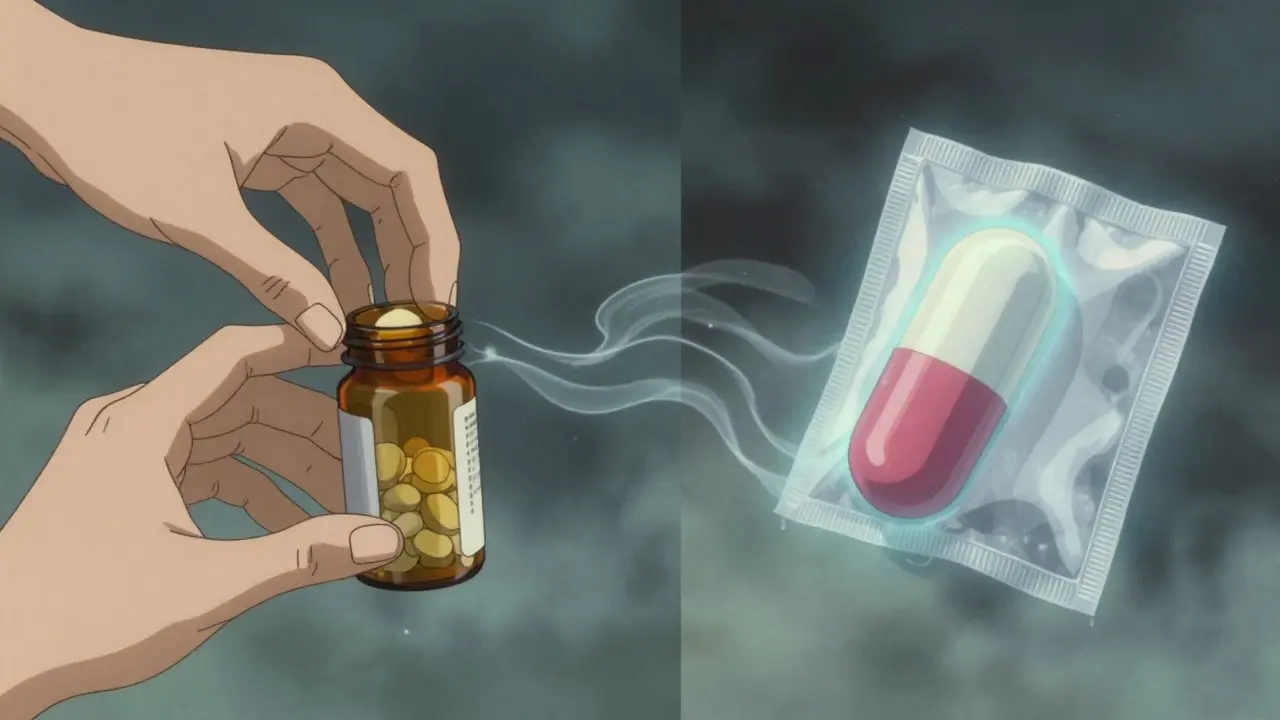
You can’t control how the drug is made, but you can control how you store it.
For drug makers, the answer isn’t just about cost. It’s about reliability. Using cheap HPMC coatings to save a few cents per pill can lead to recalls, lawsuits, and lost trust. The same goes for skipping desiccants or using undersized packs.
The industry is moving toward integrated solutions: PVA coatings paired with smart packaging that includes moisture indicators. Some new bottles now have color-changing labels that turn from green to red if moisture levels rise. That’s not science fiction-it’s already in use in Europe and parts of Asia.
Regulators are catching up too. The FDA and EMA now require proof that packaging protects against moisture throughout the product’s shelf life. If you can’t prove it, you can’t sell it.
Yes, PVA coatings cost 15-20% more than HPMC. Yes, adding a properly sized desiccant adds a few cents to the bottle. But compare that to the cost of a recall, a lawsuit, or a patient who gets sick because their antibiotic didn’t work. One pharmacy chain reported that after switching to PVA-coated meds with proper desiccants, their return rate dropped by 89%. That’s not just a win for safety-it’s a win for profit.
Small manufacturers might think they can’t afford it. But the truth is, they can’t afford not to. In 2021, two companies got FDA warning letters because their moisture protection was inadequate. Both had to recall thousands of bottles. One went out of business.
The future of moisture protection is moving beyond passive barriers. Researchers are testing active moisture-scavenging ingredients that can be mixed directly into the pill. Imagine a tablet that pulls moisture out of the air around it-even if the bottle is left open. That’s still in testing, but it’s coming.
For now, the best defense is still the three-layer approach: a strong film coating, smart packaging, and a correctly sized desiccant. If your meds don’t have all three, ask why. Your health depends on it.
No. Once a desiccant packet has absorbed moisture, it’s saturated and can’t absorb more. Reusing it gives you a false sense of security. If the packet feels soft, sticky, or looks swollen, it’s done. Always replace it with a fresh one if you’re transferring pills to another container.
No. HDPE bottles are common but allow moisture vapor to pass through slowly. For moisture-sensitive drugs, look for bottles with tighter seals or those labeled as "moisture-resistant." Some use aluminum-lined plastic or special polymer blends that block vapor better. If you’re unsure, ask your pharmacist.
Even in dry climates, moisture enters every time you open the bottle. Humidity from your hands, bathroom, or even the air in your bedroom can build up over time. For long-term medications-like those taken for years-adding a desiccant is still the safest choice. It’s cheap insurance.
Sometimes. Signs include discoloration, crumbling, unusual odor (like vinegar), or pills that feel sticky or softer than usual. But some degradation happens at a molecular level-you won’t see it. If a pill looks fine but you’re unsure, don’t take it. Contact your pharmacist. It’s better to be safe than risk taking ineffective medication.
It depends on the active ingredient and the manufacturer’s testing. Drugs like vitamin C, antibiotics, and certain heart medications are highly sensitive to moisture and almost always include desiccants. Others, like simple pain relievers, may not need them. But if you live in a humid area or store meds in a damp place, it’s smart to add one anyway.
If you’re taking long-term medication, especially in a humid climate, ask your pharmacist if your pills are coated with PVA and if they include a properly sized desiccant. It’s a simple question-and it could mean the difference between a pill that works and one that doesn’t.

Moisture damage is one of those silent threats nobody talks about until it’s too late. I’ve had pills turn chalky before-no warning, no notice. Just a bottle that looked fine but did nothing. This post nailed it: it’s not just about storage, it’s about the coating, the packaging, and yes, the damn desiccant. Most people think it’s a gimmick. It’s not. It’s science.

Did you know the FDA doesn’t require manufacturers to disclose the exact moisture permeability ratings of pill bottles? I’ve been digging into regulatory loopholes. The same companies that use cheap HDPE bottles are the ones lobbying against stricter packaging standards. It’s not negligence-it’s calculated risk. They know most people won’t check. And they’re right.

PVA coating works. Desiccants work. Stop using plastic tubs. That’s it.

Thank you for this meticulously researched and profoundly necessary breakdown. As someone who manages chronic medication regimens, I’ve long suspected the inadequacy of standard packaging-but never had the data to articulate it. The 67% statistic is staggering, and the comparison between HPMC and PVA coatings is revelatory. I will be sharing this with my pharmacist immediately.

Moisture ingress via vapor transmission coefficients (VTC) in HDPE is a documented failure mode in pharma packaging-especially under accelerated aging protocols (ICH Q1A). Silica gel desiccants with >150% moisture load capacity are non-negotiable for hygroscopic APIs like amoxicillin or ascorbic acid. If your bottle lacks a properly sized sachet, you’re essentially gambling with bioavailability. Pro tip: use Tyvek-lined containers. They’re ASTM D6653-compliant.

Of course the FDA doesn’t mandate better packaging-it’s all about profit margins. Big Pharma would rather you get sick than spend a few extra cents per pill. They don’t care if your vitamin C turns to dust. They’ve got another bottle waiting. And you? You’ll just buy another one. Sad.

Wait-so you’re telling me the government, the manufacturers, AND your pharmacist are all letting you take degraded meds??!!?? This is a MASSIVE COVER-UP!! I’ve been taking my blood pressure pills in a Ziploc for 8 years!!! I’m going to die!!! I just looked at my desiccant-it’s slightly squishy!!! I’m calling my senator!!! THIS IS A BIOLOGICAL WARFARE SCHEME!!!

Good stuff. I never thought about how each time you open the bottle, you’re letting in more humidity. I used to keep mine in the bathroom-big mistake. Now they’re in a drawer, with a fresh silica packet. Small change, big difference. I feel way more confident taking my meds now.

How quaint. In India, we’ve been using glass bottles with wax seals since the 1980s. Why are Americans still using plastic? This post reads like a marketing brochure for PVA-coated tablets. The real solution? Traditional packaging. No fancy coatings. No desiccants. Just glass, wax, and common sense.

Just switched my antibiotics to a PVA-coated version with a real desiccant. My doctor didn’t even know this was a thing. I asked. He said, "Oh, we’ll get you one." Free. No extra charge. You want to live? Ask the questions. Don’t just take the bottle.

Do you think this applies to supplements too? I take a lot of vitamin D and omega-3s. They’re not prescription, but they’re expensive. I’ve noticed the capsules getting a little sticky lately.

I found a desiccant packet in my bottle and thought it was a candy wrapper. I threw it out. Then I got sick. I swear, it’s connected. I’m not saying it’s the pills… but it’s the pills. My cat even stopped licking the bottle after I threw the packet away. That’s a sign. A sign from the universe.

So… just keep them in the fridge?

I’m from Indonesia. We don’t have desiccants in pill bottles here. We just keep them in the coolest room-usually under the bed. Works fine. Maybe it’s not as big a deal as you think.

The entire premise of this article is fundamentally flawed. Moisture degradation is a myth perpetuated by regulatory capture and pharmaceutical lobbying. The real issue is bioequivalence testing thresholds, which are intentionally lax. No evidence exists that sub-1% moisture variation affects clinical outcomes. This is fearmongering dressed as science.