Digoxin is a heart medication that’s been around for nearly a century. It helps control irregular heartbeats and improves how well your heart pumps blood, especially if you have heart failure or atrial fibrillation. But here’s the catch: digoxin doesn’t play well with many other drugs, foods, or supplements. Even small changes in what you take or eat can push your digoxin levels into the dangerous zone - and that can mean serious, even life-threatening, side effects.
Why Digoxin Is So Sensitive
Digoxin works by slowing down your heart rate and making each beat stronger. It does this by blocking a pump in your heart cells that moves sodium and potassium in and out. That sounds simple, but it’s a tightrope walk. The difference between a helpful dose and a toxic one is tiny. Doctors aim to keep your blood level between 0.5 and 0.9 nanograms per milliliter. Anything above 2.0 is considered toxic. And you don’t need to overdose to get there. Many people reach toxic levels simply because of interactions with other medicines or foods they didn’t realize mattered.
Top 5 Drug Interactions That Can Be Dangerous
Some medications change how your body handles digoxin. They might make it build up too high - or wash it out too fast. Here are the big ones:
- Dronedarone - Used for atrial fibrillation, this drug can spike digoxin levels by over 50%. The PALLAS trial found patients on both had more than double the risk of sudden death. If you’re on both, your digoxin dose must be cut in half right away.
- Verapamil and Diltiazem - These calcium channel blockers slow how fast your kidneys clear digoxin. Levels can jump 30-50%. That often leads to dangerously slow heart rates - sometimes below 40 beats per minute. If you’re on these, you need weekly digoxin level checks for at least two weeks after starting.
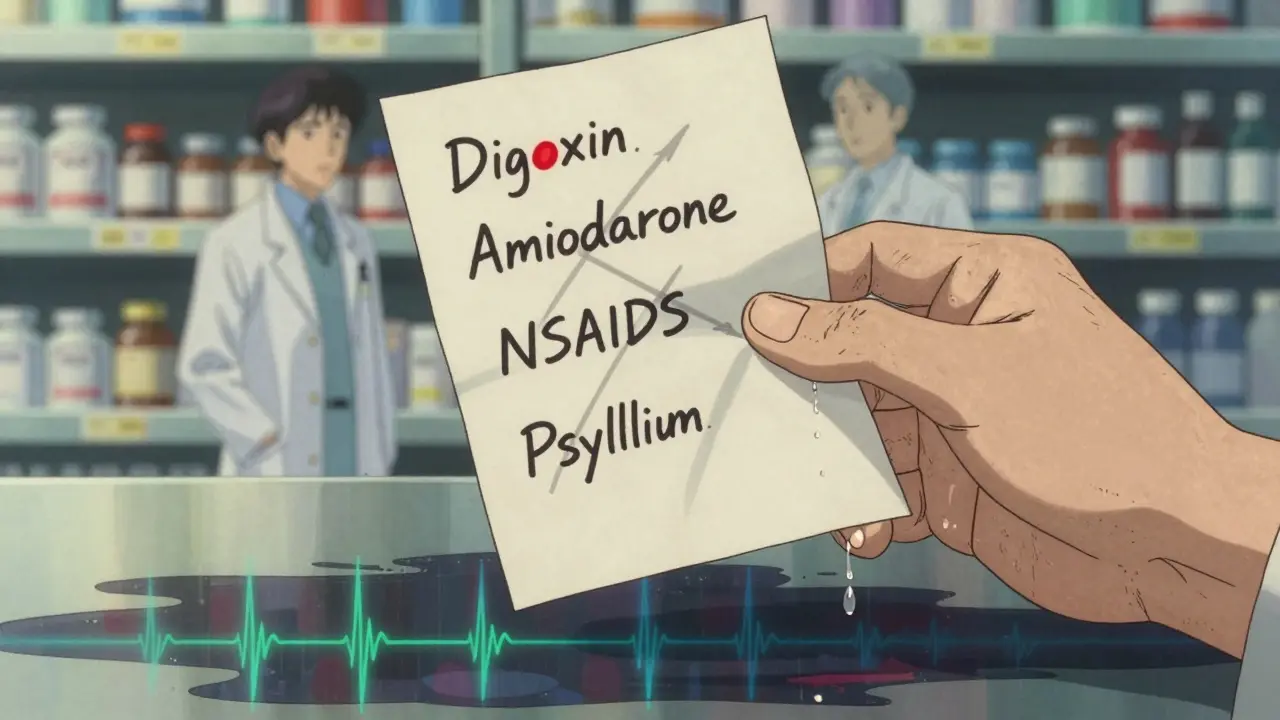
- Amiodarone - Another rhythm drug, amiodarone can cause digoxin levels to rise by 100% or more. One patient on the American Heart Association forum saw his level jump from 0.8 to 1.9 ng/mL in just two weeks - leading to blurry vision and vomiting. His dose had to be cut by half.
- Quinidine - This older antiarrhythmic can block digoxin’s removal from your body, raising levels by up to 100%. It’s rarely used now, but if you’re still on it, talk to your doctor immediately.
- Rifampin - An antibiotic used for tuberculosis, rifampin speeds up how your body breaks down digoxin. This can drop your levels below the therapeutic range, making your heart failure worse. You might not even feel it until you get worse.
What You Eat (and Don’t Eat) Matters
Digoxin doesn’t just interact with pills. What’s on your plate can change how much you absorb - or whether it even works.
- Black licorice - Yes, really. The glycyrrhizin in black licorice causes your body to lose potassium. Low potassium makes digoxin far more toxic. Even one piece a day can trigger dangerous heart rhythms. Avoid it completely.
- Oatmeal, bran, and high-fiber foods - These can reduce digoxin absorption by 20-30%. If you take your pill with your morning bowl of oatmeal, you might be getting less than half the dose you think. Take digoxin at least two hours before or after eating these foods.
- Milk and dairy - Calcium in milk can bind to digoxin in your gut and stop it from being absorbed. Don’t take your pill with a glass of milk.
- Psyllium fiber supplements - Common in fiber pills like Metamucil. If taken within two hours of digoxin, they can cut absorption by 30-40%. Space them out.
Over-the-Counter Traps
Many people don’t realize that common OTC meds can interfere. A 2021 survey found 22% of digoxin-related ER visits were caused by these:
- Antacids - Those with aluminum or magnesium (like Maalox, Mylanta) reduce digoxin absorption by up to 30%. If you take them for heartburn, take digoxin at least 2 hours before or after.
- Laxatives - Long-term use can cause low potassium, which again increases digoxin toxicity risk.
- NSAIDs - Ibuprofen and naproxen can reduce kidney function, making it harder for your body to clear digoxin. Use them sparingly and only if approved by your doctor.

Herbs and Supplements That Can Hurt
Just because something is “natural” doesn’t mean it’s safe with digoxin.
- St. John’s wort - This popular herb for mood boosts actually speeds up how your body gets rid of digoxin. Levels can drop by 25%, making your heart failure worse.
- Hawthorn - Often marketed for heart health, it can add to digoxin’s effect on heart rhythm, increasing the risk of dangerous QT prolongation.
- Coenzyme Q10 - Some people take it thinking it helps the heart, but it may interfere with digoxin’s action. There’s not enough data to say for sure - so skip it unless your doctor says yes.
Who’s at Highest Risk?
Not everyone on digoxin is equally at risk. Certain people are much more likely to have problems:
- People over 75 - Your kidneys don’t clear digoxin as well. You’re nearly three times more likely to have toxicity than younger patients.
- People with kidney problems - If your creatinine clearance is below 50 mL/min, digoxin builds up fast. Even normal doses can become toxic.
- People under 60 kg (132 lbs) - Smaller bodies process digoxin differently. A standard dose may be too much.
- People with low potassium - This is the #1 trigger for digoxin toxicity. Even if your digoxin level is “normal,” low potassium can turn it deadly.
What You Should Do Every Day
Managing digoxin safely isn’t just about taking a pill. It’s about daily habits.
- Take it at the same time every day - Consistency keeps levels steady.
- Take it 2 hours before or after meals - Especially if you eat oatmeal, bran, or dairy.
- Never skip a dose - But if you do, don’t double up. Call your doctor.
- Check your pulse daily - If your heart rate drops below 50 bpm, or if you feel dizzy or faint, hold your dose and call your doctor.
- Keep a list of every pill, supplement, and herb you take - Bring it to every appointment. Even “harmless” ones can interact.
When to Get a Blood Test
Your doctor should check your digoxin level regularly - but not just once a year. Here’s when testing is critical:
- When you start or stop any new medication
- After any change in kidney function
- If you have vomiting, diarrhea, or sweating a lot (these can lower potassium)
- Before and after electrical cardioversion
- If you develop nausea, blurred vision, or unusual heart rhythms
Most stable patients get checked every 3-6 months. But if you’re on interacting drugs like verapamil or amiodarone, check every week for the first two weeks.
What If You Have Side Effects?
Digoxin toxicity doesn’t always feel like a heart attack. It often starts with subtle signs:
- Nausea, vomiting, or loss of appetite
- Blurred or yellow-tinted vision
- Feeling unusually tired or weak
- Heartbeat that feels slow, irregular, or skipping
- Confusion or dizziness
If you notice any of these, don’t wait. Call your doctor or go to urgent care. Toxicity can lead to fatal arrhythmias. It’s not rare - about 1 in 25 people on digoxin will have a toxicity event in their lifetime.
The Bigger Picture
Digoxin prescriptions have dropped by 38% since 2010. Newer drugs like SGLT2 inhibitors and ARNIs are safer and more effective for most people. But digoxin still has a place - especially for older patients with persistent symptoms who can’t afford expensive new meds. It costs $4-6 a month. Many newer drugs cost $500-700.
For the right patient - someone with heart failure who still feels tired despite other meds, who’s not on interacting drugs, and who gets regular monitoring - digoxin still works. But it demands respect. It’s not a casual pill. It’s a precision tool.
Can I take digoxin with a multivitamin?
Yes, but avoid multivitamins with high potassium or calcium unless your doctor approves them. Most standard multivitamins are fine, but take them at least 2 hours apart from digoxin. Some supplements add potassium, which can help - but only if your levels are low. Never take extra potassium without medical advice.
What should I do if I miss a dose of digoxin?
If you miss a dose and remember within 12 hours, take it right away. If it’s been more than 12 hours, skip it and take your next dose at the regular time. Never double up. Missing one dose won’t cause harm, but doubling up can push you into toxicity. If you miss two or more doses in a row, call your doctor.
Does alcohol affect digoxin?
Moderate alcohol (one drink a day) usually doesn’t interfere with digoxin. But heavy drinking can damage your liver and kidneys, which affects how your body clears the drug. It can also lower potassium levels. If you drink regularly, tell your doctor - they may need to check your levels more often.
Can I get digoxin levels tested at home?
No, there’s no FDA-approved home test for digoxin. Blood tests must be done in a lab. Some hospitals now offer point-of-care testing in clinics, which gives results in under an hour. Ask your cardiologist if this is available near you - it’s especially helpful if you’re on interacting drugs.
Is digoxin still used in 2025?
Yes. While it’s not first-line anymore, digoxin is still prescribed to about 12% of heart failure patients in the U.S. - and up to 35% of those with persistent atrial fibrillation. It’s especially common in older adults and people who can’t afford newer, more expensive drugs. When used carefully with monitoring, it remains a valuable, low-cost option.
Final Advice: Stay Alert, Stay Informed
Digoxin isn’t going away. But its risks are real. The key isn’t avoiding it - it’s managing it with discipline. Keep a written list of everything you take. Know your potassium level. Take your pill the same way every day. And if something feels off - your pulse is slow, your vision is blurry, your stomach is upset - don’t ignore it. Talk to your doctor before the next appointment. Your life depends on the details.