
When you're heading overseas, international travel medicine, the practical health planning needed before crossing borders. Also known as travel health, it's not just about getting shots—it's about making sure your pills, prescriptions, and health habits work where you're going. Many people think if they’re healthy, they don’t need to plan. But a pill that’s legal in the U.S. might be banned in Thailand. A vaccine you got years ago might not cover the strain circulating in Brazil. And if you're on blood thinners or diabetes meds, missing a dose halfway across the world isn’t just inconvenient—it’s dangerous.
That’s why travel vaccines, preventive shots required or recommended for specific countries are only the start. You also need to know how to handle prescription travel meds, medications you carry across borders for chronic conditions. For example, if you take warfarin or clopidogrel, you need to understand how food, altitude, or time zones affect your dose. If you use insulin or birth control pills, you need backup plans in case your luggage gets lost. And if you’re taking something like azathioprine or opioids, you need proof of prescription—some countries treat those like controlled substances, even if they’re regular prescriptions at home.
cross-border pharmacy, the system that lets you refill prescriptions in foreign countries is messy, unpredictable, and rarely explained by airlines or tour operators. Some countries allow you to refill with a doctor’s note. Others require a local prescription. A few ban your meds entirely. That’s why knowing the rules ahead of time saves you from being stranded without your heart medication or your antidepressants. It’s not about being paranoid—it’s about being prepared.
And don’t forget about medication safety abroad. Natural supplements might seem harmless, but they can clash with your prescriptions in ways you never expect. Antacids like Tums can wreck your kidneys if you already have kidney disease. Herbal teas might thin your blood like warfarin. Even a simple painkiller like ibuprofen can trigger acute interstitial nephritis in people with existing health issues. The same drugs that work at home can turn risky overseas, especially when combined with dehydration, heat, or unfamiliar diets.
What you’ll find below isn’t theory. It’s real advice from people who’ve been stuck without their meds, confused by pill changes, or shocked by border rules. You’ll learn how to refill prescriptions in the EU, Canada, or China. You’ll see why your generic pill looks different overseas—and why that’s usually okay. You’ll get clear steps to avoid overdosing when restarting meds after a break, and how to handle missed doses while traveling. No fluff. No guesswork. Just what you need to stay safe, healthy, and in control—no matter where your trip takes you.
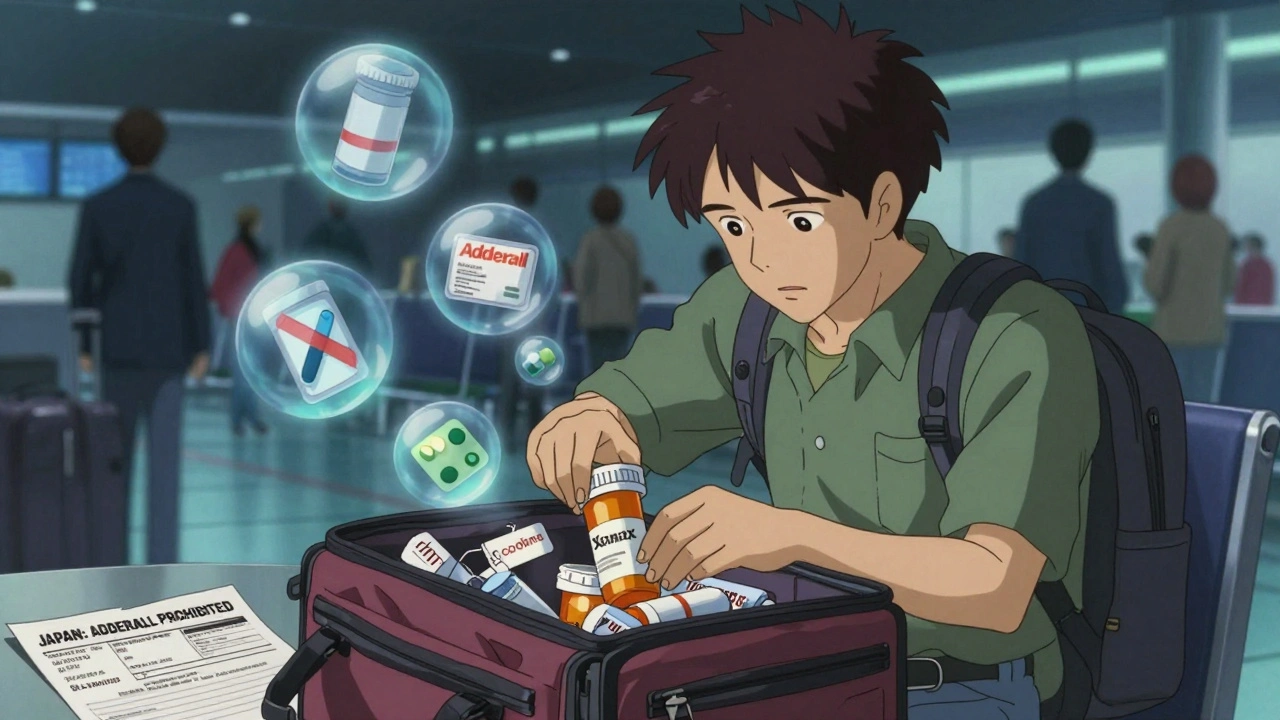
Learn how to safely bring your prescription medications overseas without risking detention, fines, or denied entry. Step-by-step guide for travelers with chronic conditions.