
Direct Oral Anticoagulants (DOACs) have changed the game for millions of people managing blood clots or atrial fibrillation. Unlike older medications like warfarin, DOACs are a class of modern blood thinners including apixaban, rivaroxaban, dabigatran, edoxaban, and betrixaban that offer predictable dosing without routine blood monitoring. They work faster, require fewer dietary restrictions, and generally have fewer interactions. But here is the catch: they are not interaction-free. If you take other common medications, supplements, or even certain foods, you could be altering how these drugs work in your body-potentially leading to dangerous bleeding or ineffective clot prevention.
The reality is that most patients on DOACs are also taking multiple other medications. This polypharmacy creates a complex web where Drug-Drug Interactions (DDIs) can silently alter drug levels in your bloodstream. Understanding which combinations are safe, which require dose adjustments, and which should be avoided entirely is critical for your health. Let’s break down exactly how these interactions happen and what you need to watch out for.
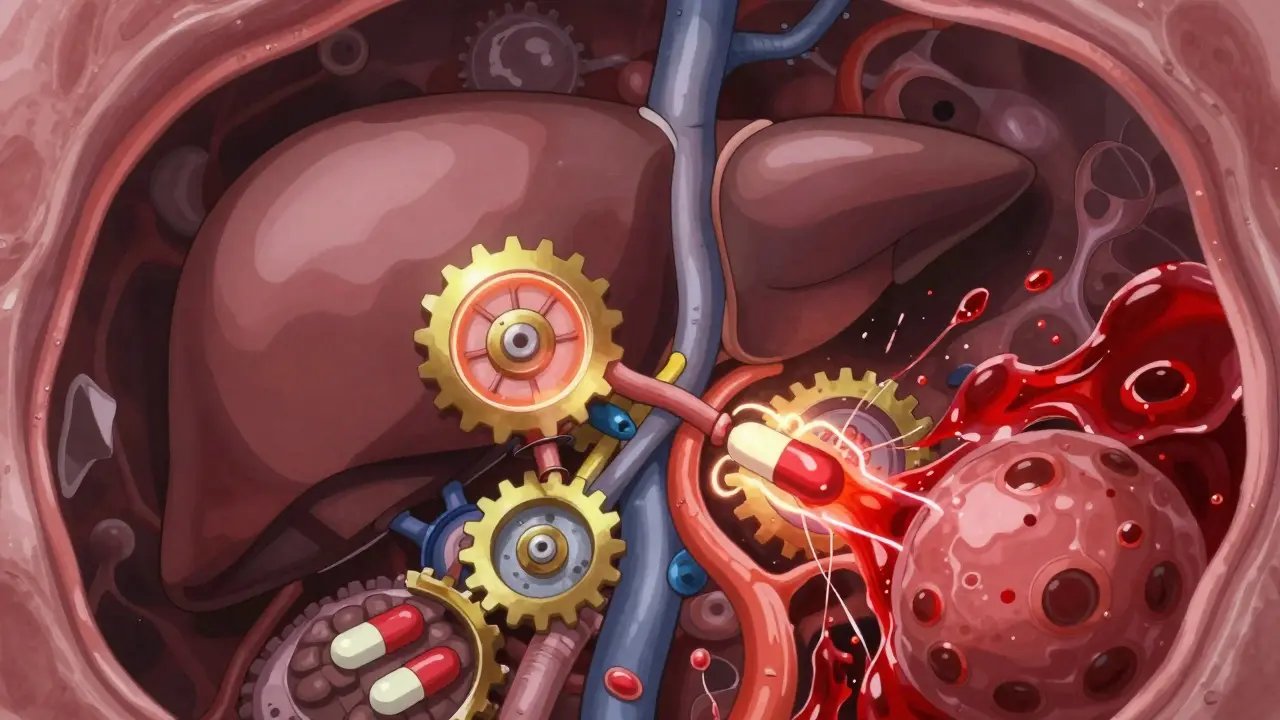
To understand the risks, you first need to know how these drugs move through your body. DOACs rely heavily on two specific biological systems: enzymes and transporters. The primary enzyme involved is Cytochrome P450 3A4 (CYP3A4 is a liver enzyme responsible for metabolizing many drugs, including apixaban and rivaroxaban). Another key player is Permeability Glycoprotein (P-glycoprotein is a transporter protein that pumps drugs out of cells, affecting absorption and elimination of all major DOACs).
When another medication interferes with CYP3A4 or P-gp, it changes the concentration of the DOAC in your blood. If an inhibitor blocks these pathways, DOAC levels rise, increasing your risk of bleeding. If an inducer speeds them up, DOAC levels drop, leaving you unprotected against strokes or clots. Not all DOACs are affected equally. Apixaban and rivaroxaban are significantly metabolized by CYP3A4, while dabigatran relies almost entirely on P-gp transport. Edoxaban falls somewhere in between. This difference means that a drug interaction that matters for one DOAC might be irrelevant for another.
Certain categories of drugs are notorious for interacting with DOACs. Being aware of these groups helps you have more informed conversations with your doctor or pharmacist.
It is crucial to note that "natural" does not mean safe. Supplements like St. John’s Wort act as strong enzyme inducers and can dangerously lower DOAC concentrations. Always disclose every supplement you take to your healthcare provider.
Each DOAC has its own unique interaction fingerprint. Knowing the specifics helps in making better treatment choices.
| DOAC Name | Primary Metabolic Pathway | Key Inhibitors to Avoid/Adjust | Key Inducers to Avoid |
|---|---|---|---|
| Apixaban | CYP3A4 & P-gp | Ketoconazole, Ritonavir, Amiodarone (monitor) | Rifampicin, Carbamazepine, Phenytoin |
| Rivaroxaban | CYP3A4 & P-gp | Ketoconazole, Ritonavir, Dronedarone (avoid) | Rifampicin, Topiramate, Phenobarbital |
| Dabigatran | P-gp only | Verapamil (dose reduction), Quinidine | Rifampicin, Carbamazepine |
| Edoxaban | P-gp & Minor CYP3A4 | Dronedarone (dose reduction), Verapamil | Rifampicin, Phenytoin |
Notice the pattern? Strong dual inhibitors of CYP3A4 and P-gp (like ritonavir or ketoconazole) are problematic for apixaban and rivaroxaban. For dabigatran, since it doesn’t use CYP3A4, those same drugs are less concerning, but P-gp inhibitors like verapamil still require attention. Conversely, strong inducers like rifampicin reduce the effectiveness of all DOACs and are generally contraindicated.
Many patients on DOACs have atrial fibrillation or heart failure, meaning they often take cardiac drugs that interact with anticoagulants. This is one of the most frequent areas of clinical concern.
Amiodarone, a common antiarrhythmic, moderately inhibits P-gp. When combined with apixaban or dabigatran, it can increase drug exposure. Clinicians usually monitor for signs of bleeding rather than changing doses immediately, unless symptoms appear. Diltiazem, used for blood pressure and rate control, weakly inhibits both CYP3A4 and P-gp. The interaction is usually mild but warrants caution in elderly patients or those with kidney issues.
Dronedarone presents a sharper conflict. It strongly inhibits P-gp and moderately inhibits CYP3A4. Current guidelines advise avoiding dronedarone with dabigatran and rivaroxaban entirely due to high bleeding risk. If you must use it with edoxaban, the edoxaban dose must be reduced to 30 mg once daily. Verapamil requires a dabigatran dose reduction to 110 mg twice daily in patients over 80 or those with moderate renal impairment, though it is generally considered safe with apixaban and rivaroxaban at standard doses.

Your kidneys play a massive role in clearing DOACs from your body. Dabigatran is about 80% renally excreted, while the others range from 30% to 50%. When kidney function declines, DOAC levels naturally rise. Add a drug interaction on top of that, and the risk spikes.
If you have chronic kidney disease (CKD), your doctor will likely start you on a lower DOAC dose anyway. Introducing a P-gp inhibitor in this scenario can push drug levels into the danger zone. Regular monitoring of creatinine clearance is essential. Never assume a medication is safe just because it worked last year; kidney function changes over time, altering how your body handles both the DOAC and the interacting drug.
Managing DOAC interactions isn’t just the doctor’s job-it’s a team effort involving you, your pharmacist, and your care providers. Here is how to stay safe:
Remember, the goal isn’t to avoid all other medications. Many combinations are safe and necessary. The goal is informed management. With proper oversight, you can effectively manage your cardiovascular health while minimizing interaction risks.
Ibuprofen is an NSAID that increases the risk of gastrointestinal bleeding when combined with apixaban. While occasional use might be acceptable under medical supervision, regular use is generally discouraged. Acetaminophen (paracetamol) is typically a safer alternative for pain relief.
Grapefruit juice inhibits CYP3A4 enzymes. Since apixaban and rivaroxaban are metabolized by CYP3A4, consuming large amounts of grapefruit juice could theoretically increase their blood levels. However, clinical significance varies. Moderate consumption is often tolerated, but consistent large intake should be discussed with your doctor.
If you miss a dose, take it as soon as you remember on the same day. Do not double up to make up for a missed dose. Consistency is key to maintaining stable blood levels. If you frequently miss doses, talk to your doctor about switching to a once-daily regimen or a different medication.
Yes. Idarucizumab reverses dabigatran, and Andexanet alfa reverses apixaban, rivaroxaban, and edoxaban. Prothrombin complex concentrates (PCCs) are also used in emergency bleeding situations. These are administered in hospital settings for life-threatening bleeds.
Most oral contraceptives do not significantly interact with DOACs. However, estrogen-containing pills slightly increase clotting risk independently. Doctors usually consider this overall thrombotic risk rather than a direct drug-drug interaction when prescribing.