When teaching patients about their condition-whether it’s diabetes, heart failure, or managing asthma-the real goal isn’t just to hand them a pamphlet. It’s to make sure they understand what to do, why it matters, and how to handle setbacks. But how do you know if they truly get it? Many clinics still rely on nodding heads and vague answers like "I understand"-but those don’t tell you if the patient can actually manage their insulin, recognize warning signs, or call for help when things go wrong.
| Level | Understanding | Behavior |
|---|---|---|
| Needs Improvement | Can’t name medications or purposes | Misses doses, stores meds incorrectly |
| Developing | Knows names but not why | Takes meds inconsistently, unsure of side effects |
| Proficient | Explains purpose of each med and timing | Takes meds daily, recognizes and reports side effects |
| Advanced | Adjusts based on symptoms, knows when to call provider | Manages refills, modifies behavior for travel or illness |
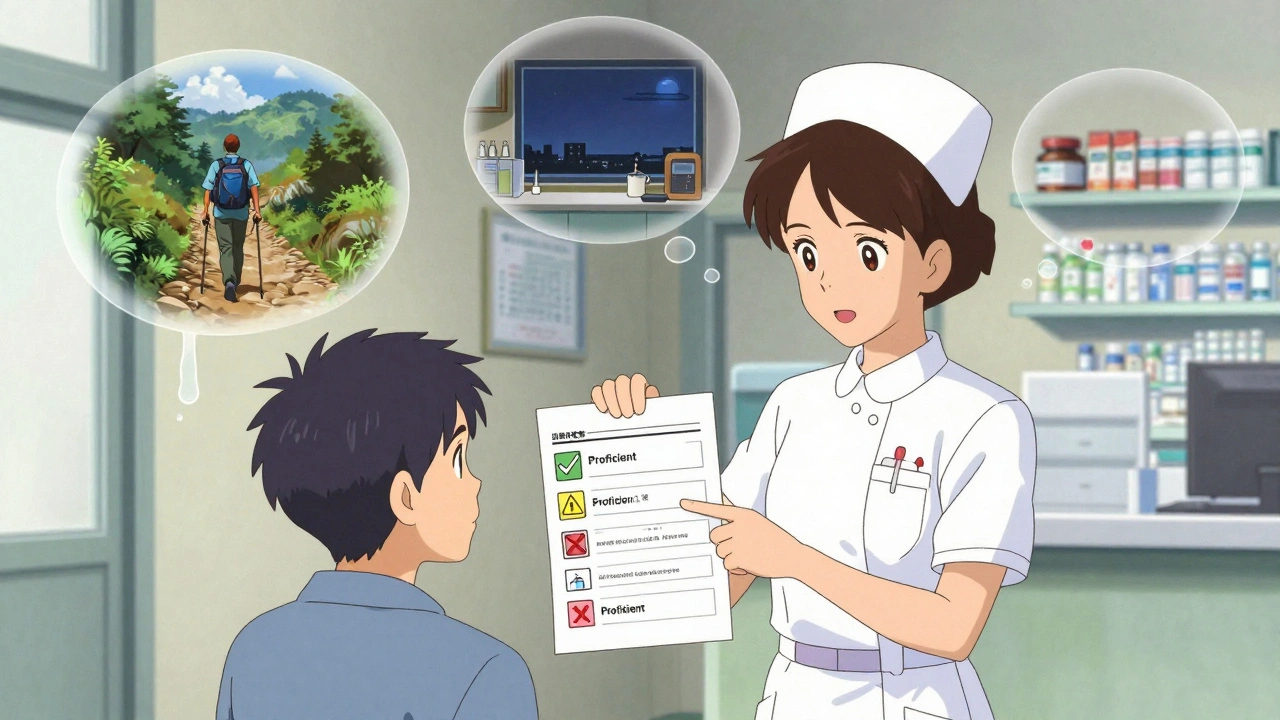
Don’t rely on yes/no answers. Use teach-back: ask them to explain the key points in their own words. Watch how they perform tasks like using an inhaler or checking blood sugar. If they can describe why they’re doing something-not just how-they’ve moved beyond memorization to real understanding.
Surveys can give you general feedback, but they’re not reliable for measuring actual understanding. Most patients say they understood even when they didn’t. Use surveys only as a supplement to direct observation and performance checks. Focus on tools that show behavior, not just opinions.
Formative assessment happens during learning-it’s about checking in, giving feedback, and adjusting. Think of it as a daily check-up. Summative assessment happens at the end, like a final exam. For patient education, formative is more valuable because it lets you fix misunderstandings before they lead to harm.
Yes-but simplify them. Use pictures, symbols, or color coding. Instead of writing "Proficient," show a green checkmark with a thumbs-up. Use verbal explanations and examples. The goal isn’t to read the rubric-it’s to use it as a guide for your conversation.
Assess at every visit, but focus on one key skill each time. Don’t overwhelm patients. For example, check medication use at one visit, diet at the next, and symptom recognition at the third. Track progress over time. Even a 2-minute check-in every few weeks makes a big difference.
They might understand the information but face barriers-cost, transportation, fear, or lack of support. Don’t assume it’s about knowledge. Ask open-ended questions: "What’s making it hard to do this?" or "What would help you stay on track?" The solution often isn’t more education-it’s removing obstacles.

This is the exact same garbage they've been pushing since 2010. Teach-back? Rubrics? You're still measuring compliance, not understanding. Real understanding is when the patient doesn't need you at all. Stop pretending paperwork is care.

It's profoundly disheartening to witness the medical establishment's persistent reliance on performative pedagogy. The notion that a 5-point checklist can capture the ontological complexity of patient agency is not merely reductive-it is epistemologically negligent. One must interrogate the very premises of behavioral compliance as a proxy for cognition. The rubric, in its sanitized quantification, erases the lived phenomenology of chronic illness. Are we measuring understanding, or merely the patient's capacity to parrot back institutional script?

I love this so much. We’ve been doing teach-back with our diabetic patients for 2 years now and the difference is night and day. One lady told me she started walking after dinner because she realized her sugar spiked after her ‘healthy’ rice bowl. No pamphlet ever told her that. This isn’t just clinical-it’s human.

I’ve used the exit ticket method with COPD patients and it’s wild how often they’ll say something like, 'I guess I just need to breathe better'-and then you realize they have no idea what 'better' even means. We start there. No judgment. Just, 'Can you show me what that looks like?' It’s amazing how much you learn when you stop talking.

So you want patients to 'demonstrate' understanding? Cool. Now tell me how many of them are gonna do that when they’re on a 10-hour shift, working two jobs, and their kid’s sick. This whole system is built on the fantasy that everyone has the bandwidth to be a medical intern. It’s not about understanding-it’s about privilege.

Formative assessment is the unsung hero of clinical education. Summative metrics are relics of an industrial model. The real ROI isn’t in compliance rates-it’s in reduced ED visits and improved QoL metrics. When you track longitudinal behavioral trajectories via micro-check-ins, you’re not just assessing-you’re intervening in real time. This is precision patient engagement.

I'm afraid I must respectfully dissent. While the teah-back methodology has its merits, the absence of a validated psychometric framework undermines its reliability. One cannot simply equate verbal recitation with cognitive internalisation. Furthermore, the proposed rubrics lack normative standardisation-how does one account for linguistic variance across socio-economic strata? The NHS pilot, while promising, suffers from selection bias and inadequate control for confounding variables. We must be rigorous.

So let me get this straight. We’re gonna fix healthcare by asking people to show us how they take their pills? Next you’ll be having them sign a waiver saying they ‘understand’ not to drink bleach. This isn’t education. It’s theater for bureaucrats who need metrics to justify their paychecks.

I’ve worked with refugees who don’t speak English and we use pictures, gestures, and their own language to teach. One woman showed me how she’d cut her insulin pen in half because she thought that was how you 'save' it for later. We didn’t use a rubric-we used her. That’s the real tool: listening. Not checking boxes.

There’s a deeper philosophical layer here: understanding isn’t a state, it’s a process of becoming. The patient doesn’t 'get it'-they become the person who no longer needs to be told. That transformation happens in the quiet spaces between visits, in the doubt, the fear, the small failures. Our job isn’t to test them-it’s to hold space for them to find their own way through.

Let’s be honest-this whole system is designed to make providers feel like they’re doing something, not to actually help patients. I’ve seen nurses spend 20 minutes on teach-back while the patient’s blood pressure is skyrocketing. It’s performative empathy. We’re not healing people-we’re checking off boxes for accreditation.

The real barrier isn’t literacy or comprehension-it’s systemic neglect. You can teach someone how to use an inhaler until they’re blue in the face, but if they can’t afford the medication, or live in a neighborhood with no pharmacy open after 7 PM, or are terrified of the hospital because of past trauma, none of this matters. We’re treating symptoms of a disease called capitalism. The rubric won’t fix that.

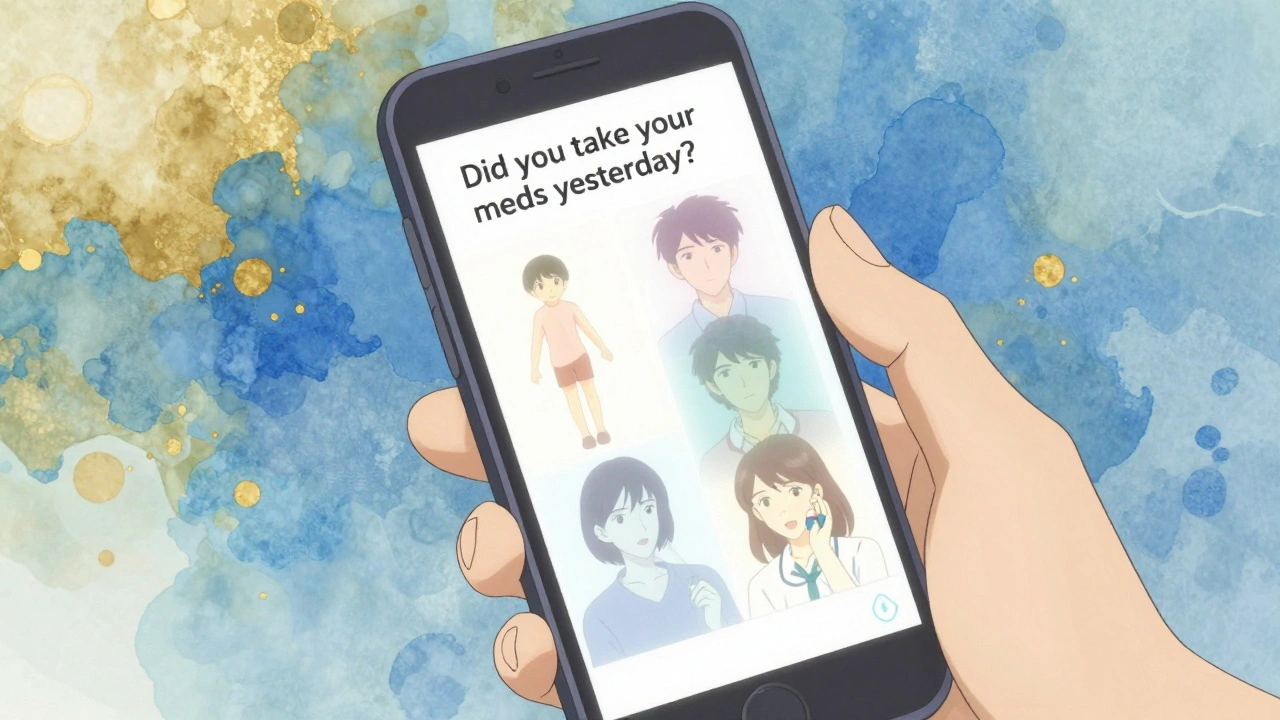
I’ve used the photo check-ins with elderly patients and it’s been a game-changer. One guy sent a pic of his pill organizer with half the slots empty and a note: 'Forgot to take it. Felt weird.' We called him. Turned out he was scared of the side effects. We didn’t lecture. We listened. He’s been on track for 8 months now. Sometimes all they need is to know someone sees them.

I tried the one-question check-in with my hypertension patients and it was shockingly effective. Just 'How’s your salt intake this week?' and I’d get stuff like 'I stopped putting salt on my eggs' or 'My wife makes me eat soup without broth.' It’s not perfect, but it’s real. And it’s way better than asking 'Do you understand?' and getting a nod.

i just started using teach back and honestly i was skeptical but one lady told me she thought her insulin was for her headaches. like. she was taking it when she felt dizzy. i cried. we need more of this.